Skip to content
You can now search across every topic, entity and event.What's new
European Tech Sovereignty
8SEP

Kerman scraps petrol rise in a day

2 min read
15:06UTC

Kerman province began selling petrol at the refinery rate of 872,000 rials a litre at 204 stations from midnight on 12 August, and stopped by the following morning.

TechnologyDeveloping
Key takeaway

Kerman's refinery-rate petrol lasted one night before the province withdrew it.

Kerman province began selling petrol at the refinery rate of 872,000 rials a litre at 204 stations from midnight on Wednesday 12 August, and stopped by the following morning 1. The provincial governor's development deputy, Ali Asghar Zakeri-Harandi, announced the scheme. Within hours the Kerman branch of the National Iranian Oil Products Distribution Company said it was halted after governor Mohammad Ali Talebi took the matter to national authorities in person 2. Subsidised card rates stand, with an extra 40 litres a month at the old 50,000-rial price 3.

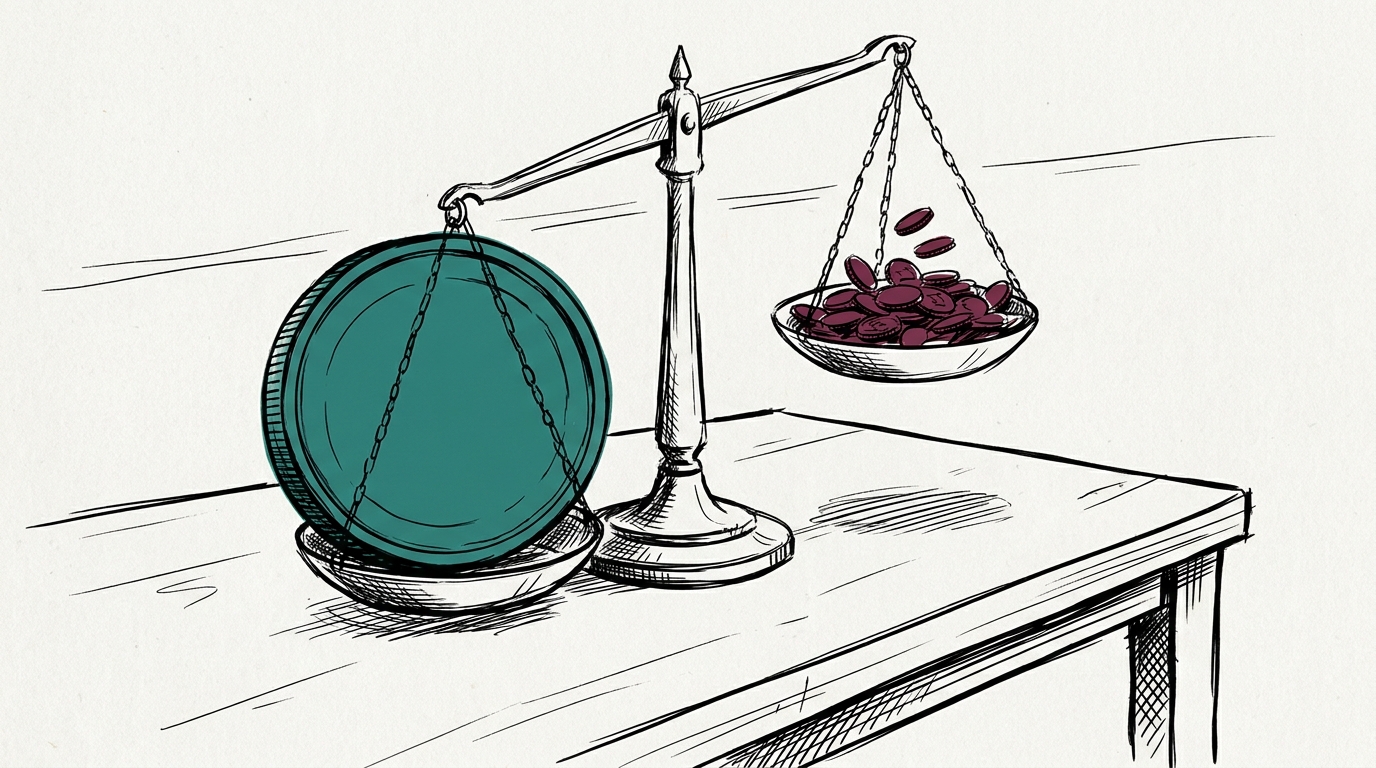
Put the number where a driver stands. A 50-litre tank at the refinery rate cost 43.6 million rials, about $23, against an Iranian monthly minimum wage of roughly 166 million rials 4. That is one tank for a quarter of a month's legal minimum, in a year when Iranian outlets put food inflation near 130 per cent.

The reversal came from the province, not from Tehran, and it came before any protest was reported. Iranian governments have never been able to move the forecourt price quietly: the November 2019 rise brought nationwide protests and a lethal crackdown, and every administration since has priced that memory into the decision. Kerman's officials appear to have run the same calculation inside a single working day.

The national ratchet has been turning for weeks. Tehran cut the second-tier subsidised ration from 70 to 50 litres a month on 28 July , part of a re-tiering that ran alongside the rial's slide to 1,933,000 to the dollar . Kerman marks the limit of that method. A ration can be trimmed from the centre; a forecourt price cannot.


Deep Analysis

In plain English

Kerman, a province in Iran, briefly started charging drivers the full market rate for petrol at midnight on 12 August, instead of the much cheaper subsidised price most Iranians pay. The new rate would have cost about $23 to fill a typical tank, more than a quarter of a month's minimum wage. By the next morning the province's governor had personally taken the issue to national authorities, and the price hike was cancelled. Iranian domestic media report this was a deliberate political decision to back down, not a technical mistake, showing how sensitive fuel prices are for a government already dealing with a currency that has lost about a third of its value this year.

Deep Analysis
Root Causes

Kerman's reversal exposes a fault line the national ration cuts avoided. Cutting a subsidised litre allowance, as Tehran did nationally in late July , is a slow, largely invisible squeeze.

Switching an entire province onto the market refinery rate overnight instead makes the rial's collapse, down roughly a third since January, visible at the pump within hours, a cost provincial officials judged too politically dangerous to sustain even for one morning.

What could happen next?
  • Meaning

    A same-morning reversal shows Iran's leadership treats visible, immediate price shocks as more politically dangerous than gradual subsidy cuts phased in nationally.

  • Risk

    If national authorities attempt a similar refinery-rate shift more broadly, the Kerman episode suggests they would need to phase it rather than announce a single overnight jump.

First Reported In

Update #170 · The ships Iran does not control are leaving Hormuz

CNN· 14 Aug 2026
Read original
Different Perspectives
Poland
Poland
Poland leads a self-announced AI Gigafactory consortium with a EUR 100 million phase-one commitment, matched by Czechia and joined by Hungary at EUR 25 million. EuroHPC has confirmed no consortium for the call closing 12 November, so the bloc exists only in national announcements so far.
UK Government (DCMS)
Secretary of State Lisa Nandy told the Commons on 3 September she has inherited the sovereign AI brief from Liz Kendall, but gave no assessment, figure or date on frontier-model access. It is the first public claim of ownership since DSIT's abolition, without the substance the committee asked for.
ASML
ASML
ASML CEO Christophe Fouquet credited Intel Foundry, not a European fab, with shipping the first high-volume logic product made on High-NA EUV, the tool only ASML builds. Europe holds the chokepoint tool; the company that spent it into volume production first is American.
Luxembourg
Luxembourg
Luxembourg joined Mistral's Series D as a new investor on 8 September, the same government that co-funds EuroHPC's MeluXina-AI supercomputer. One small member state now funds the sovereign compute Mistral may need and holds equity in the company using it.
Samsung Electronics
Samsung Electronics
Samsung led Mistral's Series D on 8 September and the same day expanded its ASML collaboration on next-generation lithography. One Korean company now sits atop Europe's largest AI funding round and inside its most sensitive chip-tooling relationship.
Mistral AI
Mistral AI
Mistral closed a EUR 3 billion Series D above a EUR 21 billion valuation on 8 September, with Samsung leading and Luxembourg joining as a new state investor. The company markets itself as Europe's non-American AI option even as the round's lead capital comes from South Korea and two US private-equity firms.