Skip to content
You can now search across every topic, entity and event.What's new
European Tech Sovereignty
8SEP

500 ships idle as Hormuz stays shut

3 min read
15:06UTC

Zero new tankers crossed Hormuz in the 24 hours after Trump's signature; more than 500 ships stayed anchored as Bimco called a crossing very risky.

TechnologyDeveloping
Key takeaway

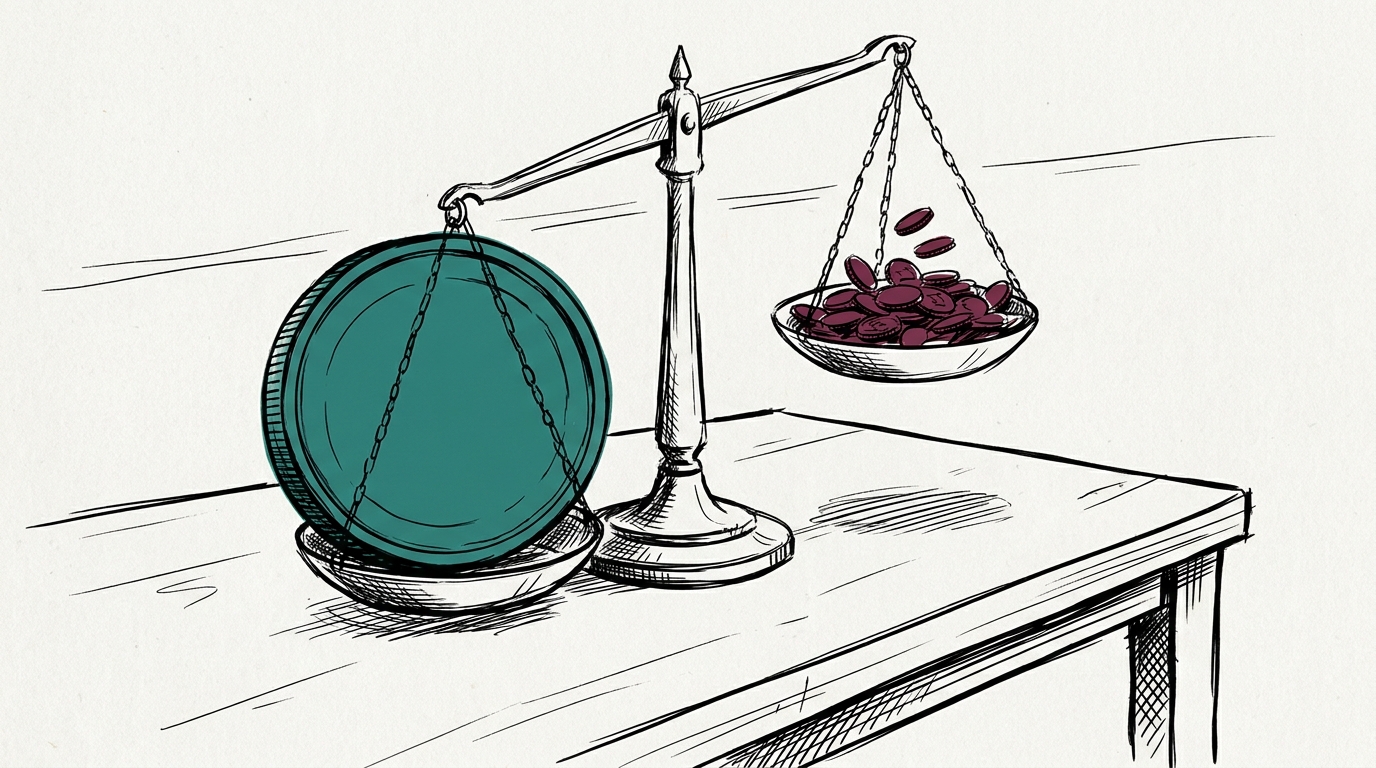
Brent priced an open strait that no tanker actually crossed; insurers still block transit.

Zero Hormuz tankers transited in the 24 hours after Trump's 16 June signature, despite his declaration that the strait was open. The two crossings logged on 15-16 June were toll passages under the Islamic Revolutionary Guard Corps (IRGC) authority, Iran's military force that controls mine routes and passage conditions, not a reopening . More than 500 ships remain parked in the Gulf 1. BIMCO, the world's largest shipowner association, calls a crossing "very risky": the floating mines are still live, no IRGC order has cleared the lanes, and not one Protection and Indemnity (P&I) club, the London-based mutual marine insurers, has lifted its Hormuz war-risk exclusion 2.

The insurance point drives the lanes more than the mines do. A tanker without P&I cover cannot dock, because terminals and lenders refuse an uninsured hull. The blockade now runs through London insurance underwriters as much as through Iranian mines, and every owner knows it. Jakob Larsen, BIMCO's chief safety officer, said owners "still consider it very risky to commence transits at this point" while the mines stand uncleared.

Brent Crude, the global benchmark that prices roughly two-thirds of internationally traded oil, fell to between $78.82 and $81.55 on the signing, down as much as 5 per cent 3, near the two-month low it touched a week ago on deal optimism . Markets priced the expectation of an open strait. No moving ship lay behind the fall, because the lanes held zero new transits. The price moved; the cargo did not.


Deep Analysis

In plain English

When a ship sails through a war zone, it needs special war-risk insurance. The P&I clubs, mutual insurance associations based in London, provide this cover for roughly 90 per cent of the world's ships. They said on 16 June that the Hormuz strait is still too dangerous to cover, because Iranian military mines remain in the water and nobody has officially certified them as swept. Without that cover, a shipowner who loses a vessel in the strait cannot claim for the loss. No credible insurer will touch an active mine zone. This is why 500 ships are sitting in the Gulf, not because their owners do not want to move, but because sailing uninsured through an uncleared mine field is commercially and legally impossible.

Deep Analysis
Root Causes

The 500-ship backlog and zero-transit outcome have two distinct root causes. The mine threat is physical: CENTCOM's own assessment by mid-May was that 90 per cent of Iran's naval mine stockpile was warehoused, not in-water, but the remaining deployed mines have not been certified as swept. Bimco's Jakob Larsen cited active mines as the primary safety barrier.

The P&I club constraint operates through the International Group of P&I Clubs, which covers roughly 90 per cent of the world's ocean-going tonnage. The group sets a collective de-risk bar that no individual member club can unilaterally lower without triggering reinsurance withdrawal by the London market. P&I clubs cannot issue standard hull and liability cover for a zone the Lloyd's Joint War Committee lists as enhanced-risk without a UN resolution or government certification of safety.

What could happen next?
  • Consequence

    P&I de-listing of Hormuz requires mine clearance certification or a UN resolution; the 60-day nuclear talks window does not address either condition.

  • Risk

    Oil markets pricing a reopening that has no ships behind it face a correction risk if Friday's ceremony also fails to produce mine clearance progress.

First Reported In

Update #130 · Trump signed the war over; it kept going

Argus Media· 17 Jun 2026
Read original
Different Perspectives
Poland
Poland
Poland leads a self-announced AI Gigafactory consortium with a EUR 100 million phase-one commitment, matched by Czechia and joined by Hungary at EUR 25 million. EuroHPC has confirmed no consortium for the call closing 12 November, so the bloc exists only in national announcements so far.
UK Government (DCMS)
Secretary of State Lisa Nandy told the Commons on 3 September she has inherited the sovereign AI brief from Liz Kendall, but gave no assessment, figure or date on frontier-model access. It is the first public claim of ownership since DSIT's abolition, without the substance the committee asked for.
ASML
ASML
ASML CEO Christophe Fouquet credited Intel Foundry, not a European fab, with shipping the first high-volume logic product made on High-NA EUV, the tool only ASML builds. Europe holds the chokepoint tool; the company that spent it into volume production first is American.
Luxembourg
Luxembourg
Luxembourg joined Mistral's Series D as a new investor on 8 September, the same government that co-funds EuroHPC's MeluXina-AI supercomputer. One small member state now funds the sovereign compute Mistral may need and holds equity in the company using it.
Samsung Electronics
Samsung Electronics
Samsung led Mistral's Series D on 8 September and the same day expanded its ASML collaboration on next-generation lithography. One Korean company now sits atop Europe's largest AI funding round and inside its most sensitive chip-tooling relationship.
Mistral AI
Mistral AI
Mistral closed a EUR 3 billion Series D above a EUR 21 billion valuation on 8 September, with Samsung leading and Luxembourg joining as a new state investor. The company markets itself as Europe's non-American AI option even as the round's lead capital comes from South Korea and two US private-equity firms.