Skip to content
You can now search across every topic, entity and event.What's new
European Tech Sovereignty
8JUL

Google fine stuck on von der Leyen's desk

3 min read
09:50UTC

The Commission's record DMA fine against Google for self-preferencing, scheduled for March, remains unissued, with the hold-up attributed to a personal intervention by President Ursula von der Leyen.

TechnologyDeveloping
Key takeaway

A record DMA fine against Google sits unissued at von der Leyen's office before the recess.

The European Commission's record DMA (Digital Markets Act) fine against Google for self-preferencing remains unissued, despite being scheduled for March 1. The DMA is the EU regulation that designates large platforms as gatekeepers and bars them from favouring their own services. The penalty sits in the high triple-digit-million-euro range, which would exceed the EUR 200m DMA record levied on Apple in 2025 . The Commission had confirmed it was preparing the fine on 25 May ; the new development is why it has not landed.

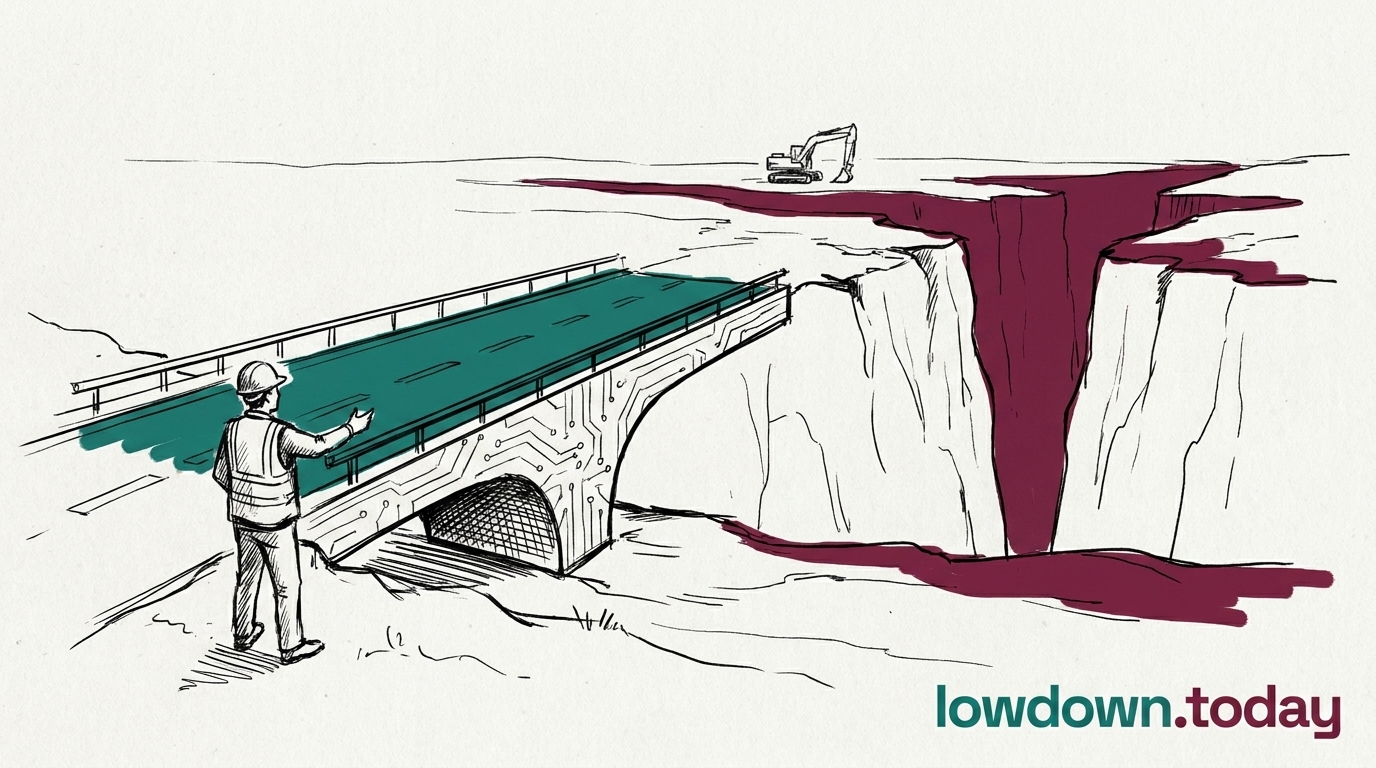
The hold-up has been attributed to a personal intervention by Commission President Ursula von der Leyen, which moves the delay from the case team to her office 2. In May, more than 30 civil-society organisations led by Open Markets Institute Europe wrote to her expressing "grave concern" 3. A fine attributable to a President's personal hold, rather than to the officials who built the case, converts a competition ruling into a bargaining counter in the EU-US trade talks, which is the discretion the DMA's design was meant to remove.

Timing sharpens the stakes. A binding ruling forcing Google to share search-ranking data with rivals is due on 27 July . If the fine clears von der Leyen's office before the summer recess, the two actions would form a double-barrel enforcement sequence against Alphabet inside five weeks. If it does not, Google's rivals keep waiting for a remedy first promised in spring while the conduct continues, and Washington gains a talking point that DMA enforcement bends to politics.

Deep Analysis

In plain English

The EU passed a law called the Digital Markets Act to stop very large tech platforms from unfairly favouring their own products. Google, for instance, shows its own shopping results and maps above rivals in search. The Commission's enforcement team completed its investigation months ago and recommended a record fine. The fine has not been issued because EU Commission President Ursula von der Leyen personally intervened to hold it back. More than 30 consumer and tech groups wrote to her in May 2026 asking her to release the decision. The fine is expected to be hundreds of millions of euros, and it would be followed by a separate order forcing Google to share its search data with rivals.

Deep Analysis
Root Causes

The delay has a documented proximate cause: Commission President von der Leyen's personal intervention. The structural cause is the EU-US regulatory-tariff coupling that formed in early 2026. The US Section 301 investigation naming DMA cloud probes as economic warfare created a credible threat of retaliatory tariffs on EU exports.

For Germany, whose automotive industry faces up to USD 200bn in threatened tariff exposure, DMA enforcement against US platforms became a variable in a tariff negotiation rather than an autonomous legal process.

A secondary structural cause is the three-deadline cluster confirmed for late July and early August 2026: the USTR Section 301 final determination on 24 July, the binding DMA Google search-data decision on 27 July, and EU AI Act GPAI enforcement on 2 August.

Releasing the Google self-preferencing fine before that window would turn a single enforcement action into the first salvo of a six-week regulatory sequence that Washington has already characterised as coordinated attack on US technology companies.

What could happen next?
  • Risk

    A confirmed presidential hold on a completed DMA case sets a precedent that geopolitical pressure can pause EU competition enforcement, which Alphabet's legal team will cite in any future fine appeal.

  • Consequence

    If the fine releases before 27 July, the six-week triple-enforcement window (DMA fine, DMA search-data order, AI Act GPAI) creates the most concentrated EU-US digital regulatory pressure in history.

First Reported In

Update #7 · Sovereignty arrives, minus Brussels

Steptoe LLP· 3 Jun 2026
Read original
Causes and effects
This Event
Google fine stuck on von der Leyen's desk
A fine held at the President's office rather than the case team turns a competition decision into a trade-negotiation chip, the politicisation the DMA was meant to prevent.
Different Perspectives
United States (Google/Alphabet)
Alphabet lost its final Android appeal on 2 July with no further court to hear it, a result its Computer and Communications Industry Association allies frame as precedent, not deterrence, since the €4.1bn fine changed nothing about Google's Play Store terms across eight years of litigation.
UK Department for Science, Innovation and Technology
DSIT opened its £96m second Sovereign AI wave on 3 July, switching from April's equity stakes to fixed-price contracts because Britain has no domestic hyperscaler or Bpifrance-style lender to fund capacity another way. It is betting on buying outcomes it controls alone rather than joining an EU-wide framework.
German federal government
Berlin backed both German deliverables this week, Infineon's fab and Aleph Alpha's merger, but is finding one far harder to close than the other. It wants enforceable protective rights inside Cohere's cap table before the merger closes, a legal instrument the Bundeskartellamt has no filing to review yet.
European Commission
European Commission
The Commission banked a clean CJEU win on the eight-year Android case on 2 July, removing Google's last comparator argument before President von der Leyen rules on the far larger DMA self-preferencing fine due 27 July. Brussels treats Infineon's early Dresden delivery as proof the Chips Act mechanism works, at the node Europe already led.
Bruegel (EU industry sceptics)
Bruegel economist Mario Mariniello argued the EU sovereignty package mimics US and Chinese strategy while EU cloud providers hold roughly 15% of their home market; using nationality as a proxy for security without fixing the underlying capital and energy gaps that drive the dependency creates €86bn of migration cost without the security benefit it is sold as delivering.
France
France
France published a joint sovereignty definition with Germany at VivaTech and mobilised €13bn under Tibi Phase 3, placing SAP's partnership with Mistral as the working proof that a German enterprise-software giant running a French sovereign model inside public administration is what digital sovereignty looks like in practice.
