Skip to content
You can now search across every topic, entity and event.What's new
European Tech Sovereignty
8JUL

Bruegel: the law leaves the chips problem

3 min read
09:50UTC

Bruegel published Analysis 13/2026 on 19 May finding Europe structurally dependent on US or Chinese computing infrastructure whatever CAIDA does, because the law governs the cloud layer and never reaches the silicon beneath it.

TechnologyDeveloping
Key takeaway

Bruegel finds CAIDA cannot close Europe's chip dependency, because the law governs cloud residency, not silicon.

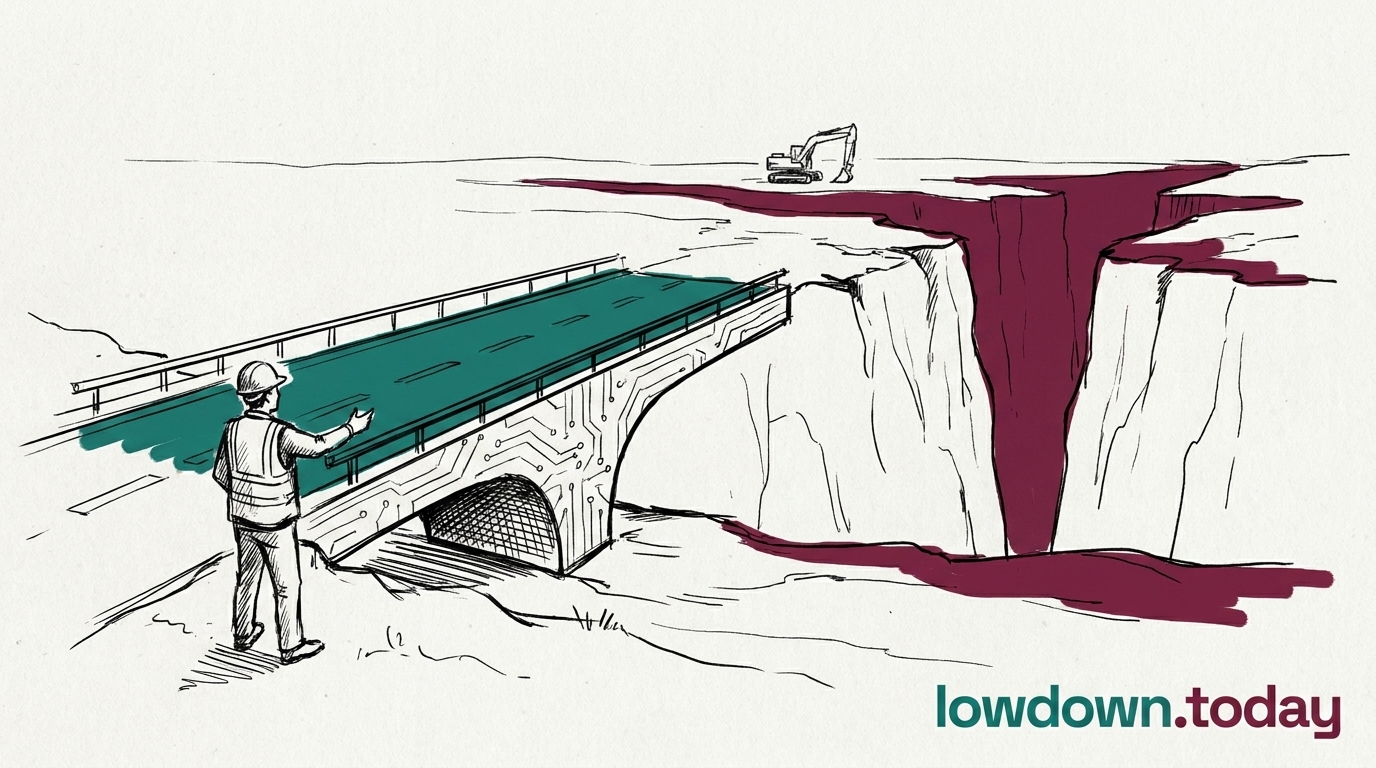
The Brussels think tank Bruegel published Analysis 13/2026 on Tuesday 19 May, finding Europe structurally dependent on US or Chinese computing infrastructure regardless of what CAIDA does 1. Bruegel is an economic policy institute whose work feeds directly into EU debate. Its finding is a layer argument: CAIDA can mandate where European public data is hosted, but it says nothing about where the silicon underneath that data comes from, and Europe has no leading-edge AI accelerator of its own to switch to.

The numbers frame the gap. Chinese domestic chips now power 41 per cent of China's data centres, and Huawei projects AI-chip revenue of $12bn in 2026, up from $7.5bn the year before 2. Both Washington and Beijing are manufacturing their way out of dependence; Europe is legislating around it. The dependency Bruegel measures is a cumulative-investment failure with no fab to point to: the cancelled Magdeburg and Crolles projects left the bloc with no leading-edge plant, and ASML's softening guidance is the only European hardware story with scale, and it sells the machines that make chips elsewhere, not the chips.

Bruegel's recommendation borrows the tool Chips Act II already adopts: coordinated EU procurement for compute on the Airbus model, plus subsidies to compensate firms that move off Nvidia. The Draghi report's delivery-gap diagnosis is the backdrop ; the correct prescription has been on record for a year. A law that governs the cloud layer leaves the hardware layer exactly where it was, which is the case Bruegel puts to a Commission about to adopt that law.

Deep Analysis

In plain English

A European think tank called Bruegel published a report in May 2026 showing that Europe cannot build or buy the computer chips needed to run cutting-edge AI, regardless of what the new EU cloud laws say. Both the US and China are spending tens of billions on their own chip factories and AI hardware. Europe is not. Huawei, the Chinese tech company, now makes enough AI chips to generate USD 12bn in sales in 2026. Europe has no equivalent chip company at that scale. Bruegel recommended that European governments pool their buying power to purchase AI computing capacity together, similar to how Airbus was built through coordinated European aerospace procurement.

What could happen next?
  • Risk

    If Chips Act II adopts without a subsidy mechanism for compute migration, European AI developers will remain on Nvidia infrastructure indefinitely, making CAIDA's data-residency mandate dependent on US-supplied hardware.

  • Consequence

    Huawei's USD 12bn 2026 AI-chip revenue trajectory suggests Chinese compute self-sufficiency by 2028, ending the period in which export controls could meaningfully constrain Chinese AI development.

First Reported In

Update #7 · Sovereignty arrives, minus Brussels

Bruegel· 3 Jun 2026
Read original
Different Perspectives
Trump administration
Washington defends the MATCH Act as closing a loophole that lets ASML's DUV tools reach Chinese fabs indirectly, dismissing the Dutch Cabinet's June complaint of being treated with disregard. Officials expect the bill's progress through Congress to keep the DUV cross-subsidy question live regardless of ASML's Q2 numbers.
Bruegel
Bruegel
Brussels-based economists argue this week's deliverables, specialist fab aid and a digital euro that restricts no US firm, prove Europe's sovereignty agenda advances only where it meets no American resistance. They expect the leading-edge fabrication gap and dependence on US frontier AI models to persist absent a policy that directly confronts a named US interest.
German federal government
Berlin welcomes the €659m tranche funding jobs across North Rhine-Westphalia, Schleswig-Holstein, Hesse and Bavaria, on top of the ESMC Dresden fab already under construction on TSMC-shipped tooling. Officials treat power and analogue capacity as the achievable near-term win while Dresden remains Germany's only bet on leading-edge logic.
House of Commons Science, Innovation and Technology Committee
The committee's 7 July report found the UK has "no coherent strategic framework" for sovereign technology and warns it "risks being cut off at whim", citing the June order that barred foreign access to Anthropic's Fable 5 and Mythos 5 as the trigger case. It expects no domestic hyperscaler or foundry response before the gap widens further.
European Commission
European Commission
The Commission cleared €659m in German state aid on 14 July, taking cumulative Chips Act support to roughly €14.2bn, and let the digital-euro mandate reach trilogue after ECON's floor-vote shortcut was overturned. Brussels presents both as sovereignty delivered, without addressing that neither funds leading-edge logic fabrication.
ASML
ASML
ASML raised FY2026 guidance to €43-45bn on 15 July and, for the first time since Q1, dropped the export-control hedge from its release even with the MATCH Act live in Congress. Fouquet frames the order book, 86 systems against 67 in Q1, as strong enough to outrun the DUV dispute rather than evidence it has cooled.
