Skip to content
You can now search across every topic, entity and event.What's new
European Oil Markets
18JUN

TTF back over EUR 50 on withdrawn cargo

2 min read
12:45UTC

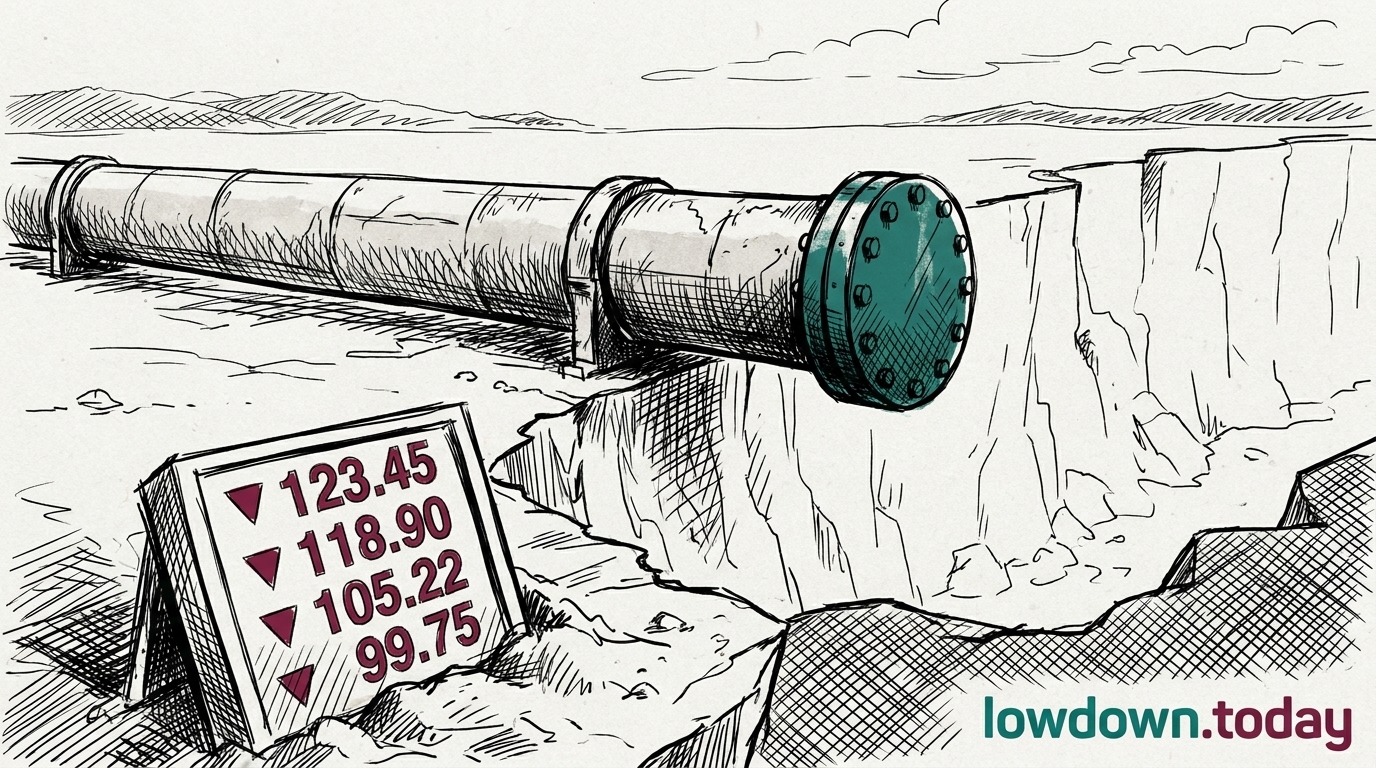
TTF front-month rose 13% to EUR 50.10 on 9 July on QatarEnergy's withdrawn volume, easing to 49.99 on 10 July; unlike June's diplomacy premium, this break rests on physical supply.

EconomicAssessed
Key takeaway

Withdrawn Qatari cargo, not sentiment, is holding TTF above EUR 50 this time.

TTF front-month climbed from 44.13 EUR/MWh on Monday 6 July to 46.58, 49.02 and 50.10 by Thursday 9 July, a four-session gain of roughly 13%, before easing to 49.99 on Friday 10 July 12. The benchmark last held above EUR 50 before the 17 June slide, when it settled 41.12 on ban-binding day and never snapped back .

That earlier EUR 50 was a diplomacy premium on Iran-Israel escalation risk to Gulf tanker routes, and it drained in a single session once the US-Iran memorandum was signed , after the prompt had already broken its EUR 46 floor selling into the ban on 15 June . This EUR 50 rests on withdrawn cargo instead: QatarEnergy has removed expected volume, so the move lacks the diplomatic off-ramp that emptied the June ceiling.

The Friday flattening deserves honest weight. One carrier was hit, not the Ras Laffan terminal itself, and a sceptical desk will file this alongside the 1 July tanker-headline pop that faded within a session. The counter is concrete: a headline reprices sentiment, but al-Kaabi's ramp-halt and the force majeure running to August pull real volume from the forward curve. A floor built on withdrawn cargo holds better than one built on risk sentiment, though neither proves the level survives an escort convoy re-forming.


Deep Analysis

In plain English

TTF is the main price traders use to buy and sell natural gas in Europe, similar to how oil has a benchmark price like Brent. It jumped from EUR 44 to just over EUR 50 for every megawatt-hour of gas in four trading days. The jump matters because it goes beyond traders reacting to worrying headlines, which is what happened the last time the price briefly passed EUR 50 earlier this year. This time an actual gas supplier, QatarEnergy, has genuinely reduced how much gas it is shipping. Less real gas on the market tends to keep prices higher for longer than a scare that later proves unfounded.

Deep Analysis
Root Causes

QatarEnergy's own withdrawal of Ras Laffan volume, rather than renewed Hormuz transit risk in general, is the physical driver behind the repricing: force majeure notices into August remove supply European buyers had priced in returning this summer.

A persistent Asia premium compounds the effect. The JKM-TTF spread has sat in the USD 1.4-2.4/MMBtu range through late June, below the roughly USD 2/MMBtu threshold that typically redirects spot cargoes toward Europe, meaning marginal LNG supply was already tilted toward Asian buyers before this week's withdrawal.

What could happen next?
  • Consequence

    Higher TTF settlements feed directly into CCGT-fired power costs across Germany and France, compounding the same-window rise in day-ahead electricity prices.

  • Risk

    If the rally proves durable rather than sentiment-driven, storage operators face a harder trade-off between paying up now and accepting a wider shortfall against the 80% November target.

First Reported In

Update #25 · Qatari LNG strike puts TTF back over EUR 50

Investing.com· 10 Jul 2026
Read original
Different Perspectives
Gulf oil producer
Gulf oil producer
Secured OPEC's confirmed 188,000 b/d September increment with the next meeting set for 6 September, but the Secretariat's own 2 August release says nothing about the fourth quarter. Output guidance beyond September remains undisclosed even as delegate sourcing keeps filling that gap.
Money manager positioned in WTI
Added 21,402 lots to a 108,307 net long in NYMEX WTI in the week to 28 July, against just 1,485 added to Brent's 15,740, a roughly fourteen-to-one split. Conviction sits in the American benchmark even as the European diesel story sets the record.
Indian refiner buying Urals
Bought Russian crude at a discount that narrowed to $1-2 a barrel in the week to 29 July from over $10, as Hormuz risk pushed it toward Urals. If that risk eases with the strike now called off, the discount it is currently enjoying could re-widen just as fast.
Russian diesel exporter
Novak tied any lifting of the diesel export ban, due to lapse 31 July, to an unspecified market recovery with no date, and pushed the gasoline ban to end-2026. An open-ended constraint suits an exporter benefiting from the record European crack it feeds.
War-risk underwriter
Withdrew war-risk cover for Saudi-linked hulls on 24 July and has not reinstated it, holding Bab el-Mandeb tanker transits near 7.5 a day. A cancelled strike does not by itself trigger the committee review needed to re-accept the class.
Northwest European refiner
Sources only 17% of diesel imports from Saudi Red Sea ports against the Mediterranean's 24%, so the ARA crack at $85.86 trails the Med print by $5.81. Lower Red Sea exposure is cushioning it against the rerouting cost, not eliminating it.



