Skip to content
You can now search across every topic, entity and event.What's new
European Oil Markets
18JUN

Brent recovers to $93.91 on deal delay

3 min read
12:45UTC

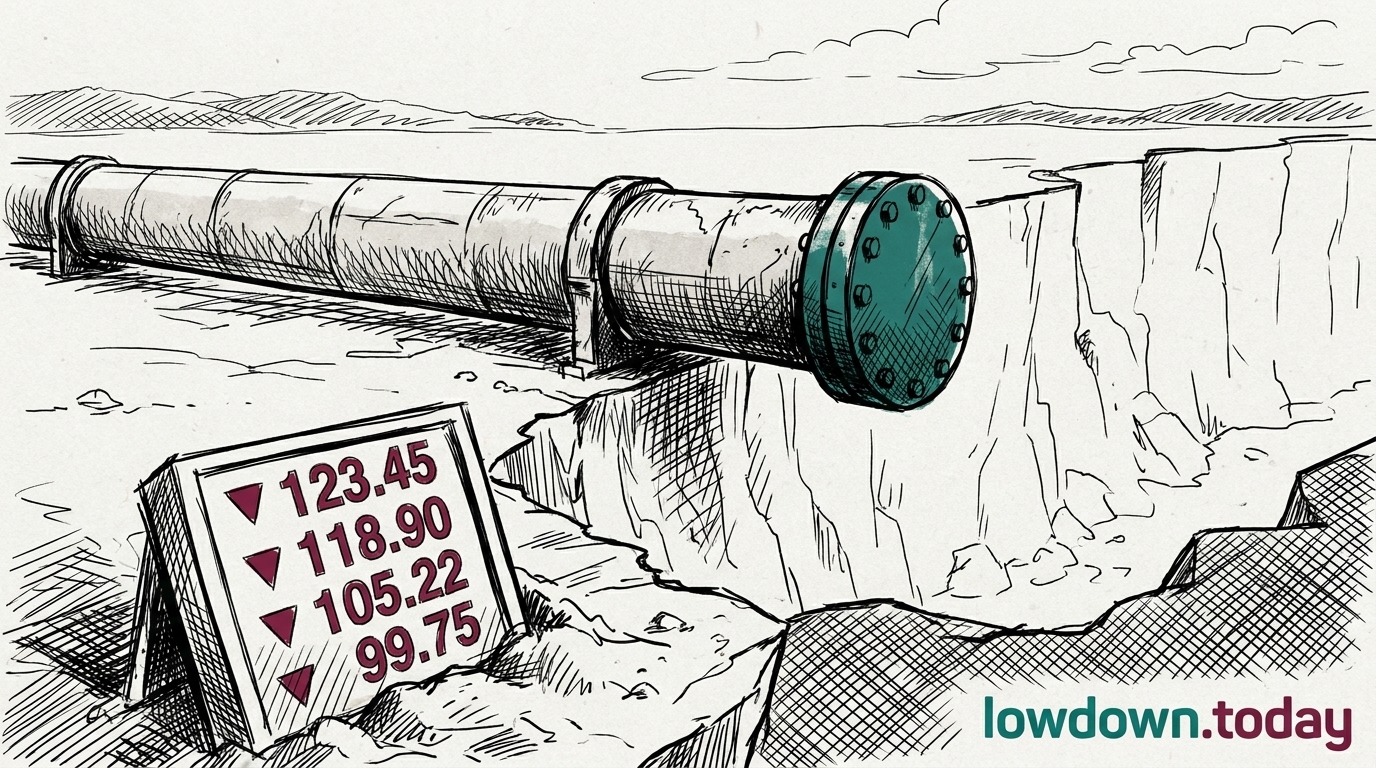
Brent crude opened Monday at $93.91, up 3.06%, holding above last week's floor and keeping its forward curve above spot, the market's verdict that the unsigned weekend was a delay rather than a rupture.

EconomicAssessed
Key takeaway

Brent's forward curve sits above spot, pricing sub-$100 oil as a temporary deal premium, not a new floor.

Brent Crude opened Monday 1 June at $93.91, up 3.06% from Friday's $91.12 close 1. Brent is the global oil benchmark against which most of the world's crude is priced, and its level encodes how seriously traders rate the risk that the strait of Hormuz closes. Monday's move recovered part of last week's losses without breaking either way: no collapse toward $90, no deal-failure surge toward $110.

The price held above the $92.05 floor set on 29 May , the bottom of a sell-off that ranked as Brent's worst monthly fall since the Covid shock. Holding that floor tells you the market read the unsigned weekend as a delay, not a rupture, the same reading that pulled Brent below $100 in late May as diplomatic optimism built .

The signal worth reading sits in the shape of the curve, not the spot price. The 12-month forward near $105 still sits above spot, which means traders are paying more for oil a year out than for oil today. That inversion prices sub-$100 Brent as a temporary deal premium, the discount the market awards while a settlement looks likely, rather than a new structural level. If the talks collapse, the premium unwinds and spot chases the forward upward; for now the curve says the deal is late, not dead.


Deep Analysis

In plain English

Oil traders pushed Brent crude to $93.91 a barrel on 1 June, a 3% jump from Friday's close. Oil had been falling for weeks as traders hoped a US-Iran deal would reopen the Strait of Hormuz to shipping, but no deal arrived over the weekend. Futures contracts for oil a year from now price at around $105, roughly $11 above today's spot price. That $11 gap represents the market's estimate of the economic cost of the current blockade: traders are still pricing in an eventual reopening.

What could happen next?
  • Opportunity

    The $11-13 spread between spot and 12-month forward Brent means any credible deal announcement would produce an immediate oil-price fall that delivers significant household cost relief across Europe and Asia.

  • Risk

    If the 2 June House vote on SJ Res 59 passes, oil traders may interpret it as signalling an imminent end to the US blockade regardless of the Iran deal status, triggering a Brent sell-off that would undercut US leverage in the MOU negotiations.

First Reported In

Update #114 · Two parliaments, one war neither can govern

Trading Economics· 1 Jun 2026
Read original
Different Perspectives
Gulf oil producer
Gulf oil producer
Secured OPEC's confirmed 188,000 b/d September increment with the next meeting set for 6 September, but the Secretariat's own 2 August release says nothing about the fourth quarter. Output guidance beyond September remains undisclosed even as delegate sourcing keeps filling that gap.
Money manager positioned in WTI
Added 21,402 lots to a 108,307 net long in NYMEX WTI in the week to 28 July, against just 1,485 added to Brent's 15,740, a roughly fourteen-to-one split. Conviction sits in the American benchmark even as the European diesel story sets the record.
Indian refiner buying Urals
Bought Russian crude at a discount that narrowed to $1-2 a barrel in the week to 29 July from over $10, as Hormuz risk pushed it toward Urals. If that risk eases with the strike now called off, the discount it is currently enjoying could re-widen just as fast.
Russian diesel exporter
Novak tied any lifting of the diesel export ban, due to lapse 31 July, to an unspecified market recovery with no date, and pushed the gasoline ban to end-2026. An open-ended constraint suits an exporter benefiting from the record European crack it feeds.
War-risk underwriter
Withdrew war-risk cover for Saudi-linked hulls on 24 July and has not reinstated it, holding Bab el-Mandeb tanker transits near 7.5 a day. A cancelled strike does not by itself trigger the committee review needed to re-accept the class.
Northwest European refiner
Sources only 17% of diesel imports from Saudi Red Sea ports against the Mediterranean's 24%, so the ARA crack at $85.86 trails the Med print by $5.81. Lower Red Sea exposure is cushioning it against the rerouting cost, not eliminating it.



