Skip to content
You can now search across every topic, entity and event.What's new
European Oil Markets
15JUN

EU's 21st sanctions package stalls again

1 min read
11:33UTC

The EU's 21st Russia sanctions package failed to clear Coreper on 15 July. Greece wants LNG re-export rights preserved; Austria wants a Deripaska-linked firm delisted.

EconomicDeveloping
Key takeaway

Watch which carve-outs make the final text, not whether the twenty-first package clears.

The European Union's 21st Russia sanctions package failed to clear Coreper, the committee of member states' permanent representatives in Brussels, on 15 July, with negotiators setting a new target of 22 July rather than letting it slip to autumn 1. Greece wants to preserve re-export rights for Russian liquefied natural gas. Austria wants Rasperia, an investment firm linked to the sanctioned aluminium magnate Oleg Deripaska, removed from the list so that frozen assets can be used to compensate Raiffeisen Bank International.

Neither objection is an argument about whether to pressure Moscow. Both are domestic commercial interests: Greek shipping's role in moving cargoes that pass through Europe rather than remaining in it, and Raiffeisen's search for compensation against its Russian exposure. Sanctions packages pass by unanimity, so a commercial interest in one member state carries the same stopping power as a strategic objection in another.

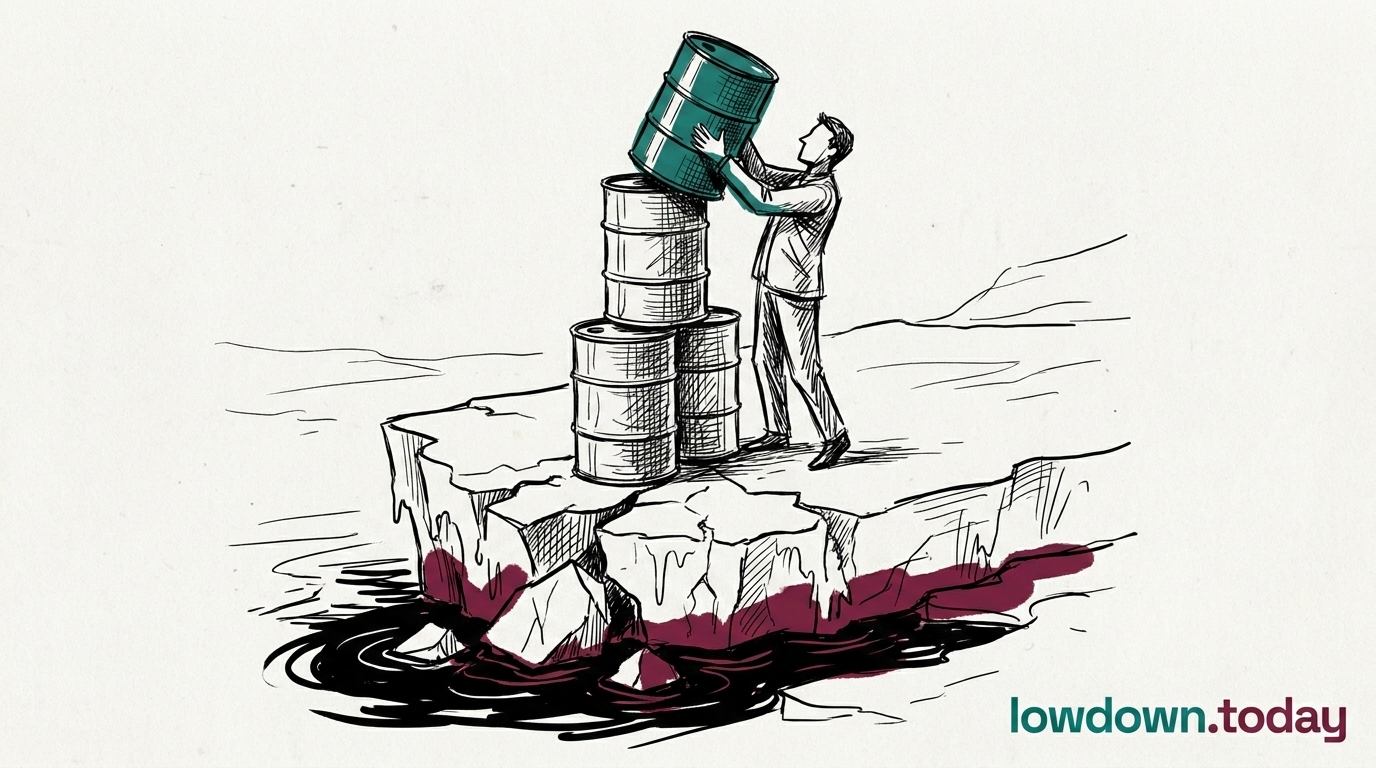
Each round of unanimity leaves its mark on the text. Holdouts extract a carve-out, the carve-out persists into later packages because reopening settled wording costs another round of unanimity, and the enforcement surface narrows even as the number on the package climbs. Brussels has been tightening on paper while Washington has been loosening in practice, most recently by letting its crude oil waiver lapse unrenewed . Whether Greece's LNG exemption and Austria's Rasperia demand survive into the final wording is the part worth watching on 22 July, not whether the package passes.


Deep Analysis

In plain English

The European Union tries to pass new rounds of sanctions against Russia as a package, and this one, the 21st since the war began, failed to get the votes it needed at a meeting in Brussels on 15 July. Two countries are blocking it for different reasons: Greece wants to keep the right to re-export Russian liquefied natural gas to other countries, and Austria wants a specific investment firm removed from the sanctions list so its frozen assets can be used to compensate an Austrian bank that lost money doing business with it. EU sanctions need every member country to agree, so either objection alone is enough to stop the whole package. A new vote is set for 22 July.

Deep Analysis
Root Causes

The package's two holdouts trace to different national exposures rather than a shared objection: Greece's shipping industry depends on revenue from re-exporting Russian LNG to third countries, while Austria's block is a compensation mechanism for Raiffeisen Bank International's frozen Russian exposure via Rasperia. Clearing the package therefore requires satisfying two unrelated national balance-sheet problems, not resolving one disputed principle.

Each objection is solvable in isolation (a carve-out for Greek re-export rights, a delisting tied to specific compensation terms for Austria), but EU sanctions require unanimity, so either holdout alone is enough to stall the whole 21st package regardless of how narrow its underlying demand is.

First Reported In

Update #24 · Fedorov sacked as the front stands still

Global Sanctions· 19 Jul 2026
Read original
Causes and effects
This Event
EU's 21st sanctions package stalls again
Two national carve-outs, neither about Russia policy, are holding an entire package.
Different Perspectives
Sanctions compliance officer reviewing a Lukoil International GmbH bid
OFAC's amended FAQ 1224 gives a compliance desk its first published standard: full severance from Lukoil and a US-jurisdiction blocked account for sale proceeds. The conditions name neither ISAB nor Italy, so a Priolo Gargallo-linked bid answers a different question than a Neftochim Burgas or Petrotel Ploiesti one.
Managed-money funds on Brent Last Day
CFTC data for the week to 21 July showed managed money flipping 74,400 contracts to a net long of 15,665 against 1,410 short on the Brent Last Day contract, code 06765T. A fund that held that short through July has now covered it, and the spent short base raises the bar for the next leg higher.
Saudi crude exporters
Saudi-linked tanker transits through Bab el-Mandeb fell to about 7.5 a day after the 24 July underwriting withdrawal, pushing more barrels onto the longer route round the Cape or through the Yanbu terminal. Every diverted barrel ties up a ship for longer, and a fleet that turns slower charges more.
Tanker owners on the Bab el-Mandeb route
Lloyd's-market syndicates withdrew war-risk cover from Saudi-linked hulls on 24 July, leaving owners of that class of vessel to sail Bab el-Mandeb uninsured or not at all. Tanker transits on the route fell to roughly 7.5 a day, and cover, once withdrawn, does not return on a shipowner's timetable.
Eni
Eni
Eni's board approved second-quarter results on 29 July, swinging refining EBIT to a EUR0.08bn profit from a year-earlier loss even as group profit doubled, and named Red Sea freight cost as a cap on that improvement. A refiner absorbing higher shipping costs on Saudi-linked crude while its numbers improve treats the freight line as a drag, not a crisis.
Asian buyers (India, Japan, China, South Korea)
Asian refiners are absorbing 62% of Yanbu's 3.75m b/d flow, the bulk of Saudi Arabia's rerouted crude now clearing east rather than into the Atlantic basin. That destination split leaves Asian buyers more exposed to any single Yanbu-specific disruption than under the kingdom's normal multi-terminal export pattern.



