Skip to content
Briefings are running a touch slower this week while we rebuild the foundations.See roadmap
European Oil Markets
4JUN

Brent sub-$95 prices a different market

3 min read
10:20UTC

Brent fell below $95 in the 28-29 May window on reports of a US-Iran ceasefire extension, with WTI near $92-93 and Brent-WTI compressed to roughly $2-3.

EconomicDeveloping
Key takeaway

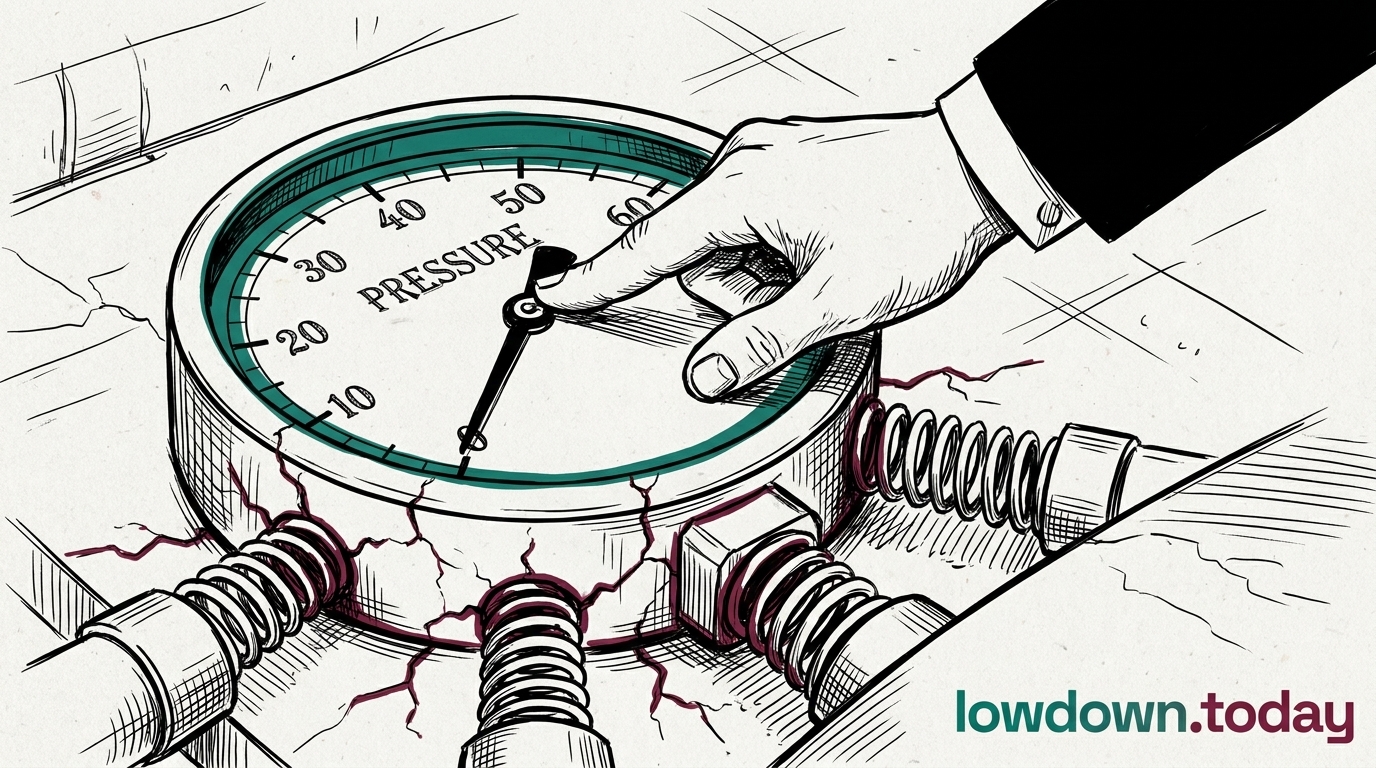
The screen prices the Iran ceasefire while the cracks price a physical shortage; the two are now reading different markets.

Brent fell below $95 in the 28-29 May window on reports of a US-Iran ceasefire extension awaiting Trump's sign-off, with WTI near $92-93 and the Brent-WTI spread compressed to roughly $2-3 1. The $14 move itself was the 26 May story ; the new element is that the screen kept leaking on ceasefire headlines while OFAC loaded GL 131F and the Iran SDN action underneath it on the same day.

The flat price and the light-sweet spread are unwinding the Hormuz risk premium. The product cracks are not, because they price barrels that are physically short rather than a war-risk option . The two are now reading different markets: the screen prices ceasefire optionality, the cracks price the inventory deficit, and a desk can be long the crack and short the flat-price premium without contradiction.

Saudi Arabia is expected to cut the July Arab Light OSP to Asia for a second straight month, per Reuters, with the official sheet due circa 1-5 June and not yet published 2. If the Asia cut lands, Asian refiners keep their Russian and Iranian discounts and more Gulf sour competes into Europe, which would press Med sour differentials and the Urals discount lower. Aramco has not published, so the cut belongs in the watch column as an expectation, not a print.


Deep Analysis

In plain English

Brent crude is the global benchmark price for oil, used as a reference for most crude sold outside North America. WTI (West Texas Intermediate) is the US benchmark. Normally Brent trades $3-5 per barrel above WTI because of quality and transport differences. This week, Brent fell below $95 and the gap between Brent and WTI compressed to only $2-3, its narrowest since 2020. The price fell because news reports suggested a ceasefire between the US and Iran might be extended, which would mean Iranian oil could eventually return to global markets and ease supply. But the physical market for diesel and other refined products tells a different story: stocks at European storage hubs just hit a 12-year low, meaning there is not enough product to go around. So the screen price (what traders pay for future oil) and the real-world price (what refiners pay for products) are moving in opposite directions, which usually does not last.

What could happen next?
  • Risk

    Brent-WTI at $2-3/bbl is below the structural transport-cost differential; if Cushing-to-Gulf pipeline economics reassert, WTI reprices up or Brent reprices down to restore the spread, adding volatility to both benchmarks.

    Immediate · Assessed
  • Consequence

    A crack-to-flat-price ratio above 55% on a $95 Brent base historically precedes either demand destruction in diesel (reducing the draw rate) or a flat-price recovery as refiner purchasing drives crude demand; either resolves the current divergence.

    Short term · Assessed
  • Opportunity

    The divergence between the falling flat price and the firm crack creates an opportunity to enter long crack spreads: buy product forward, sell crude, and capture the basis if physical shortage forces flat-price recovery.

    Immediate · Suggested
First Reported In

Update #3 · OFAC loads a June squeeze the screen ignores

Trading Economics (Reuters synthesis)· 29 May 2026
Read original
Different Perspectives
Kazakhstan (Tengiz / CPC pipeline operators)
Kazakhstan's 322kbd Tengiz overage runs on the CPC pipeline, which bypasses the Gulf, making it structurally durable and effectively quota-exempt within the cartel. The Tengiz expansion reached plateau production in early 2026 and cannot be throttled without reservoir damage, setting a precedent for infrastructure-forced overproduction as an OPEC+ carve-out.
NWE sell-side macro desk
The divergence between sub-$97 Brent and a crack near $54 is the structural trade: long the crack against crude, with the June OFAC calendar as convexity on top. With the WTI unwind complete and Brent-WTI at $2 with no mechanical compressor, the Brent-WTI spread carries cheap optionality on the three June dates rather than a directional flat-price call.
Italian government / ISAB / Priolo Gargallo operators
Six GL rollovers without a completed ISAB sale leave the 320kbd Sicilian refinery under a sanctions-perimeter procurement overhang; the Italian Golden Power review has no confirmed timeline and can block the Ludoil deal independently of OFAC. Rome secured a 30-day EU derogation for ISAB in 2012 and is expected to seek one again if 27 June approaches.
Chinese state refiners (CNPC / Sinopec)
Chinese seaborne crude imports ran at a decade-low 6.78mbd in May as refining margins stayed negative near -$2/bbl, with state refiners drawing on onshore strategic stocks rather than buying at $90-plus Brent. The demand hole, not a reopened Hormuz, compressed the Brent-Dubai EFS off its $6-plus peak; restart signal is margin recovery above $3-5/bbl.
EU Council sanctions directorate
Brussels adopted its 21st sanctions package on 26 May targeting shadow-fleet tanker listings and bank financing rather than revising the G7 price cap, a doctrine that routes pressure through freight and financing costs rather than cap arithmetic. The EU's approach compounds OFAC's tonnage drain without requiring G7 consensus on a new cap number.
US Treasury / OFAC
US Treasury / OFAC
OFAC has issued no GL 134D rollover as of 04 June, leaving a 13-day cliff on the Russian vessel-services umbrella while simultaneously running a negotiation-only clock on the ISAB divestiture to 27 June. The dual-deadline architecture, authorise-without-compelling on the Russian refinery track while closing Iranian buyer legs, is OFAC's deliberate June compliance design.