Skip to content
You can now search across every topic, entity and event.What's new
European Oil Markets
1JUN

Iran's deal-signer cannot be reached at speed

3 min read
09:19UTC

Trump's team says the framework was approved at the highest level of Iranian leadership. That level is a Supreme Leader unseen since March who answers only by courier.

EconomicAssessed
Key takeaway

Iran's command was rebuilt to fight without a single signer, which is exactly what a deal needs.

Trump's team said the MoU (memorandum of understanding) framework was "approved at the highest level of Iranian leadership". That level is Supreme Leader Mojtaba Khamenei, who has not appeared in public since 8 March and is reachable only by handwritten message in a sealed envelope, carried by courier with a three-to-five-day lag 1.

The day before, analysts assessed that the IRGC (Islamic Revolutionary Guard Corps), not Khamenei, holds day-to-day war authority, with no memorandum response recorded from the top . So the approval claim collides with the command structure. A framework cleared "at the highest level" inside the signing window Trump describes would have to pass a decision node that needs days to deliver a single letter, while the corps runs the kinetic war in the meantime.

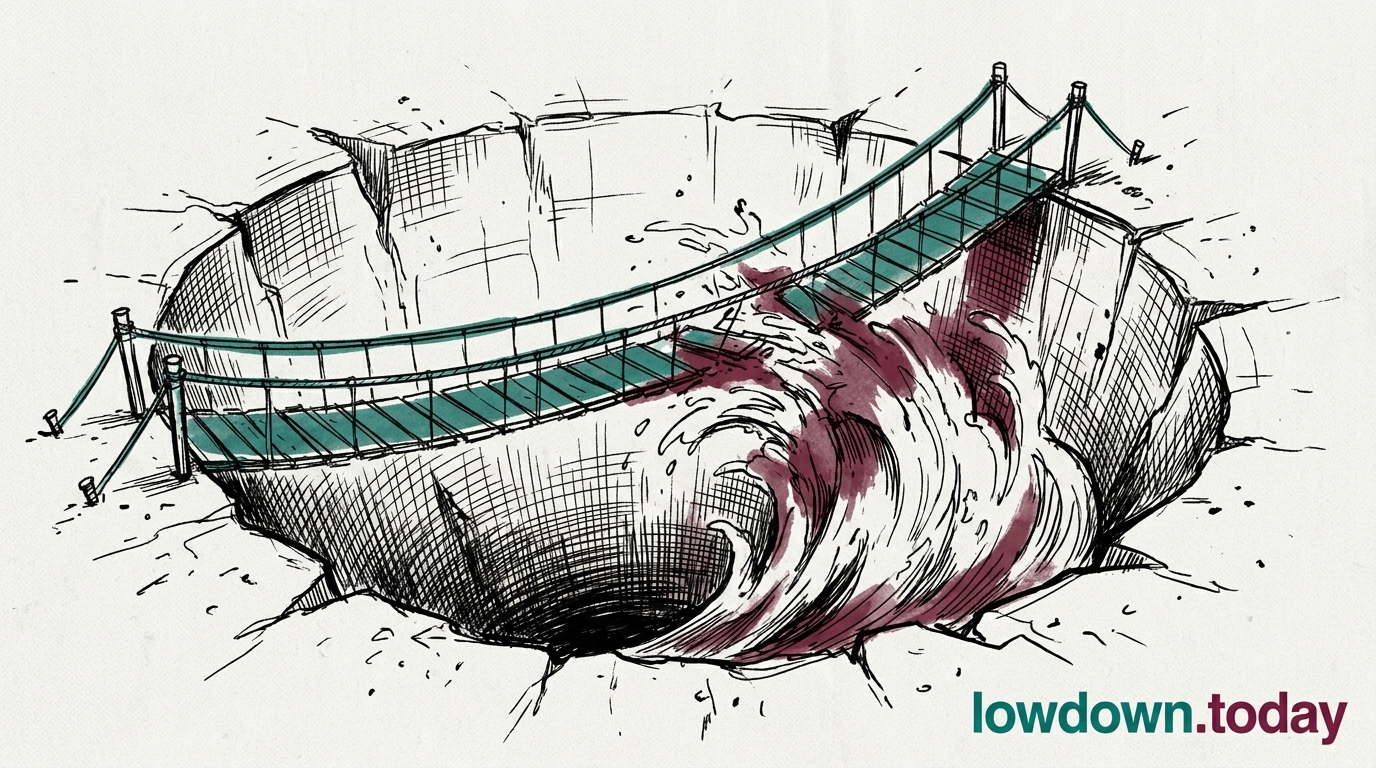
Iran's wartime command was deliberately decentralised after the February decapitation, devolving launch authority to provincial units and leaving the state with no single ratifying voice the war machine was redesigned to do without. Either someone other than Mojtaba approved the text, or the word "approved" is doing lighter work than it implies. Until the IRGC itself comments, the claim cannot be verified at deal speed.


Deep Analysis

In plain English

Iran's supreme leader is a man named Mojtaba Khamenei, who has not been seen in public since early March 2026. He only receives messages by handwritten letter, and replies take three to five days to arrive. Trump's team said Khamenei approved the deal, but getting his actual signature within a few days is physically very difficult given that constraint. Iran's military force, the IRGC, has been running the war day-to-day and making its own decisions independently of the supreme leader. Think of it as a situation where the president has gone quiet and the army has taken over the daily running of the war. A deal needs the president's signature, but the army is not the president.

Deep Analysis
Root Causes

Mojtaba Khamenei's installation as supreme leader on 7 March 2026 came under IRGC pressure, with at least eight Assembly of Experts members boycotting the vote citing his lack of the marja theological credentials required under Article 109 of Iran's constitution. His authority is therefore contested at its constitutional source, making it structurally difficult for him to issue binding commands over a corps that effectively installed him.

The Decentralised Mosaic Defence doctrine, activated on 28 February 2026, deliberately distributed launch authority to provincial IRGC units to prevent command decapitation from halting operations. That architecture is operationally correct for surviving a US-Israeli strike campaign. It is functionally incompatible with a single ratifying authority confirming a negotiated text at the speed of a weekend signing window.

Escalation

The command-split dynamic introduced by Khamenei's inaccessibility and the IRGC's autonomous authority is the single most likely mechanism by which a genuine deal collapses without either side formally rejecting it. No escalation signal is present on 12 June specifically, but the structural gap remains unchanged.

What could happen next?
  • Risk

    If the IRGC publicly disowns the MoU framework, Trump's 'approved at the highest level' claim collapses, and any signed text becomes politically unenforceable on the Iranian side regardless of civilian signature.

    Immediate · Assessed
  • Consequence

    A weekend signing would require either a pre-cleared mandate from Khamenei communicated days before Trump's announcement, or a proxy signer whose authority the IRGC would need to publicly accept. Neither scenario has been publicly confirmed.

    Immediate · Assessed
  • Risk

    The constitutional illegitimacy of Khamenei's appointment means any deal he signs may face future repudiation by hardline IRGC factions that contested the succession, a structural fragility that outlasts the immediate signing window.

    Long term · Suggested
First Reported In

Update #125 · Trump halts strikes, touts deal Iran denies

CBS News· 12 Jun 2026
Read original
Different Perspectives
Indian refiners
Indian refiners
Indian refiners kept lifting discounted Urals as the India/Baltic price split widened past $9-10 a barrel, a gap that only grows as GL X1's Iranian wind-down cuts an alternative discounted grade off the market by 17 July. Cheaper Russian feedstock is being locked in while it lasts.
Chinese refiners
Chinese refiners
Chinese refiners gain leverage as the Urals-Brent discount widens, since Beijing's state buyers already source discounted Russian barrels near the fiscal floor unaffected by Western insurance costs. A wider discount, if it holds past 23 July, lets them lock in cheaper term contracts regardless of the cap's outcome.
US money managers (CFTC-tracked)
Managed money trimmed WTI net length into the rally, positioning that reflects doubt the Hormuz premium survives without freight or war-risk confirmation. The Brent-WTI spread widening almost entirely on the Brent leg supports that scepticism about a broad-based repricing.
OPEC+ (Saudi-led subgroup)
Saudi Arabia is defending market share through a fourth straight 188kbd August hike even as OPEC's own July MOMR cut 2026 demand growth for the fourth consecutive month. At a $108-111 fiscal breakeven, every added barrel costs Riyadh revenue it cannot recoup, so the hike reads as a positioning signal, not a demand bet.
Greek shipping registries
Greece, backed by Cyprus and Malta, is pushing a three-month cap-freeze compromise against the Commission's freeze to January 2027 ahead of the 23 July vote. Athens' and Valletta's combined tanker registrations mean a shorter review gives their insurers more frequent chances to reprice risk on Russian cargoes.
Russia (Deputy PM Alexander Novak)
Novak extended the diesel export restriction to producers on 8 July, the first producer-binding curb of the war, protecting the domestic pump price ahead of any refinery repair timeline. Urals still trades below Russia's $59 budget floor even as Brent gained, so the ban trades export revenue for fiscal stability at home.