Skip to content
You can now search across every topic, entity and event.What's new
European Oil Markets
29MAY

Moscow bans its own diesel exports

3 min read
14:36UTC

Alexander Novak announced on 8 July that Russia would halt all diesel exports until 31 July, the first such decree of the war to bind producers as well as traders.

EconomicDeveloping
Key takeaway

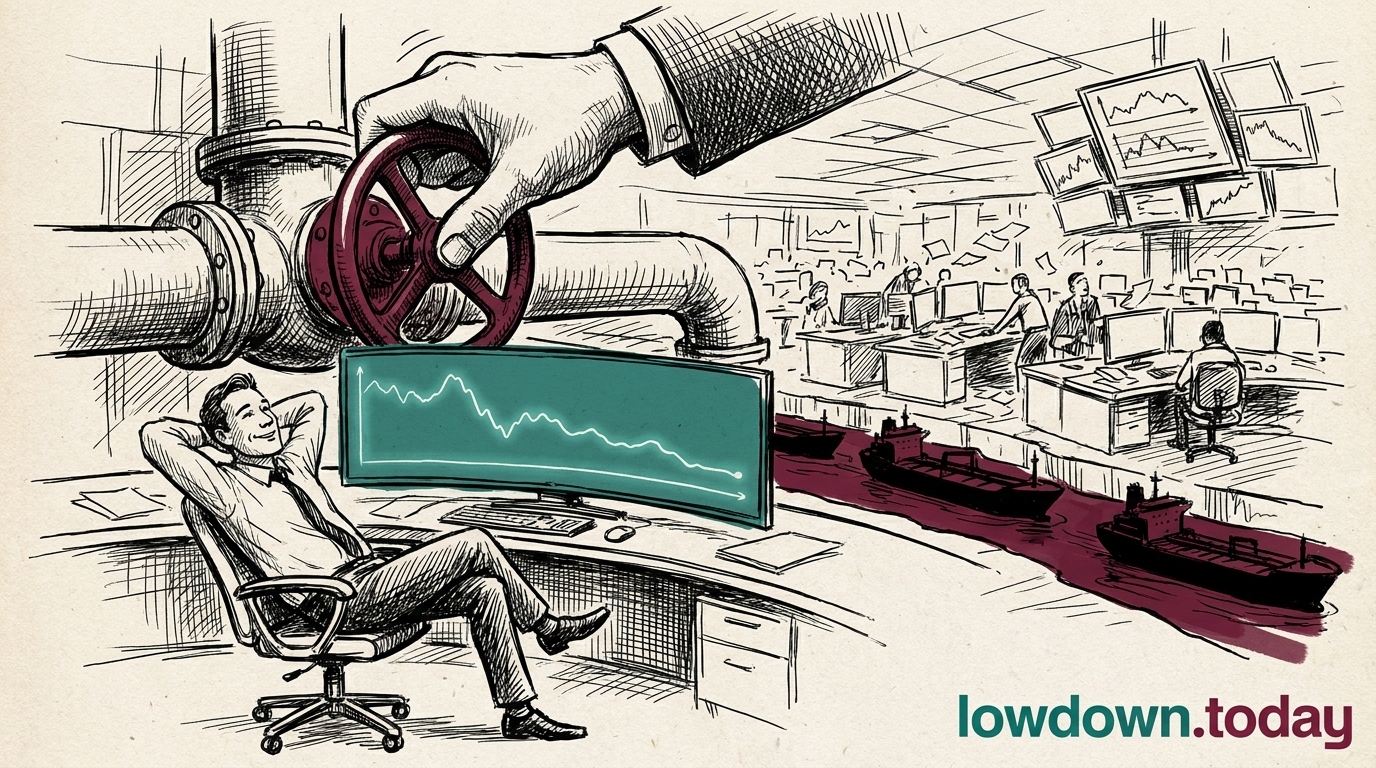
Russia banned its own diesel exports until 31 July, choosing domestic pumps over the revenue those cargoes earned.

Deputy Prime Minister Alexander Novak announced on 8 July that Russia would halt all diesel exports abroad until 31 July, in a televised meeting chaired by Vladimir Putin 1. Russia is the world's second-largest diesel exporter behind the United States, and for the first time the decree binds producers as well as the traders that earlier bans left free to sell. Two weeks earlier Novak had told Putin fuel supply was under control as fifteen regions rationed petrol ; days after that Putin admitted the fuel-station queues in public for the first time .

The decree protects domestic pumps at the cost of export earnings. Turkey and Brazil together take at least half of Russia's diesel cargoes, and both lose access until the ban lapses 2. It formalises a fall already under way: seaborne diesel exports had dropped 39% month-on-month in June before the order was signed 3. Global benchmark diesel prices rose almost 13% on the announcement, a cost that reaches hauliers and farmers well beyond Russia 4.

Russia steadied fuel shortages with rhetoric through 2023 and 2024, when temporary bans targeted grey-market traders and left producers free to export. Extending this decree to producers removes the last legal channel keeping cargoes moving, which is why it reads as forced rather than routine seasonal management. Moscow is now rationing its own exports by law, a step it deferred for two years.


Deep Analysis

In plain English

Russia relies on selling diesel abroad for revenue, but its refineries have been hit by Ukrainian drone strikes and cannot make enough fuel for both export and home use. On 8 July, Deputy Prime Minister Alexander Novak announced a total ban on diesel exports until 31 July, and for the first time the ban covers the oil companies that make the fuel as well as the traders who sell it abroad. This matters because Russia is normally the world's second-largest diesel exporter. Cutting off that supply pushed global diesel prices up 13% overnight, and countries like Turkey and Brazil that relied on cheap Russian cargoes now have to look elsewhere.

Deep Analysis
Root Causes

The ban follows directly from a capacity problem, not a policy choice made from strength. Ukrainian strikes on the Kapotnya (18 June) and Tyumen (20 June) refineries cut into the same processing capacity that supplies both export cargoes and domestic pumps, and CREA recorded oil-product loadings at a record low in June even as revenue rose 14% month on month on tighter global supply.

Binding producers as well as traders closes the specific mechanism refiners had been using to keep exporting during the domestic shortage: selling to intermediary trading houses that were not covered by the narrower June restriction. With no spare refining capacity to route around the strikes, Moscow's only remaining lever was to widen who the ban applies to, not how long it lasts.

What could happen next?
  • Consequence

    Turkey and Brazil, previously absorbing at least half of Russia's diesel cargoes, must source replacement volumes from other exporters for the duration of the ban.

  • Meaning

    Extending the restriction to producers signals Moscow has exhausted the trader-level workaround it relied on during the narrower June jet-fuel ban.

First Reported In

Update #23 · Moscow rations diesel as US cover lapses

The Moscow Times· 13 Jul 2026
Read original
Different Perspectives
Indian refiners
Indian refiners
Indian refiners kept lifting discounted Urals as the India/Baltic price split widened past $9-10 a barrel, a gap that only grows as GL X1's Iranian wind-down cuts an alternative discounted grade off the market by 17 July. Cheaper Russian feedstock is being locked in while it lasts.
Chinese refiners
Chinese refiners
Chinese refiners gain leverage as the Urals-Brent discount widens, since Beijing's state buyers already source discounted Russian barrels near the fiscal floor unaffected by Western insurance costs. A wider discount, if it holds past 23 July, lets them lock in cheaper term contracts regardless of the cap's outcome.
US money managers (CFTC-tracked)
Managed money trimmed WTI net length into the rally, positioning that reflects doubt the Hormuz premium survives without freight or war-risk confirmation. The Brent-WTI spread widening almost entirely on the Brent leg supports that scepticism about a broad-based repricing.
OPEC+ (Saudi-led subgroup)
Saudi Arabia is defending market share through a fourth straight 188kbd August hike even as OPEC's own July MOMR cut 2026 demand growth for the fourth consecutive month. At a $108-111 fiscal breakeven, every added barrel costs Riyadh revenue it cannot recoup, so the hike reads as a positioning signal, not a demand bet.
Greek shipping registries
Greece, backed by Cyprus and Malta, is pushing a three-month cap-freeze compromise against the Commission's freeze to January 2027 ahead of the 23 July vote. Athens' and Valletta's combined tanker registrations mean a shorter review gives their insurers more frequent chances to reprice risk on Russian cargoes.
Russia (Deputy PM Alexander Novak)
Novak extended the diesel export restriction to producers on 8 July, the first producer-binding curb of the war, protecting the domestic pump price ahead of any refinery repair timeline. Urals still trades below Russia's $59 budget floor even as Brent gained, so the ban trades export revenue for fiscal stability at home.