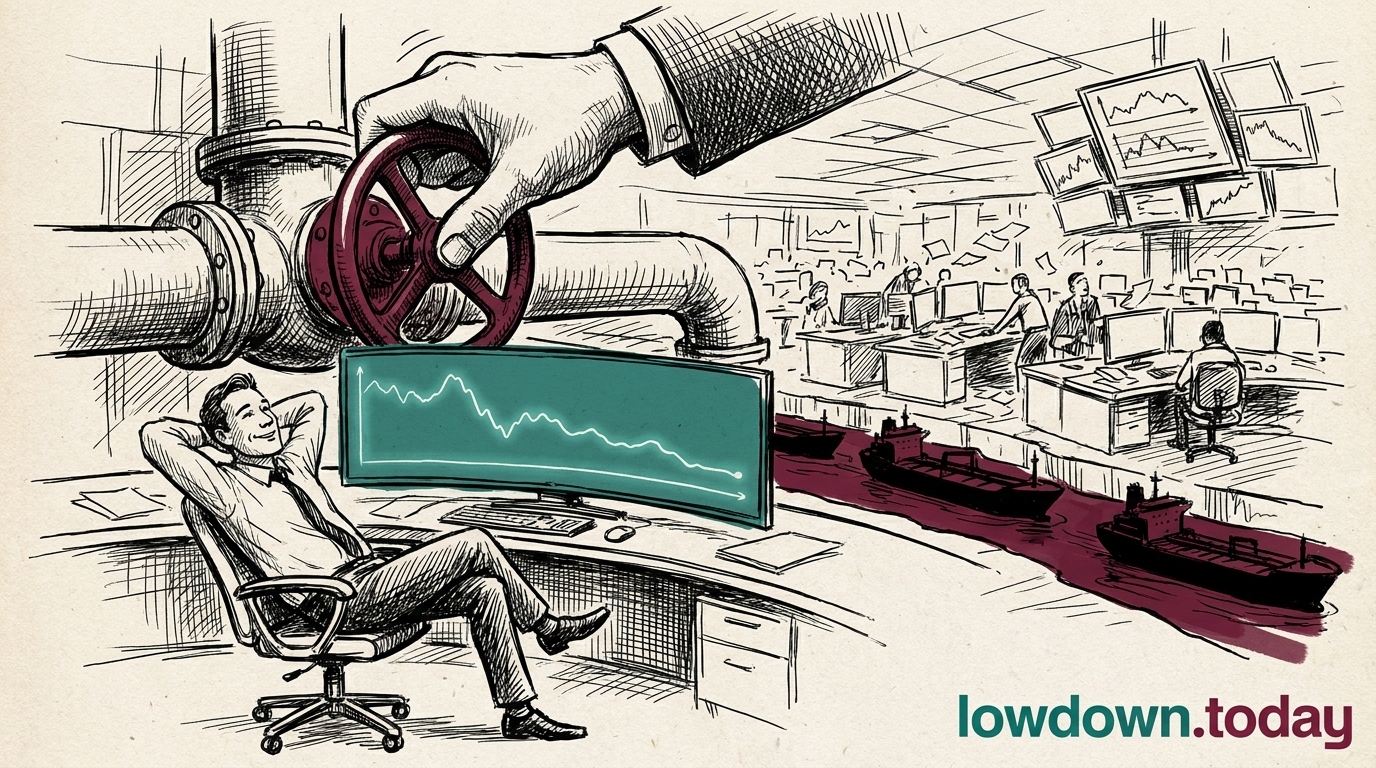
ASML raised its full-year 2026 guidance to €43-45bn on 15 July, its second increase in two quarters, and dropped the export-control language it had written into Q1 guidance. The Dutch firm in Veldhoven builds the lithography machines every advanced chipmaker depends on, and it has gone quiet on the risk that defined its previous quarter. None of the added strength reaches a European leading-edge fab. 1
The quarter beat expectations: €9.3bn in net sales, a 54.0% gross margin, €2.9bn of net income, and 86 lithography systems sold, up from 67 in Q1. The earlier Q1 range of €36-40bn had sat €300m below analyst consensus . In that first-quarter release, chief executive Christophe Fouquet wrote that guidance "accommodates potential outcomes of ongoing discussions around export controls", a line that wrote Washington's trade policy into ASML's forward numbers. The Q2 release and earnings call carried no such hedge, even with the MATCH Act, the US bill to govern ASML's deep ultraviolet (DUV) lithography sales to China, live in Congress since 24 June . 2
Fouquet attributed the raise to demand for advanced logic and memory chips, the processors that train and run AI systems. China guided at roughly 20% of full-year sales, close to Q1's 19% and far below the 36% of late 2025, so the collapse that defined the Q1 story has stabilised rather than deepened. ASML is adding 30% to its 2026 low-numerical-aperture (low-NA) extreme ultraviolet (EUV) capacity, from about 65 units to about 85, for delivery in 2027, with matching expansion under study for its DUV immersion tools.
Those tools serve the fabs that already lead the world: TSMC in Taiwan, Samsung in South Korea and US plants in Arizona. No new European leading-edge fab has been announced to receive them. ASML builds the tools; the most advanced chips get printed elsewhere, and an order book running well ahead of last year does nothing to close that distance .





