Skip to content
You can now search across every topic, entity and event.What's new
European Oil Markets
3AUG

FDD: oil licence has no enforcement

3 min read
09:56UTC

The Foundation for Defense of Democracies found that General License X carries no escrow, no value cap, no buyer list and no reporting, functioning as a 60-day safe harbour for Chinese refiners.

EconomicDeveloping
Key takeaway

General License X has no escrow, cap or reporting, mostly legalising the Chinese purchases already under way.

The Foundation for Defense of Democracies (FDD), a Washington think tank focused on Iran sanctions, found that General License X carries no escrow mechanism, no value cap, no approved-buyer list and no transaction reporting requirement 1. The licence is the OFAC instrument Treasury Secretary Bessent signed on 22 June , the first oil-relief paper of the war after 116 days of sanctions.

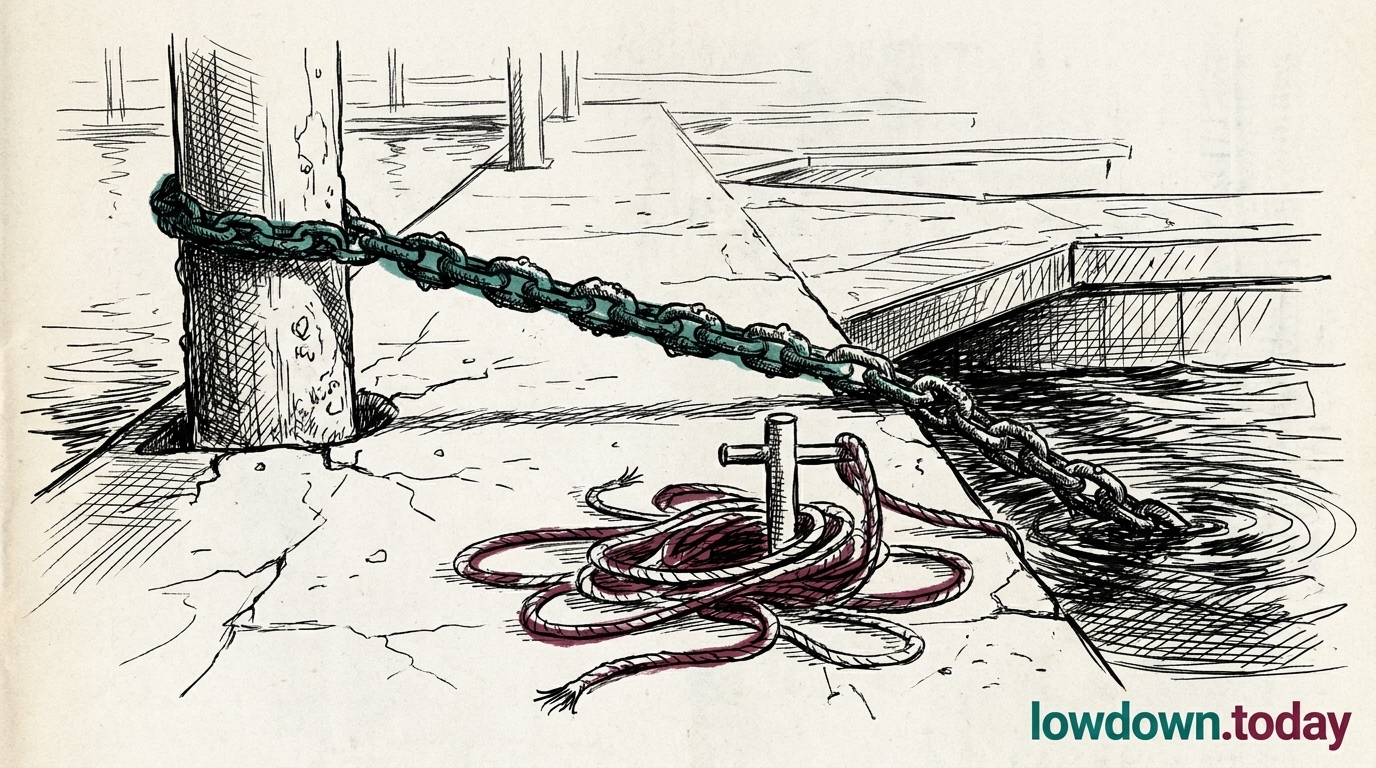
That absence of architecture changes what the licence does. Rather than relief for Iran, the FDD reads it as a 60-day safe harbour for the Chinese refiners and banks already buying Iranian crude through workarounds: it legalises the trade that was happening anyway, without recording who buys, how much, or at what price.

The revenue at stake makes the gap consequential. The FDD estimated roughly one-third of Iran's annual oil income, about $12.4 billion, flows to the IRGC and the armed forces, the same actors holding the nuclear file shut. No bank or trader had publicly disclosed a transaction under the licence as of 23-24 June. The signed paper exists; the enforcement that would make it accountable does not.


Deep Analysis

In plain English

On 22 June, the US Treasury issued a document called General License X, which allowed Iranian oil to be sold legally on international markets for 60 days. The Foundation for Defense of Democracies; a Washington think tank that monitors Iran sanctions; examined the document and found it had no safeguards: no limit on how much oil could be sold, no list of approved buyers, no requirement to report transactions, and no account held in escrow to ensure the money goes where it should. In practice, this means China; the main buyer of Iranian oil; can continue buying it through the same workaround channels it has used for years, now with a legal cover rather than sanctions risk. Roughly one-third of Iran's oil income, about $12.4 billion per year, goes to the IRGC (the country's powerful ideological military force). The licence does not prevent that from continuing.

Deep Analysis
Root Causes

GL X's lack of enforcement architecture reflects a tension inside the US sanctions regime that has existed since 2019: the secondary-sanctions threat against Chinese crude buyers was never enforced because designating Chinese state-owned refiners would trigger a full economic confrontation the Trump administration chose to avoid.

The FDD finding that roughly one-third of Iran's oil revenues (~$12.4bn) flows to the IRGC and armed forces was known at the time of GL X's drafting. The licence provides a market-price signalling benefit (Brent falling toward $76) without requiring the political cost of secondary sanctions to enforce Iranian compliance.

First Reported In

Update #137 · Iran and Oman claim the strait; US says no

Foundation for Defense of Democracies· 24 Jun 2026
Read original
Different Perspectives
Gulf oil producer
Gulf oil producer
Secured OPEC's confirmed 188,000 b/d September increment with the next meeting set for 6 September, but the Secretariat's own 2 August release says nothing about the fourth quarter. Output guidance beyond September remains undisclosed even as delegate sourcing keeps filling that gap.
Money manager positioned in WTI
Added 21,402 lots to a 108,307 net long in NYMEX WTI in the week to 28 July, against just 1,485 added to Brent's 15,740, a roughly fourteen-to-one split. Conviction sits in the American benchmark even as the European diesel story sets the record.
Indian refiner buying Urals
Bought Russian crude at a discount that narrowed to $1-2 a barrel in the week to 29 July from over $10, as Hormuz risk pushed it toward Urals. If that risk eases with the strike now called off, the discount it is currently enjoying could re-widen just as fast.
Russian diesel exporter
Novak tied any lifting of the diesel export ban, due to lapse 31 July, to an unspecified market recovery with no date, and pushed the gasoline ban to end-2026. An open-ended constraint suits an exporter benefiting from the record European crack it feeds.
War-risk underwriter
Withdrew war-risk cover for Saudi-linked hulls on 24 July and has not reinstated it, holding Bab el-Mandeb tanker transits near 7.5 a day. A cancelled strike does not by itself trigger the committee review needed to re-accept the class.
Northwest European refiner
Sources only 17% of diesel imports from Saudi Red Sea ports against the Mediterranean's 24%, so the ARA crack at $85.86 trails the Med print by $5.81. Lower Red Sea exposure is cushioning it against the rerouting cost, not eliminating it.



