Skip to content
You can now search across every topic, entity and event.What's new
European Oil Markets
31JUL

India's Chabahar waiver lapses on Sunday

4 min read
09:33UTC

India's only sanctions exemption for its Iranian port investment expires at 00:01 EDT on Sunday 26 April. No substitute text has been published.

EconomicDeveloping
Key takeaway

Three India-US-Iran pressure points converge on one desk before Sunday's waiver lapse.

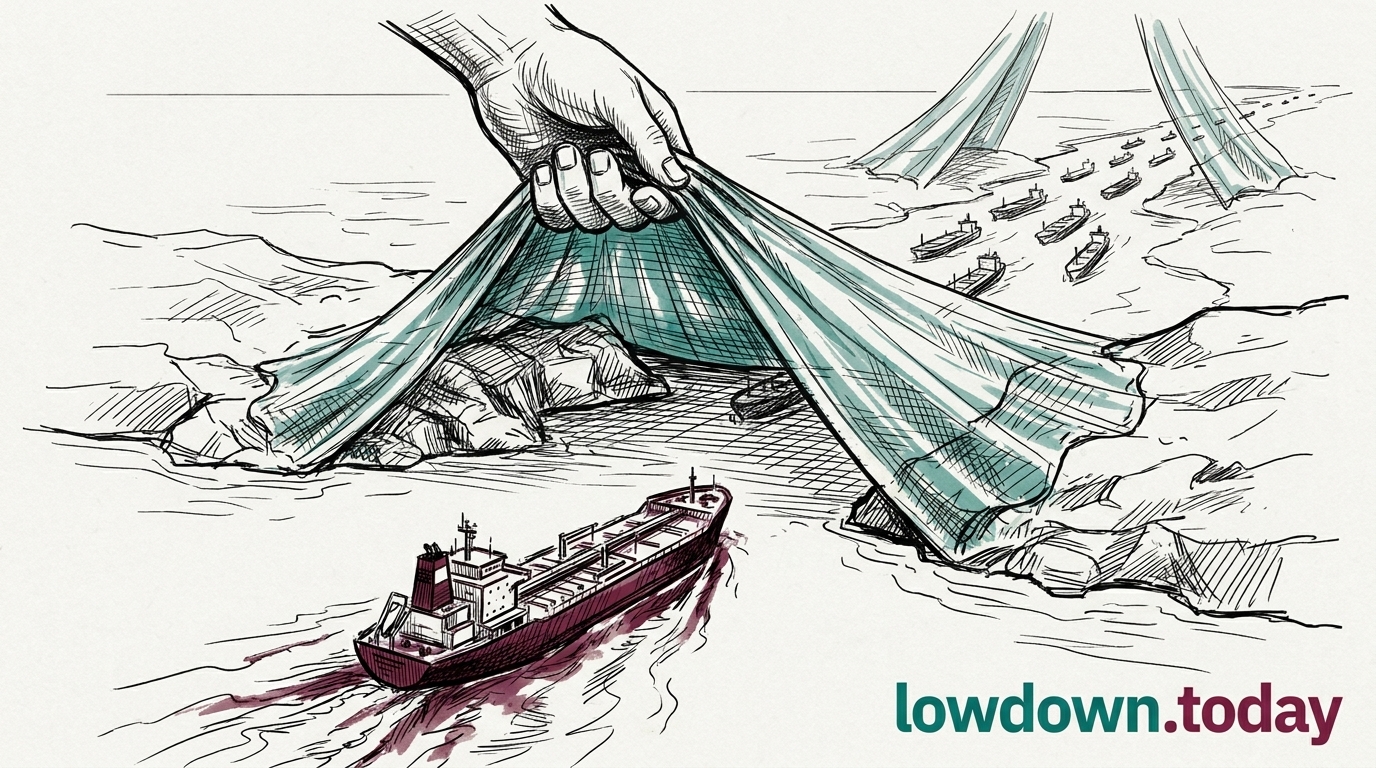
India's Chabahar port sanctions waiver lapses at 00:01 EDT on Sunday 26 April 2026, roughly two days from publication. India's Ministry of External Affairs (MEA) confirmed on Friday that it is "engaging with US" on renewal; no text has been published 1. The waiver is Delhi's sole US sanctions exemption covering investment in the Iranian port built around the 2016 trilateral agreement, which carries Afghan and Central Asian trade through a route that bypasses Pakistan.

The deadline stacks on two unresolved India files. Foreign Secretary Vikram Misri's office has now held public silence for nine days on the 15 April Shamkhani network designations, which named five Indian nationals and eight India-registered firms . On 22 April the IRGC seized the tanker Epaminondas, carrying cargo bound for Mundra port in Gujarat, and the MEA engaged Tehran quietly the following day while still refusing public comment on the Treasury list .

Three US-Iran pressure points converge on one desk over the weekend. Indian crews are at sea under IRGC fire; Indian firms sit on a live OFAC designation list; Indian port rights lapse at the weekend. For Indian charterers with cargo bound for Mundra or Chennai, a waiver lapse translates to secondary sanctions exposure on ships already afloat, because the statute does not distinguish between cargoes booked before expiry and after.

The structural beneficiary of any Indian pullback is Chinese carriage. Delhi has used Chabahar as the anchor of a triangulation that worked only because the US carved a bespoke exemption out of the broader Iran sanctions architecture; let it lapse and the triangulation collapses into two bilateral disputes, India-US over sanctions and India-Iran over ship safety, with Chinese-flagged shipping the default replacement. Every additional day Misri stays silent on Treasury designations while demanding IRGC restraint is a day Mumbai and Chennai operators cannot price their next cargo.


Deep Analysis

In plain English

India built a port in Iran called Chabahar as part of a deal to give Afghanistan and Central Asian countries a trade route that bypasses Pakistan. The US allowed this, despite its sanctions on Iran, through a special waiver. That waiver runs out on Sunday 26 April at midnight US time. If the waiver is not renewed in time, any Indian company or shipping firm that uses the port after that point faces potential US sanctions. This matters especially because India is already dealing with two other Iran-related crises at the same time: its sailors are being fired on by Iranian gunboats in the Gulf, and its firms have just been named on a US sanctions list. The Indian foreign ministry is quietly trying to get the waiver extended but has not announced any deal.

What could happen next?
  • Consequence

    A waiver lapse without substitute text forces Indian charterers to choose between completing cargoes already at sea and accepting secondary-sanctions exposure, or abandoning the cargo and the charter, with insurance claims contested in post-war litigation.

  • Risk

    China, which operates under CENTCOM's separate carve-out for Hormuz transits, gains a structural advantage in Iranian crude access if India's Chabahar channel closes, deepening Beijing's share of Iran's post-war reconstruction trade.

First Reported In

Update #78 · Allies flagged, adversaries listed, nothing signed

The Hindu· 24 Apr 2026
Read original
Different Perspectives
Sanctions compliance officer reviewing a Lukoil International GmbH bid
OFAC's amended FAQ 1224 gives a compliance desk its first published standard: full severance from Lukoil and a US-jurisdiction blocked account for sale proceeds. The conditions name neither ISAB nor Italy, so a Priolo Gargallo-linked bid answers a different question than a Neftochim Burgas or Petrotel Ploiesti one.
Managed-money funds on Brent Last Day
CFTC data for the week to 21 July showed managed money flipping 74,400 contracts to a net long of 15,665 against 1,410 short on the Brent Last Day contract, code 06765T. A fund that held that short through July has now covered it, and the spent short base raises the bar for the next leg higher.
Saudi crude exporters
Saudi-linked tanker transits through Bab el-Mandeb fell to about 7.5 a day after the 24 July underwriting withdrawal, pushing more barrels onto the longer route round the Cape or through the Yanbu terminal. Every diverted barrel ties up a ship for longer, and a fleet that turns slower charges more.
Tanker owners on the Bab el-Mandeb route
Lloyd's-market syndicates withdrew war-risk cover from Saudi-linked hulls on 24 July, leaving owners of that class of vessel to sail Bab el-Mandeb uninsured or not at all. Tanker transits on the route fell to roughly 7.5 a day, and cover, once withdrawn, does not return on a shipowner's timetable.
Eni
Eni
Eni's board approved second-quarter results on 29 July, swinging refining EBIT to a EUR0.08bn profit from a year-earlier loss even as group profit doubled, and named Red Sea freight cost as a cap on that improvement. A refiner absorbing higher shipping costs on Saudi-linked crude while its numbers improve treats the freight line as a drag, not a crisis.
Asian buyers (India, Japan, China, South Korea)
Asian refiners are absorbing 62% of Yanbu's 3.75m b/d flow, the bulk of Saudi Arabia's rerouted crude now clearing east rather than into the Atlantic basin. That destination split leaves Asian buyers more exposed to any single Yanbu-specific disruption than under the kingdom's normal multi-terminal export pattern.



