Skip to content
You can now search across every topic, entity and event.What's new
European Oil Markets
31JUL

Brent jumps 7%, rial hits record low

2 min read
09:33UTC

Brent crude spiked almost 7% intraday to $97.47 on 1 June after Iran suspended talks, settling at $94.98; the rial hit a record 1,746,000 to the dollar as Lloyd's held its Hormuz war-risk line.

EconomicDeveloping
Key takeaway

Oil and the rial both moved on Iran's walkout, yet Lloyd's kept Hormuz war-risk locked.

Brent Crude, the global oil benchmark, spiked almost 7% intraday to $97.47 on Monday 1 June once Iran suspended talks, its highest since the $98.83 Bandar Abbas bounce on 26 May , yet it settled lower at $94.98, up 4.2% on the day, as the Lebanon ceasefire pared the gain 1. The jump came on a formal Iranian diplomatic act, not a missile, so the risk premium now tracks the negotiating table rather than the battlefield. A 7% move translates to roughly 12 to 15p a litre for UK drivers within a fortnight.

The Iranian rial hit a record 1,746,000 to the dollar on Iran's open market by 2 June, from 1,705,000 on 31 May , a 2.4% depreciation in two days that accelerated after the suspension 2. Imported food, medicine and fuel cost more in rial overnight, and for Iranians on fixed wages savings erode in days. The same Iranian act split the two markets: Brent rallied while the rial fell, because traders read deal-breakdown risk where ordinary Iranians read a worsening economy.

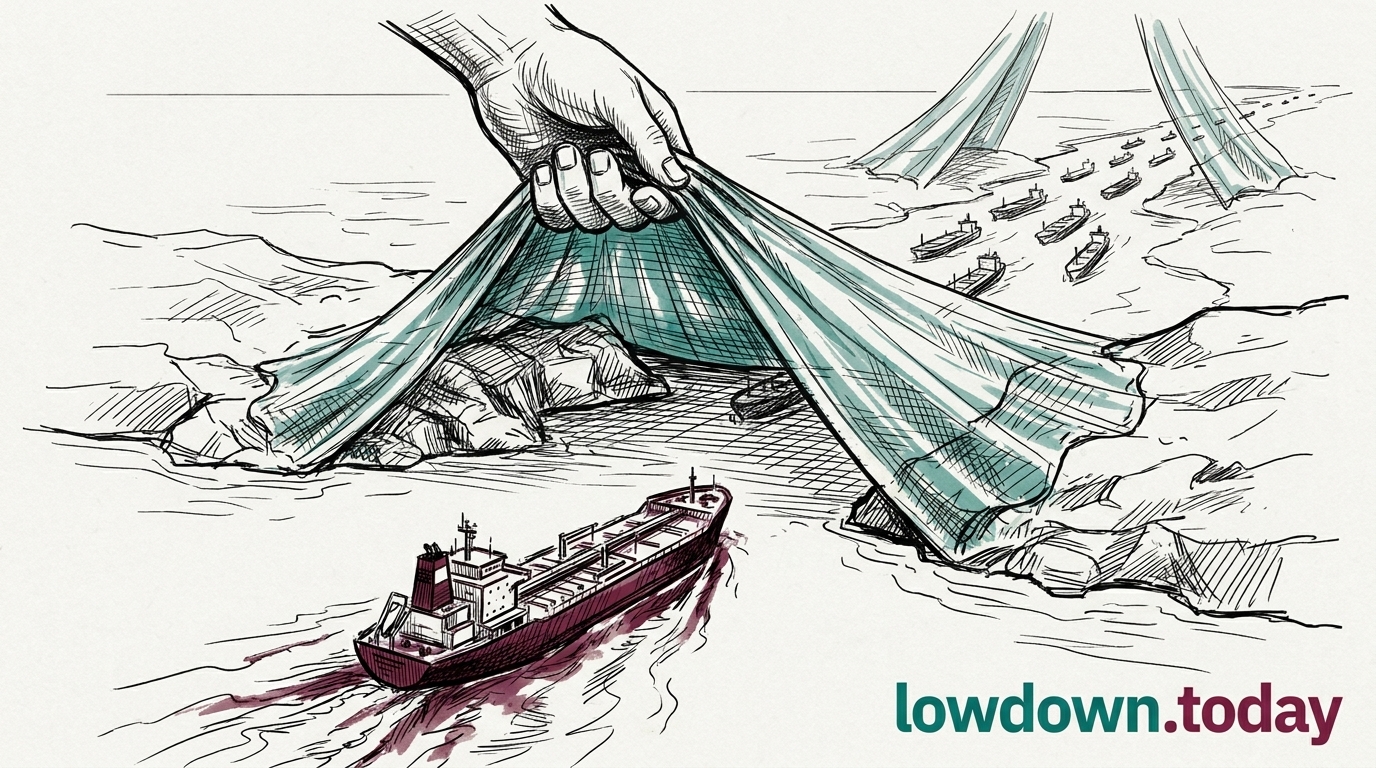
Lloyd's of London kept its Hormuz war-risk designation unchanged , holding the two-market split that has run since the conflict began. Lloyd's Joint War Committee can de-list the strait of Hormuz only on a UN Security Council resolution or a government certification letter, a structural trigger no sentiment can shift; futures, by contrast, price the odds of a press release. So crude can rally on a thaw while marine insurance stays frozen, because the two answer to different triggers.


Deep Analysis

In plain English

Two different markets were tracking the same conflict on 1 June and reached opposite conclusions. The oil futures market, where traders bet on the price of crude oil, drove Brent crude up by nearly 7% when Iran suspended talks, then back down when the Lebanon ceasefire was announced, ending the day 4.2% higher. Oil futures respond to headlines within minutes because traders can buy or sell in seconds. Lloyd's of London, founded in London in 1688, runs the specialist market that insures ships against war damage. It left its high-cost 'war-risk' designation on the Strait of Hormuz unchanged, as it has throughout the conflict. Lloyd's cannot de-list Hormuz just because a ceasefire looks possible; it needs a formal UN Security Council resolution or a government certification letter. None has arrived. The result is that oil traders think the risk is easing while the insurers who cover the actual ships think nothing has changed. The Iranian rial (Iran's currency) fell to a record low of 1,746,000 per dollar on Iran's open market by 2 June. That means ordinary Iranians buying imported food, medicine or electronics face rapidly rising prices, regardless of what diplomats are negotiating.

Deep Analysis
Root Causes

The Lloyd's/futures split has a specific institutional cause: Lloyd's Joint War Committee operates on the basis of 'listed areas' that require a formal government certification process to de-list. That process requires either a UN Security Council resolution certifying the end of hostilities, or a letter from a government with jurisdiction over the area.

Neither the US government, which runs the blockade, nor Iran, which controls the strait, has issued such a letter. With Russia and China vetoing any UNSC resolution, the bureaucratic unlock is structurally blocked for the duration of the conflict. This is not risk-model inertia; it is a deliberate institutional design that was built after the 1988 Tanker War specifically to prevent Lloyd's from being repriced by political headlines rather than verified security conditions.

First Reported In

Update #115 · Iran moves first, Trump moves by phone

CBS News· 2 Jun 2026
Read original
Different Perspectives
Sanctions compliance officer reviewing a Lukoil International GmbH bid
OFAC's amended FAQ 1224 gives a compliance desk its first published standard: full severance from Lukoil and a US-jurisdiction blocked account for sale proceeds. The conditions name neither ISAB nor Italy, so a Priolo Gargallo-linked bid answers a different question than a Neftochim Burgas or Petrotel Ploiesti one.
Managed-money funds on Brent Last Day
CFTC data for the week to 21 July showed managed money flipping 74,400 contracts to a net long of 15,665 against 1,410 short on the Brent Last Day contract, code 06765T. A fund that held that short through July has now covered it, and the spent short base raises the bar for the next leg higher.
Saudi crude exporters
Saudi-linked tanker transits through Bab el-Mandeb fell to about 7.5 a day after the 24 July underwriting withdrawal, pushing more barrels onto the longer route round the Cape or through the Yanbu terminal. Every diverted barrel ties up a ship for longer, and a fleet that turns slower charges more.
Tanker owners on the Bab el-Mandeb route
Lloyd's-market syndicates withdrew war-risk cover from Saudi-linked hulls on 24 July, leaving owners of that class of vessel to sail Bab el-Mandeb uninsured or not at all. Tanker transits on the route fell to roughly 7.5 a day, and cover, once withdrawn, does not return on a shipowner's timetable.
Eni
Eni
Eni's board approved second-quarter results on 29 July, swinging refining EBIT to a EUR0.08bn profit from a year-earlier loss even as group profit doubled, and named Red Sea freight cost as a cap on that improvement. A refiner absorbing higher shipping costs on Saudi-linked crude while its numbers improve treats the freight line as a drag, not a crisis.
Asian buyers (India, Japan, China, South Korea)
Asian refiners are absorbing 62% of Yanbu's 3.75m b/d flow, the bulk of Saudi Arabia's rerouted crude now clearing east rather than into the Atlantic basin. That destination split leaves Asian buyers more exposed to any single Yanbu-specific disruption than under the kingdom's normal multi-terminal export pattern.



