Skip to content
You can now search across every topic, entity and event.What's new
European Oil Markets
31JUL

15 days: Russia's crude waiver lapses

1 min read
09:33UTC

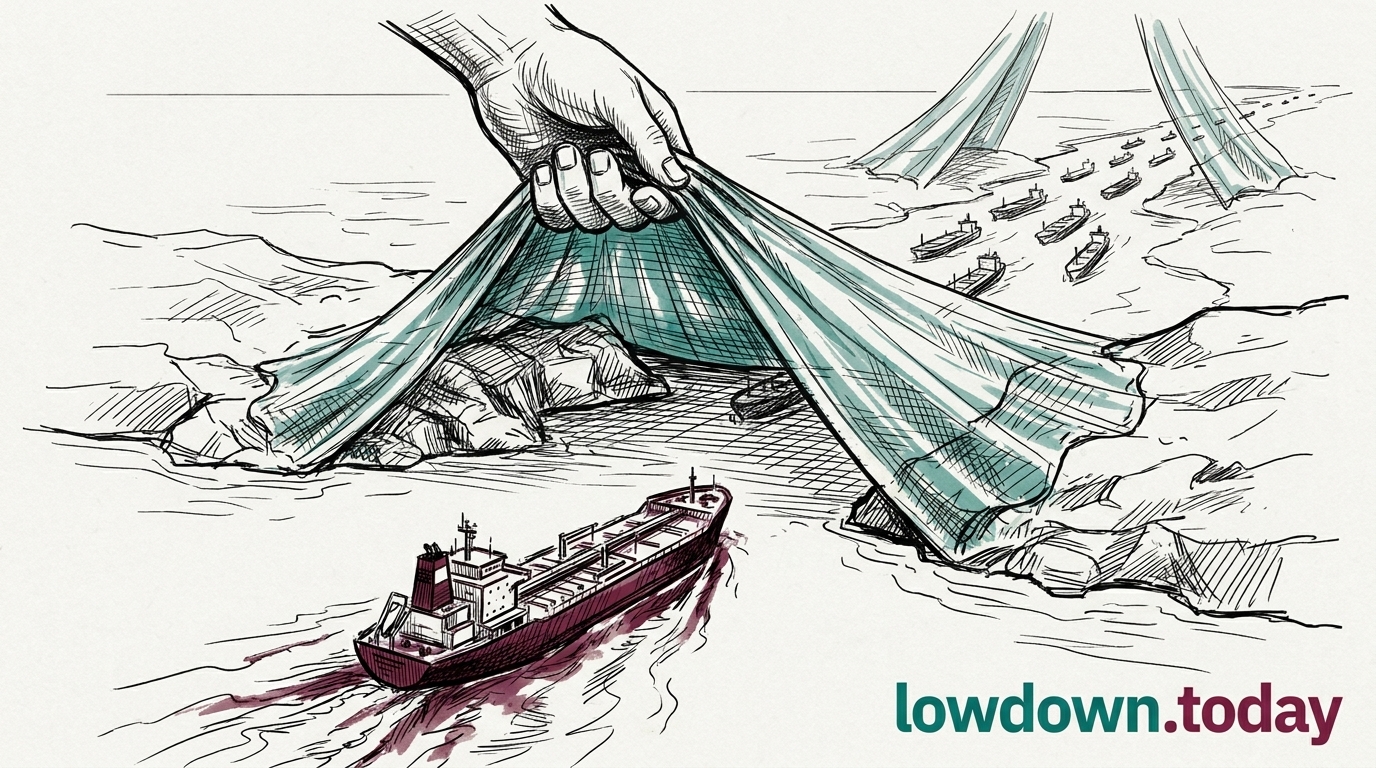
OFAC let General License 134C, the waiver allowing purchase of pre-cut-off Russian crude, lapse on 17 June with no successor, a 15-day gap and the longest of the war.

EconomicAssessed
Key takeaway

OFAC's 15-day silence on the crude waiver is the longest of the war.

The US Treasury's Office of Foreign Assets Control (OFAC), the bureau that runs American sanctions, let General License 134C lapse on 17 June with no successor issued as of 1 July 1. The licence is the waiver that lets buyers take Russian crude loaded before a cut-off date, and its expiry has now stretched into a 15-day gap.

Every earlier lapse was bridged within one or two days; this is the longest of the war 2. A permanent lapse would strip the legal cover under which some buyers still take Russian crude, tightening the channel further. Whether OFAC issues a General License 134D or lets the waiver die will decide how much Russian oil can move without sanctions risk.

Washington's mediation has been dormant since Secretary of State Marco Rubio declared it stagnant on 22 May, and Vladimir Putin's published calendar shows no US or Ukrainian diplomatic contact in the week 3. The unrenewed waiver sits inside that same absence, one of the few levers Washington still holds over Russian oil revenue, currently left idle.


Deep Analysis

In plain English

The US Treasury has a rolling permission slip, called a general licence, that lets buyers finish paying for Russian oil cargoes that were already loaded onto ships before a cut-off date. Without it, completing the deal risks breaking US sanctions. That permission slip expired on 17 June and, as of 1 July, hadn't been renewed, a two-week gap where the usual turnaround is a day or two. Buyers still paying for cargoes loaded before 17 June now have no OFAC paperwork to show if Washington asks.

Deep Analysis
Root Causes

The GL 134 waiver series requires active renewal by OFAC every cycle rather than running on autopilot, so any gap in Treasury's attention or willingness produces an automatic lapse rather than a deliberate one-off decision.

With no successor issued as of 1 July, the lapse has already outlasted every prior GL 134 renewal gap combined, suggesting the drift is now structural rather than an administrative delay.

What could happen next?
  • Risk

    Buyers and insurers still finalising already-loaded Russian cargoes face sanctions exposure until a successor licence appears.

  • Meaning

    A 15-day gap, far longer than any prior GL 134 renewal delay, suggests Treasury's routine sanctions bureaucracy has itself become a source of uncertainty for the oil trade.

First Reported In

Update #22 · Belarus relays go dark on Kyiv's deadline

US Energy Information Administration· 2 Jul 2026
Read original
Different Perspectives
Sanctions compliance officer reviewing a Lukoil International GmbH bid
OFAC's amended FAQ 1224 gives a compliance desk its first published standard: full severance from Lukoil and a US-jurisdiction blocked account for sale proceeds. The conditions name neither ISAB nor Italy, so a Priolo Gargallo-linked bid answers a different question than a Neftochim Burgas or Petrotel Ploiesti one.
Managed-money funds on Brent Last Day
CFTC data for the week to 21 July showed managed money flipping 74,400 contracts to a net long of 15,665 against 1,410 short on the Brent Last Day contract, code 06765T. A fund that held that short through July has now covered it, and the spent short base raises the bar for the next leg higher.
Saudi crude exporters
Saudi-linked tanker transits through Bab el-Mandeb fell to about 7.5 a day after the 24 July underwriting withdrawal, pushing more barrels onto the longer route round the Cape or through the Yanbu terminal. Every diverted barrel ties up a ship for longer, and a fleet that turns slower charges more.
Tanker owners on the Bab el-Mandeb route
Lloyd's-market syndicates withdrew war-risk cover from Saudi-linked hulls on 24 July, leaving owners of that class of vessel to sail Bab el-Mandeb uninsured or not at all. Tanker transits on the route fell to roughly 7.5 a day, and cover, once withdrawn, does not return on a shipowner's timetable.
Eni
Eni
Eni's board approved second-quarter results on 29 July, swinging refining EBIT to a EUR0.08bn profit from a year-earlier loss even as group profit doubled, and named Red Sea freight cost as a cap on that improvement. A refiner absorbing higher shipping costs on Saudi-linked crude while its numbers improve treats the freight line as a drag, not a crisis.
Asian buyers (India, Japan, China, South Korea)
Asian refiners are absorbing 62% of Yanbu's 3.75m b/d flow, the bulk of Saudi Arabia's rerouted crude now clearing east rather than into the Atlantic basin. That destination split leaves Asian buyers more exposed to any single Yanbu-specific disruption than under the kingdom's normal multi-terminal export pattern.



