Skip to content
You can now search across every topic, entity and event.What's new
European Oil Markets
26MAY

WPR cliff is 1 June, not 1 May

3 min read
08:52UTC

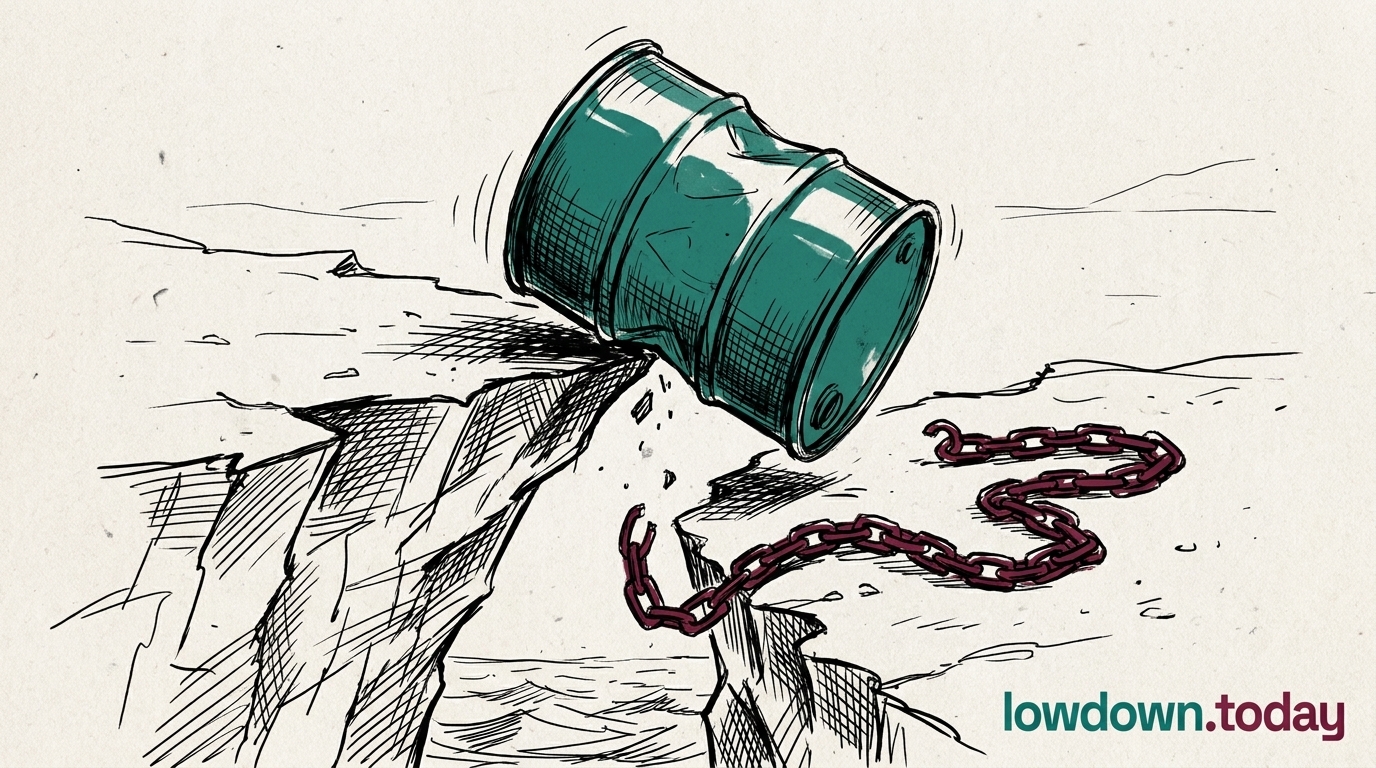
Chuck Schumer scheduled a sixth War Powers Resolution vote on 29 April; Section 1544(b) of the 1973 statute extends the operative legal deadline by 30 days, putting the binding cliff at roughly 1 June.

EconomicDeveloping
Key takeaway

Section 1544(b) shifts the binding War Powers cliff to roughly 1 June, giving Trump four more weeks of unsigned war.

Senate Majority Leader Chuck Schumer announced on 29 April that he would bring a sixth challenge to the uninstrumented Iran campaign under the WPR (the 1973 War Powers Resolution) 1. The fifth vote, taken on 22 April, failed 51-46 . Schumer's pledge converts the WPR from a single binary cliff into rolling weekly pressure ahead of the legal deadline.

That deadline is widely reported as Friday 1 May, the 60-day mark from the campaign's 28 February opening. Section 1544(b) of the WPR appends a 30-day force wind-down to the 60-day engagement limit, which the Friday-cliff reporting omits. The Office of Legal Counsel has historically read 1544(b) as permissive on troop withdrawal sequencing, not as a continuation of presidential authority; legal exposure begins not at the 60-day mark but at the moment The White House refuses to begin withdrawal. That date has not been set. The operative cliff therefore falls at roughly Monday 1 June, four weeks after the Friday number on every front page.

The procedural quirk reframes Lisa Murkowski's non-filing. She drafted an Iran AUMF (Authorisation for Use of Military Force) with Susan Collins, Thom Tillis and John Curtis as backers , set herself a 28 April target to file , then let it slip . Read against a Friday cliff that produces filed leverage; read against a 1 June cliff she is exactly where she wants to be. Filing the bill before the 60-day mark surrenders the negotiation; holding it through the 30-day wind-down keeps White House counsel at her staff's door. Tim Kaine is running the public side; Murkowski is running the private one.

For markets and procurement desks the practical implication is straightforward: insurance pricing, congressional staff allocation and Pentagon contingency planning need to operate on a month-long cliff, not a day-long one. The vote Schumer brings this week may force Republican defections beyond the existing four; it may fail at the 51-46 line; it may not happen until Friday morning. None of those outcomes touch the 1 June date that actually binds the President's options. Trump has four weeks to either sign something or run the war on the same uninstrumented terms it has run on since 28 February.


Deep Analysis

In plain English

In 1973, Congress passed a law limiting how long a US president can keep troops in combat without congressional approval. The limit is 60 days, after which Congress has the option to force the military to stand down. Day 60 was 1 May. But there is a lesser-known section of the same law that adds another 30 days for a wind-down period, pushing the actual deadline to around 1 June. Senator Chuck Schumer scheduled a sixth vote to force Trump to stop the Iran war or get formal congressional approval. Five previous votes have failed. Senator Lisa Murkowski has a draft war authorisation written but has not filed it. She is holding it back as a bargaining tool with the White House, so she can use the threat of filing it to extract concessions on other issues.

Deep Analysis
Root Causes

The Republican Senate caucus has 53 seats, giving the administration a structural majority that prevents the WPR concurrent resolution from reaching the floor. Schumer can call repeated votes, but the majority leader controls the floor schedule, and the five failed votes have been the result of majority procedural blocking rather than substantive defeats on the merits.

Murkowski's leverage rests on a specific Republican Senate arithmetic: the administration needs her vote and the votes of Susan Collins and Thom Tillis on unrelated domestic legislation, particularly the budget reconciliation package. Her AUMF draft is therefore a conditional asset whose value to the White House derives from its non-filing, not its filing.

The Section 1544(b) analysis is analytically significant because it was not widely understood before 29 April: most public commentary assumed the operative deadline was 1 May, when it is actually approximately 1 June. This four-week shift gives the administration additional time to negotiate or simply wait out the pressure.

What could happen next?
  • Consequence

    The 1 June Section 1544(b) deadline, not 1 May, is the operative legal cliff; the administration has four additional weeks before the pressure intensifies.

    Immediate · High
  • Risk

    Murkowski filing the AUMF could legally authorise a war already conducted without authorisation, creating constitutional ambiguity about what the authorisation retroactively covers.

    Short term · Medium
  • Precedent

    Conducting six WPR challenges without achieving a floor majority sets a precedent that the resolution cannot be enforced by a determined executive majority.

    Long term · High
First Reported In

Update #84 · Department named, war unsigned

Time· 30 Apr 2026
Read original
Different Perspectives
Greek shipping registries
Flag states dominating the tanker fleet await the EU's 15 July cap-freeze vote. A formula unlock toward $75 would loosen the ceiling squeezing insurance and crewing costs on their registered hulls.
US money managers
US money managers
NYMEX WTI managed-money net long fell 23% to +64,041 in the week to 7 July, trimming length into the rally on doubt the Hormuz premium survives without freight or war-risk confirmation.
European refiners (ARA)
ARA refiners are capturing an $80/bbl US diesel crack as Russian gasoil loadings collapsed to 234kbd before Novak's 31 July export ban even bites, widening the arbitrage straight into refining margins.
OPEC+
OPEC+
The seven-member group confirmed a fourth consecutive 188kbd August hike on 5 July, defending market share even though Saudi Arabia's $108-111/bbl breakeven means every added barrel costs Riyadh revenue it cannot recoup.
Indian refiners
Indian refiners
Refiners kept lifting discounted Urals as the India/Baltic split widened past $9-10 a barrel on 7 July. A wider Urals-Brent gap means cheaper feedstock locked in against Baltic buyers.
Russia
Russia
Urals traded $48.95-55.12 on 12-13 July, below Moscow's $59 budget floor even as Brent gained $6. Oil and gas fund roughly 30% of federal revenue, and Novak's diesel export ban is rationing a shrinking export base.