Skip to content
You can now search across every topic, entity and event.What's new
European Oil Markets
23JUL

Iran says it struck the Omani route

1 min read
19:27UTC

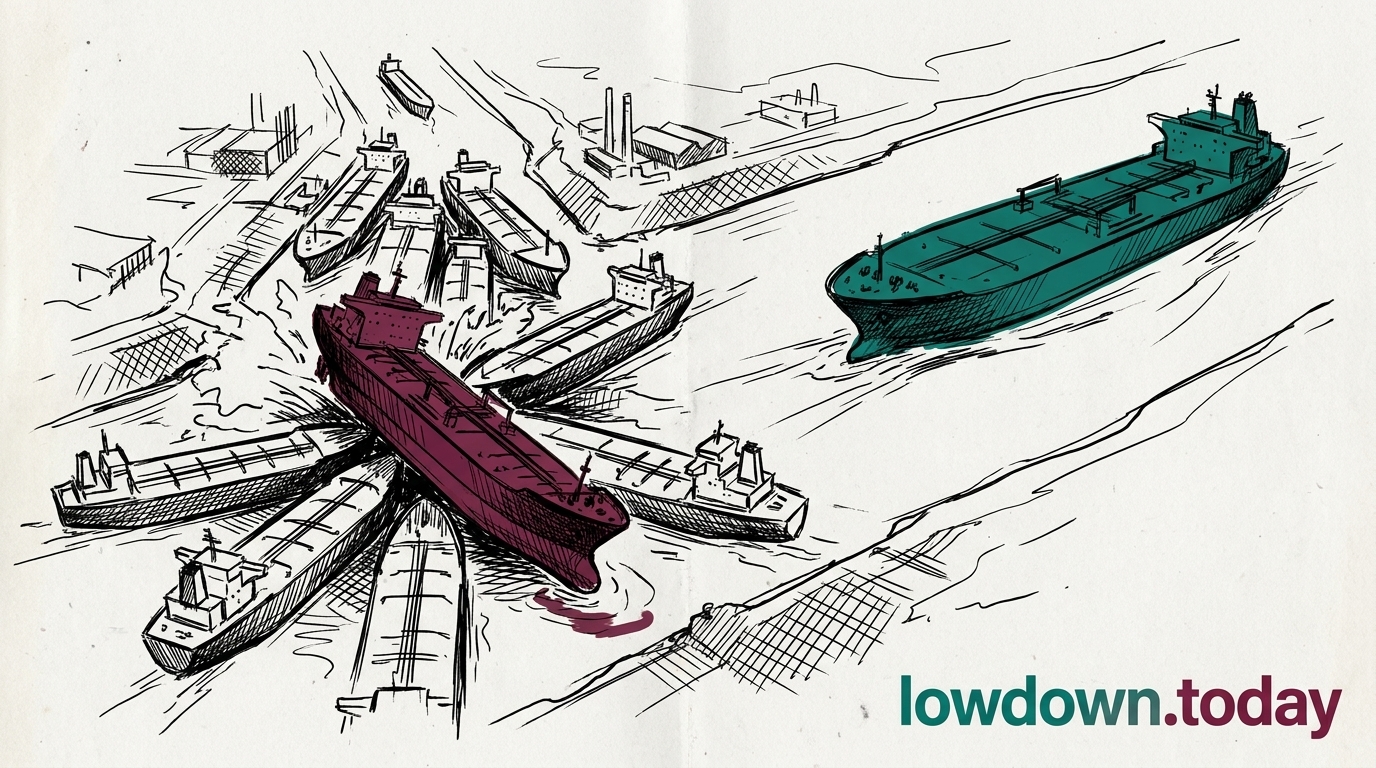
Iranian state broadcaster IRIB said the tanker was struck for using the 'Omani route' after repeated warnings, and separately claimed the vessel had 'US Navy support', a justification no other source corroborates.

EconomicDeveloping
Key takeaway

Iranian state media framed the strike as punishment for using the Omani transit route.

Islamic Republic of Iran Broadcasting (IRIB), Iran's state broadcaster, said Al Rekayyat was struck for using the 'Omani route' after 'repeated warnings', and IRGC radio told vessels its missiles and drones were 'ready to fire' 1. State media separately claimed the ship had 'US Navy support'. No independent source corroborates that, and it should be read as Tehran's framing rather than established fact 2.

Iran branded Oman's transit-fee plan compulsory on 30 June while Muscat called it voluntary , and the corps had called the Oman-backed corridor unacceptable in the days before that. A US official confirmed the attack to Axios 3. What the broadcast adds is intent: by naming a rule and citing prior warnings, IRIB casts the strike as deliberate enforcement, which is the reading Tehran wants on the record whether or not the order came from the top.


Deep Analysis

In plain English

Iran's state broadcaster, IRIB, said the tanker was attacked because it used a shipping route Iran had warned ships to avoid, and separately claimed, without any outside proof, that the ship had US Navy backing. When only one side's media makes a claim and nobody else can confirm it, readers should treat it as that government's version of events, not as an established fact.

Deep Analysis
Root Causes

IRIB's justification rests on a category, 'hostile-linked vessels', that Iran's 2024 domestic maritime law leaves largely undefined, giving Tehran wide discretion to retroactively fit almost any struck vessel into the category after the fact.

No neutral verification mechanism exists to test IRIB's 'US Navy support' claim, so the assertion stands or falls entirely on Iranian state media's own credibility, which international reporting has not corroborated in this case.

What could happen next?
  • Risk

    An undefined 'hostile-linked' legal category gives Tehran room to justify future strikes without a consistent public standard for which vessels qualify.

First Reported In

Update #148 · Iran shoots the Hormuz route it rejected

The National· 7 Jul 2026
Read original
Different Perspectives
US money managers (CFTC-tracked)
US money managers had trimmed WTI net long positioning into July's rally, doubting the Hormuz premium would hold without freight or war-risk confirmation, and the crude stock build reported for the week to 17 July gives that scepticism a fundamentals basis. The 25 July CFTC data will show whether Brent's move above $100 changed their calculus.
Asian distillate buyers (Singapore)
Singapore's distillate holders kept retaining middle-distillate barrels as the East-West arbitrage window narrowed further this week, a pattern that sharpened as Fujairah light distillates hit a record low. Cargoes are being held rather than released west into the tightening Mediterranean market.
Bulgaria
Bulgaria
Bulgaria secured the removal of Lukoil founder Vagit Alekperov and Patriarch Kirill from the 21st package, with President Rumen Radev calling a personal listing 'shooting ourselves in the foot'. Sofia is protecting its position in Lukoil's EUR 3bn compensation claim over the 2023 Neftohim Burgas nationalisation.
Russia
Russia
Russia loses the roughly $14 a barrel of legal headroom the price-cap formula would have released toward $58, even as Urals continues trading below Moscow's $59 budget floor. The shadow-fleet insurance workaround that lets sanctioned crude clear above $44 in practice remains untouched by the freeze itself.
European Union
European Union
The EU adopted its 21st sanctions package on 23 July, freezing the $44 Russia oil cap for 12 months rather than letting the formula drift it toward $58, and listed shadow-fleet support vessels for the first time. The package cleared only after three failed Coreper votes.
Marine war-risk underwriters (Lloyd's-linked syndicates)
War-risk syndicates lifted southern Red Sea hull premiums 150% to about 0.75% of hull value after the 20 July blockade declaration, still a seventh of the roughly 5% Hormuz band. Underwriters reset on realised loss, not declared threat, so the 23 July Encelia and Layla strikes set up the next re-mark.