Skip to content
Welcome, thoughtbot's Giant Robots listeners!Start here
European Oil Markets
16JUL

TD3C hits WS372 as hull cover reaches 5%

3 min read
09:39UTC

The Baltic Exchange assessed the Middle East Gulf to China VLCC route at WS372 on 17 July, and Hormuz war-risk hull cover widened the same day to a 3-10% band with 5% the emerging norm.

EconomicDeveloping
Key takeaway

War-risk cover at 5% of hull adds roughly $2.50 a barrel to a Gulf cargo, twice the late-June loading.

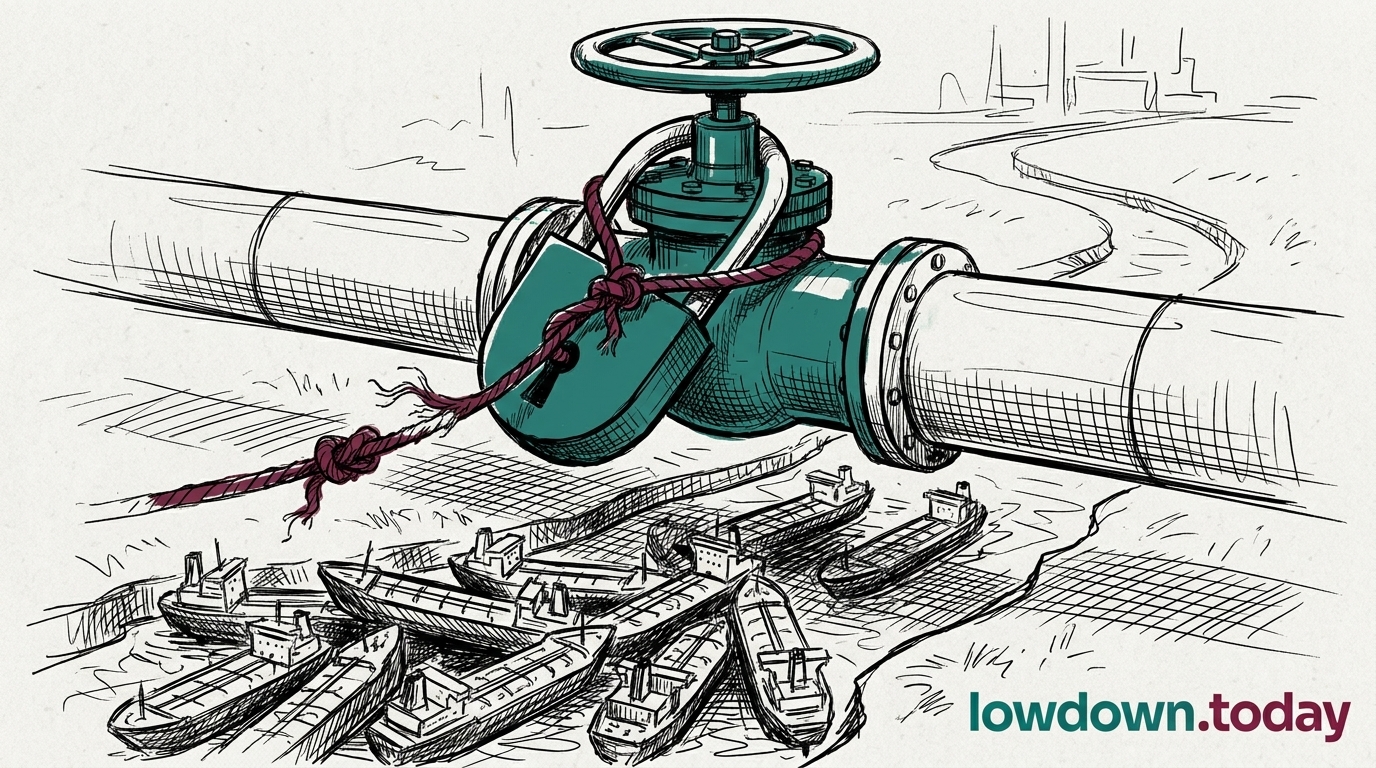
The Baltic Exchange assessed the TD3C Middle East Gulf to China VLCC route at WS372 on Friday 17 July, roughly 15 Worldscale points above the previous Friday and about 27% above the WS293.89 print of 3 July⁠1. War-risk hull cover for Hormuz transits widened the same day to 3-10% of hull value, with 5% emerging as the market norm⁠2, against the 3-4% baseline this desk recorded in late June.

Put that in cash. On a $100m VLCC, 5% is $5m a voyage against roughly $250,000 before the war, or about $2.50 a barrel across a 2m-barrel cargo. The loading has doubled from the $1 to $1.50 range of a month ago, and it sits on top of the freight rate rather than inside it.

War-risk cover is the slowest instrument in the complex to move and the hardest to talk down, because it reprices on the London market's read of loss frequency rather than on political signalling. The Lloyd's Joint War Committee listed-areas mechanism compounds that: a single insurable casualty inside a designated zone moves the whole quoted band, which is how 3-4% became 3-10% in one step instead of drifting. Underwriters moved when two UAE supertankers were actually hit, and not when ministers issued statements about the strait.

This breaks the pattern the desk has traded since late June, when the TD3C 4Q26 forward sat at $181,163 a day and would not budge while Brent shed 8%. Charterers who took that forward cover are now materially in the money against a WS372 spot, so paper freight length is quietly subsidising physical programmes. The reverse trade deserves naming too: both legs can retrace far faster than a premium priced into the curve, and if the strike tempo slows, freight and hull cover come off before the flat price does.

Deep Analysis

In plain English

Shipping companies charge more to move oil through dangerous waters, and insurance companies charge more to cover ships that might get attacked. For weeks, both prices stayed calm even as oil itself got more expensive, because nobody had actually been hit. Then real ships were struck in the Gulf, and both the shipping cost (TD3C) and the insurance cost (war-risk cover) jumped at once, showing the danger had become real rather than just talked about.

Deep Analysis
Root Causes

War-risk hull cover resets on the Lloyd's Joint War Committee's listed-areas framework, which prices a designated zone on evidence of loss frequency rather than on political announcements; two UAE supertankers struck supplied the actuarial trigger that six weeks of diplomacy could not.

Freight lagged separately because owners holding 4Q26 forward cover at $181,163/day were pricing a physical Hormuz recovery in months, a bet that two strikes in one week directly undercut.

What could happen next?
  • Consequence

    A European refiner buying a Gulf VLCC cargo now pays flat price plus roughly $2.50 a barrel in insurance plus the WS372 freight uplift, raising the delivered cost floor independent of any further crude price move.

  • Risk

    If the strike tempo continues, hull cover could move toward the top of its quoted 3-10% band, since the Joint War Committee mechanism reprices on each new casualty rather than settling at a fixed level.

First Reported In

Update #18 · Brent tops $90 and freight follows this time

The Edge Malaysia (republishing Baltic Exchange)· 20 Jul 2026
Read original →
Different Perspectives
S&P Global
S&P Global
S&P Global said on 12 November that thin refining buffers leave jet fuel exposed to price spikes in 2027. Its view cuts against the pump-lag case, because tight middle distillates would keep jet and diesel dear even as crude falls.
European Union
European Union
The Commission proposed a 22nd package on 23 November that would list more than 70 more tankers and ban Russia-insured ones, after listing Balance Insurance on 16 November. It needs every member state's vote, so Russian tanker insurance becomes the EU's next test of unanimity.
UK households and hauliers
UK drivers paid 193.29p a litre for diesel in the week of 23 November, DESNZ data show, 31.33p more than petrol, and BoilerJuice quoted heating oil at 96.51p a litre before VAT. They pay the gap that crude's fall has not closed, with motor fuels up 33.2% in October's inflation figures.
Saudi Arabia and the OPEC+ Seven
The OPEC+ Seven held December output at September's level on 1 November, and Saudi Aramco priced December Arab Light to Europe below Brent, Attaqa reported. The full group decides on Sunday 29 November whether about 2m b/d of cuts outlast 2026, with Saudi diesel loadings already up 30% in early November.
Eni
Eni
Eni reported a third-quarter standard refining margin of $28.1 a barrel and raised its full-year assumption from $14 to $18. Its finance chief Francesco Gattei said on the 23 October call that the quarter to date was at $18, press coverage reported, so the refiner sees its windfall shrinking.
Gulf oil producer
Gulf oil producer
Secured OPEC's confirmed 188,000 b/d September increment with the next meeting set for 6 September, but the Secretariat's own 2 August release says nothing about the fourth quarter. Output guidance beyond September remains undisclosed even as delegate sourcing keeps filling that gap.

Written with AI from Lowdown's published reporting. Not individually reviewed by an editor. Editorial standards.
