Skip to content
Welcome, thoughtbot's Giant Robots listeners!Start here
European Oil Markets
16JUL

Freight rate holds as Brent caves

3 min read
09:39UTC

The TD3C Gulf-to-China tanker rate held its fourth-quarter forward at $181,163 a day on 22 June even as Brent shed roughly 8%, a freight market pricing a recovery in months the flat price has already called complete.

EconomicDeveloping
Key takeaway

The TD3C forward curve is pricing a slow physical Hormuz recovery the flat Brent screen has written off.

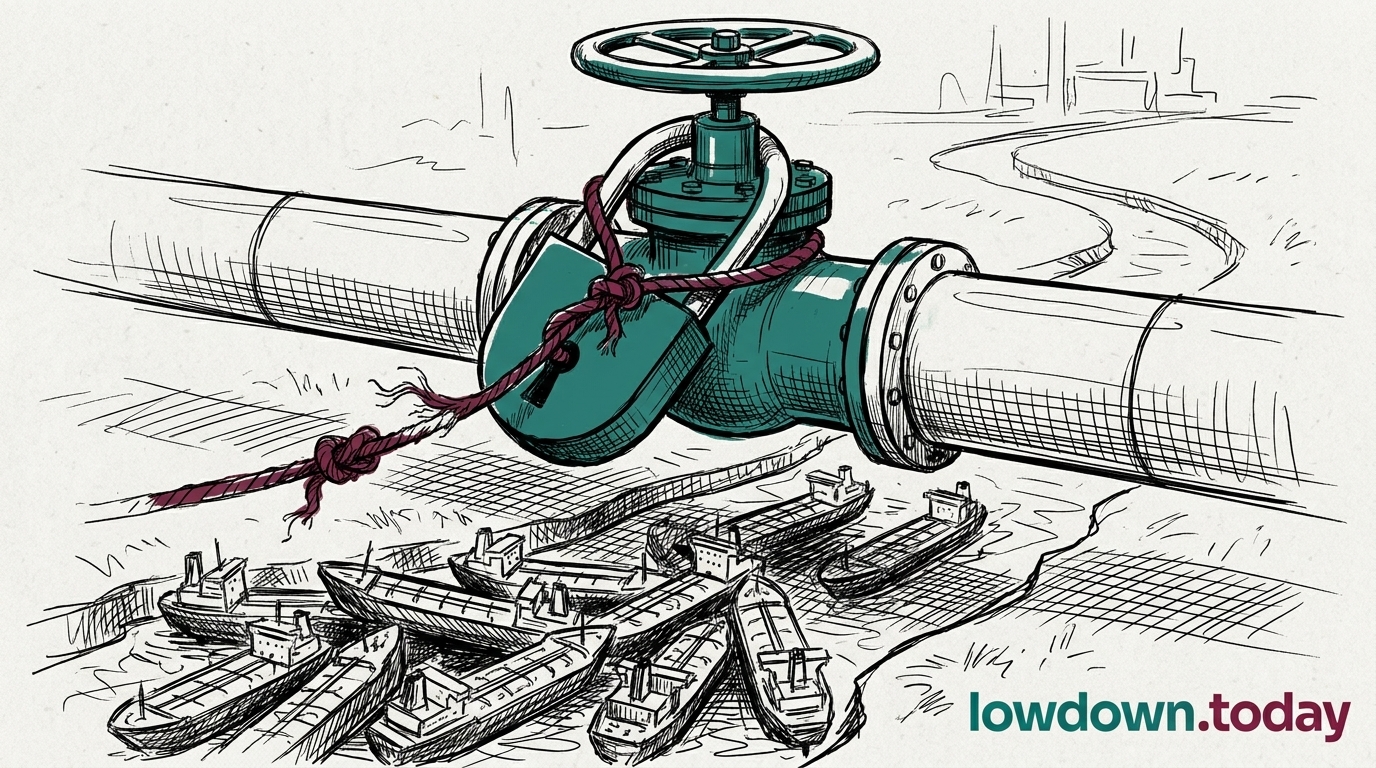
The TD3C Gulf-to-China route, the Baltic Exchange benchmark for very large crude carriers, held its 4Q26 forward rate at $181,163 a day on Monday 22 June, flat against the 16 June print and again on 19 June, even as Brent shed roughly 8% over the same stretch⁠1. At twice The Atlantic-basin equivalent, the curve is pricing a Hormuz recovery measured in months.

A forward freight rate that refuses to fall while the flat price drops 8% is the curve pricing the physical reopening constraints, mines uncleared and transit permits still live, that the prompt screen discounts. The geopolitics of the strait belong to the Iran desk; the freight book is ours, and it has not moved on the all-clear.

Western war-risk cover has returned to the strait, but at premiums that add a structural cost floor to every Gulf cargo, an insurance story in its own right. The signal here is the forward curve itself: it is reading the mines and the permits while the flat price is reading the diplomacy. They cannot both hold for long.

Deep Analysis

In plain English

Tanker freight rates tell you what it costs to move a large oil shipment by sea. TD3C is the standard measure for moving 270,000 tonnes of crude oil from the Middle East Gulf to China on a Very Large Crude Carrier (VLCC, a tanker roughly 340 metres long). Right now, the spot rate for a VLCC sailing today from the Gulf to China is around $412,000 per day. But the rate for a voyage in the last quarter of 2026 (Q4, October to December), traded on a forward contract, is only $181,163 per day. This gap, called a contango, shows the freight market expects Hormuz shipping costs to fall significantly by autumn, but not to fully recover to pre-war levels. At the same time, Brent Crude's price fell roughly 8% this week as oil traders priced in more Iranian supply from GL X. The freight rate did not fall at all. This matters because if oil traders were right that normal supply would be flowing again soon, freight rates should also be falling. The freight market's refusal to move suggests tanker operators and insurers see a different timeline: physical barriers like mine clearance and insurance reinstatement will keep Gulf shipping expensive for longer than the oil price is implying.

First Reported In

Update #11 · Thin Brent book, heavy WTI length into a loaded week

Lloyd's List· 26 Jun 2026
Read original →
Different Perspectives
S&P Global
S&P Global
S&P Global said on 12 November that thin refining buffers leave jet fuel exposed to price spikes in 2027. Its view cuts against the pump-lag case, because tight middle distillates would keep jet and diesel dear even as crude falls.
European Union
European Union
The Commission proposed a 22nd package on 23 November that would list more than 70 more tankers and ban Russia-insured ones, after listing Balance Insurance on 16 November. It needs every member state's vote, so Russian tanker insurance becomes the EU's next test of unanimity.
UK households and hauliers
UK drivers paid 193.29p a litre for diesel in the week of 23 November, DESNZ data show, 31.33p more than petrol, and BoilerJuice quoted heating oil at 96.51p a litre before VAT. They pay the gap that crude's fall has not closed, with motor fuels up 33.2% in October's inflation figures.
Saudi Arabia and the OPEC+ Seven
The OPEC+ Seven held December output at September's level on 1 November, and Saudi Aramco priced December Arab Light to Europe below Brent, Attaqa reported. The full group decides on Sunday 29 November whether about 2m b/d of cuts outlast 2026, with Saudi diesel loadings already up 30% in early November.
Eni
Eni
Eni reported a third-quarter standard refining margin of $28.1 a barrel and raised its full-year assumption from $14 to $18. Its finance chief Francesco Gattei said on the 23 October call that the quarter to date was at $18, press coverage reported, so the refiner sees its windfall shrinking.
Gulf oil producer
Gulf oil producer
Secured OPEC's confirmed 188,000 b/d September increment with the next meeting set for 6 September, but the Secretariat's own 2 August release says nothing about the fourth quarter. Output guidance beyond September remains undisclosed even as delegate sourcing keeps filling that gap.

Written with AI from Lowdown's published reporting. Not individually reviewed by an editor. Editorial standards.
