Skip to content
You can now search across every topic, entity and event.What's new
European Oil Markets
16JUL

Hormuz held severe as Guard herds ships

2 min read
09:39UTC

JMIC held the Strait of Hormuz at a severe threat level through 7 July as the IRGC hailed transponder-on vessels and directed them into the Iranian-controlled northern corridor.

EconomicAssessed
Key takeaway

Hormuz stayed at severe threat as the IRGC herded transponder-on ships into the corridor it controls.

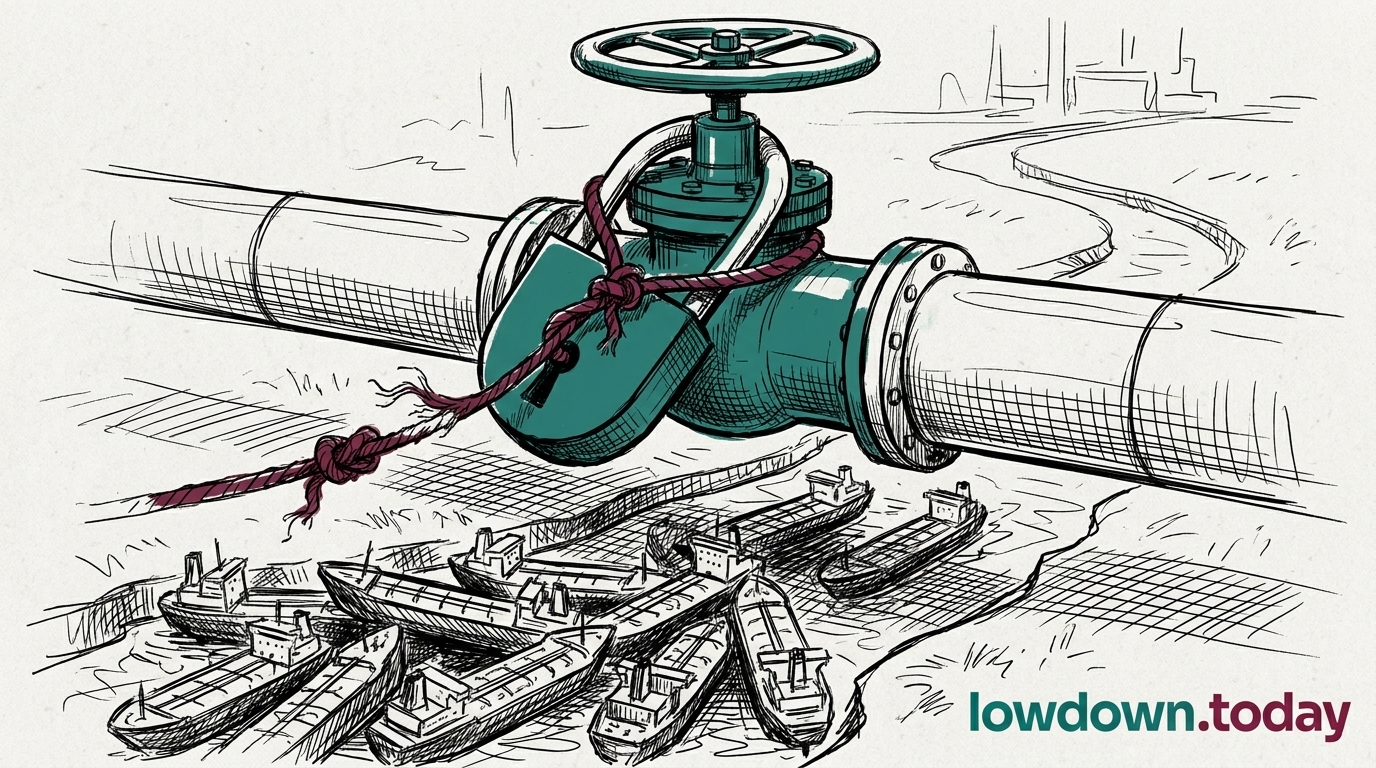
The Joint Maritime Information Center (JMIC), run through UK Maritime Trade Operations (UKMTO), held the Strait of Hormuz at a SEVERE threat level through 7 July in its Advisory Note Update 068. 1 JMIC is the body that issues Gulf maritime threat ratings to merchant shipping, and at severe, marine underwriters price each transit as a live war-risk exposure. Commercial traffic still runs through both the widened southern Omani corridor and the northern Iranian-controlled route.

Vessels transiting with Automatic Identification System (AIS) transponders switched on may be hailed and warned to divert to the northern route, the advisory said, and IRGC hailing has intensified to enforce that flow. 2 AIS is the shipboard transponder that broadcasts a vessel's identity and position, so leaving it on is what lets the Islamic Revolutionary Guard Corps (IRGC) pick out and redirect ships. Mine-risk reporting remains live within and adjacent to the Traffic Separation Scheme, the marked deep-water lanes that keep inbound and outbound tankers apart.

the strait had briefly recovered. Thirty-five tankers exited it at pre-war levels on 2 July before the IRGC suspended and re-policed its corridors . The sanctioned diversion now pushes vessels into water Iran controls, at the moment Washington has closed the legal channel for selling the cargo, so a single mine incident inside the northern lanes would test whether the widened southern corridor can absorb the diverted traffic at all.


Deep Analysis

In plain English

JMIC (the Joint Maritime Information Center) is a body, run through UKMTO (UK Maritime Trade Operations), that issues warnings to commercial ships about security threats in the Gulf. It kept the Strait of Hormuz at its highest threat level, SEVERE, through 7 July. Iran's IRGC (Islamic Revolutionary Guard Corps) has been hailing ships that have their AIS (Automatic Identification System, a tracking transponder all large ships must legally run) switched on, and ordering them into a narrower shipping lane it controls in the northern part of the strait. Mines have also been reported near the marked shipping lanes, adding to the danger for any vessel passing through.

Deep Analysis
Root Causes

JMIC's SEVERE rating extends a threat level set after the 25 June Ever Lovely attack, when the Persian Gulf Strait Authority first suspended the corridor; the mine-risk reporting near the Traffic Separation Scheme has never been formally lifted since.

The IRGC's reliance on AIS to hail vessels is a structural vulnerability it exploits deliberately: commercial ships cannot legally sail through the strait's narrow deep-water lanes with transponders off under IMO collision-avoidance rules, giving Iranian patrol craft a reliable, low-cost method to identify and divert targets without radar or satellite tracking.

What could happen next?
  • Risk

    Unresolved mine-risk reporting near the Traffic Separation Scheme raises the chance of an accidental strike on a vessel that has already complied with IRGC diversion orders.

  • Consequence

    A sustained SEVERE rating keeps war-risk insurance premiums elevated for any vessel transiting Hormuz regardless of whether it follows the IRGC's northern corridor.

First Reported In

Update #149 · The first thing Washington signed on Iran: a revocation

Times of Israel· 8 Jul 2026
Read original
Different Perspectives
Indian refiners
Indian refiners
Indian refiners kept lifting discounted Urals as the India/Baltic price split widened past $9-10 a barrel, a gap that only grows as GL X1's Iranian wind-down cuts an alternative discounted grade off the market by 17 July. Cheaper Russian feedstock is being locked in while it lasts.
Chinese refiners
Chinese refiners
Chinese refiners gain leverage as the Urals-Brent discount widens, since Beijing's state buyers already source discounted Russian barrels near the fiscal floor unaffected by Western insurance costs. A wider discount, if it holds past 23 July, lets them lock in cheaper term contracts regardless of the cap's outcome.
US money managers (CFTC-tracked)
Managed money trimmed WTI net length into the rally, positioning that reflects doubt the Hormuz premium survives without freight or war-risk confirmation. The Brent-WTI spread widening almost entirely on the Brent leg supports that scepticism about a broad-based repricing.
OPEC+ (Saudi-led subgroup)
Saudi Arabia is defending market share through a fourth straight 188kbd August hike even as OPEC's own July MOMR cut 2026 demand growth for the fourth consecutive month. At a $108-111 fiscal breakeven, every added barrel costs Riyadh revenue it cannot recoup, so the hike reads as a positioning signal, not a demand bet.
Greek shipping registries
Greece, backed by Cyprus and Malta, is pushing a three-month cap-freeze compromise against the Commission's freeze to January 2027 ahead of the 23 July vote. Athens' and Valletta's combined tanker registrations mean a shorter review gives their insurers more frequent chances to reprice risk on Russian cargoes.
Russia (Deputy PM Alexander Novak)
Novak extended the diesel export restriction to producers on 8 July, the first producer-binding curb of the war, protecting the domestic pump price ahead of any refinery repair timeline. Urals still trades below Russia's $59 budget floor even as Brent gained, so the ban trades export revenue for fiscal stability at home.