Skip to content
You can now search across every topic, entity and event.What's new
European Oil Markets
16JUL

FDD: oil licence has no enforcement

3 min read
09:39UTC

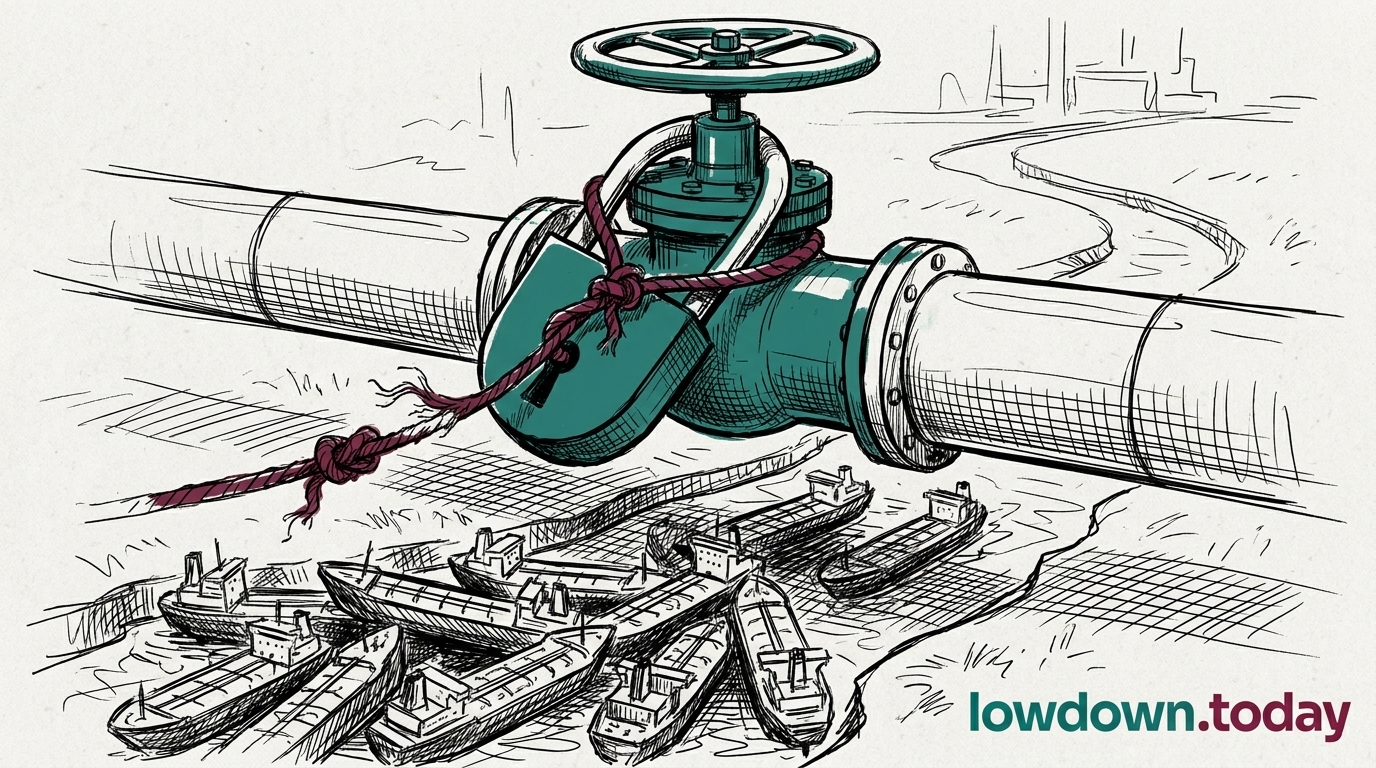
The Foundation for Defense of Democracies found that General License X carries no escrow, no value cap, no buyer list and no reporting, functioning as a 60-day safe harbour for Chinese refiners.

EconomicDeveloping
Key takeaway

General License X has no escrow, cap or reporting, mostly legalising the Chinese purchases already under way.

The Foundation for Defense of Democracies (FDD), a Washington think tank focused on Iran sanctions, found that General License X carries no escrow mechanism, no value cap, no approved-buyer list and no transaction reporting requirement 1. The licence is the OFAC instrument Treasury Secretary Bessent signed on 22 June , the first oil-relief paper of the war after 116 days of sanctions.

That absence of architecture changes what the licence does. Rather than relief for Iran, the FDD reads it as a 60-day safe harbour for the Chinese refiners and banks already buying Iranian crude through workarounds: it legalises the trade that was happening anyway, without recording who buys, how much, or at what price.

The revenue at stake makes the gap consequential. The FDD estimated roughly one-third of Iran's annual oil income, about $12.4 billion, flows to the IRGC and the armed forces, the same actors holding the nuclear file shut. No bank or trader had publicly disclosed a transaction under the licence as of 23-24 June. The signed paper exists; the enforcement that would make it accountable does not.


Deep Analysis

In plain English

On 22 June, the US Treasury issued a document called General License X, which allowed Iranian oil to be sold legally on international markets for 60 days. The Foundation for Defense of Democracies; a Washington think tank that monitors Iran sanctions; examined the document and found it had no safeguards: no limit on how much oil could be sold, no list of approved buyers, no requirement to report transactions, and no account held in escrow to ensure the money goes where it should. In practice, this means China; the main buyer of Iranian oil; can continue buying it through the same workaround channels it has used for years, now with a legal cover rather than sanctions risk. Roughly one-third of Iran's oil income, about $12.4 billion per year, goes to the IRGC (the country's powerful ideological military force). The licence does not prevent that from continuing.

Deep Analysis
Root Causes

GL X's lack of enforcement architecture reflects a tension inside the US sanctions regime that has existed since 2019: the secondary-sanctions threat against Chinese crude buyers was never enforced because designating Chinese state-owned refiners would trigger a full economic confrontation the Trump administration chose to avoid.

The FDD finding that roughly one-third of Iran's oil revenues (~$12.4bn) flows to the IRGC and armed forces was known at the time of GL X's drafting. The licence provides a market-price signalling benefit (Brent falling toward $76) without requiring the political cost of secondary sanctions to enforce Iranian compliance.

First Reported In

Update #137 · Iran and Oman claim the strait; US says no

Foundation for Defense of Democracies· 24 Jun 2026
Read original
Different Perspectives
Indian refiners
Indian refiners
Indian refiners kept lifting discounted Urals as the India/Baltic price split widened past $9-10 a barrel, a gap that only grows as GL X1's Iranian wind-down cuts an alternative discounted grade off the market by 17 July. Cheaper Russian feedstock is being locked in while it lasts.
Chinese refiners
Chinese refiners
Chinese refiners gain leverage as the Urals-Brent discount widens, since Beijing's state buyers already source discounted Russian barrels near the fiscal floor unaffected by Western insurance costs. A wider discount, if it holds past 23 July, lets them lock in cheaper term contracts regardless of the cap's outcome.
US money managers (CFTC-tracked)
Managed money trimmed WTI net length into the rally, positioning that reflects doubt the Hormuz premium survives without freight or war-risk confirmation. The Brent-WTI spread widening almost entirely on the Brent leg supports that scepticism about a broad-based repricing.
OPEC+ (Saudi-led subgroup)
Saudi Arabia is defending market share through a fourth straight 188kbd August hike even as OPEC's own July MOMR cut 2026 demand growth for the fourth consecutive month. At a $108-111 fiscal breakeven, every added barrel costs Riyadh revenue it cannot recoup, so the hike reads as a positioning signal, not a demand bet.
Greek shipping registries
Greece, backed by Cyprus and Malta, is pushing a three-month cap-freeze compromise against the Commission's freeze to January 2027 ahead of the 23 July vote. Athens' and Valletta's combined tanker registrations mean a shorter review gives their insurers more frequent chances to reprice risk on Russian cargoes.
Russia (Deputy PM Alexander Novak)
Novak extended the diesel export restriction to producers on 8 July, the first producer-binding curb of the war, protecting the domestic pump price ahead of any refinery repair timeline. Urals still trades below Russia's $59 budget floor even as Brent gained, so the ban trades export revenue for fiscal stability at home.