Skip to content
You can now search across every topic, entity and event.What's new
European Oil Markets
3JUL

Ghalibaf: hungry Iran will not endure

2 min read
10:26UTC

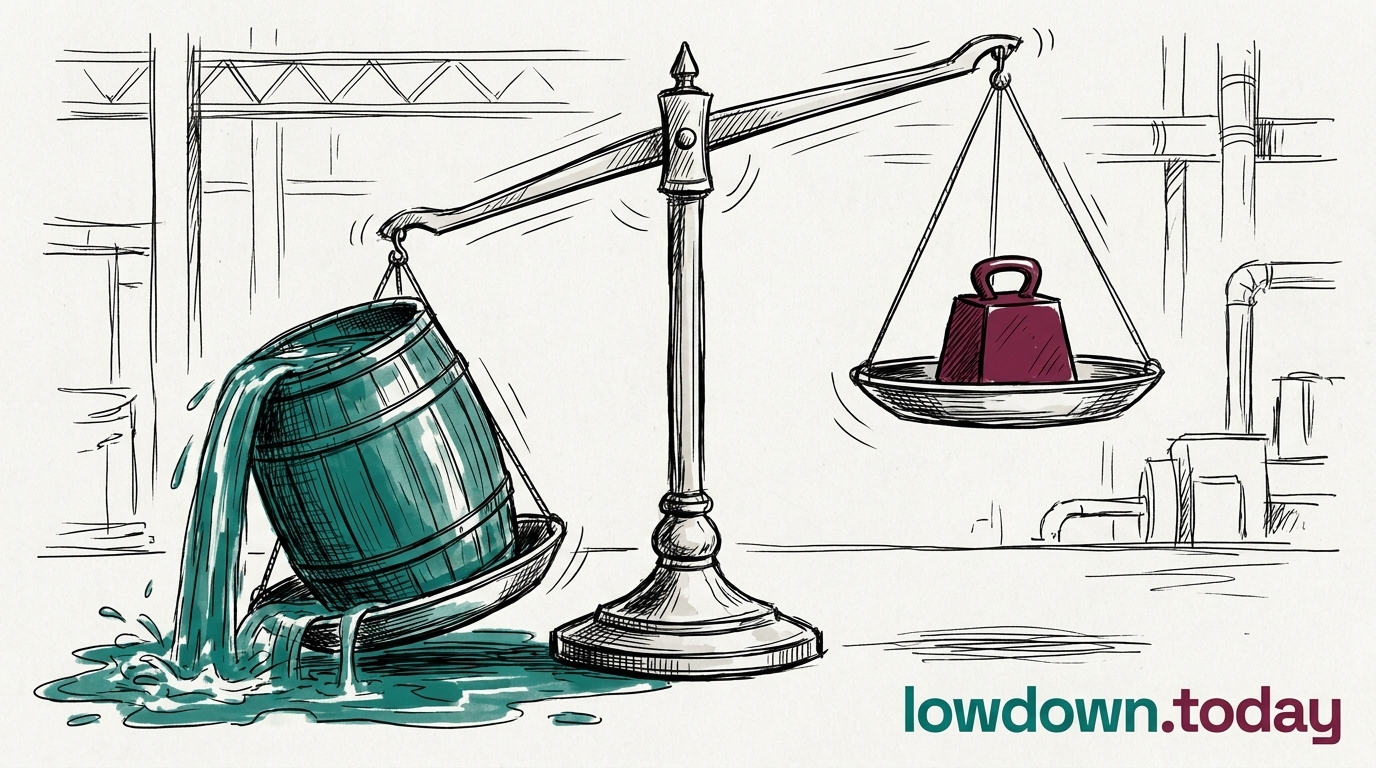
Iran's parliamentary Speaker told a Baghdad business meeting that military power counts for nothing if the population is hungry. Hardliners turned on him within a day, not for being wrong but for saying it abroad.

EconomicDeveloping
Key takeaway

Tehran's leadership is arguing about disclosure of the economic damage, not about the damage itself.

Mohammad Bagher Ghalibaf, Speaker of the Majlis, Iran's parliament, told a business meeting in Baghdad on Thursday 20 August that no matter how much military power Iran holds, it will not endure if its people are hungry 12. Ghalibaf has sat close to the ceasefire negotiations with Washington, which makes him an unusual source for a concession of this kind, and he made it in a neighbouring capital rather than at home.

Hardliners turned on him within a day. A former state television presenter accused him on X of sending a message of weakness 3. In Iran's factional politics, conceding economic distress in a foreign capital reads as a bargaining weakness to those who reject negotiation with Washington, whatever the state's own statistics office publishes 4.

Four days earlier the same man had told parliament's security Commission that Iran had won the war . Nobody in the exchange contests the underlying figures, which Iran's government publishes itself. What is being fought over is the audience: whether a senior official may say out loud, in Baghdad, that the war has reached the household budget. A Speaker who has justified the point in public cannot easily vote down a food coupon expansion built on it, which is why the backlash arrived so fast.


Deep Analysis

In plain English

Mohammad Bagher Ghalibaf is the Speaker of Iran's parliament, its most senior elected official after the presidency. He told a business meeting in Iraq that Iran's people are going hungry and that military strength alone cannot fix that. Hardliners in Iran, who oppose talks with Washington, accused him of making Iran look weak by admitting the problem abroad. The row shows how even naming a food shortage has become politically dangerous inside Iran.

Deep Analysis
Root Causes

Iran's factional system ties economic candour to the unresolved question of who controls negotiating authority with Washington. Figures who concede hardship abroad are read by hardliners as legitimising talks Iran ruled out extending only days earlier .

Ghalibaf's position as Speaker, rather than an economic minister, adds a separate structural problem: he holds no portfolio to answer for the shortage he named, so hardliners can attack the messenger without rebutting a policy.

What could happen next?
  • Risk

    Public hunger warnings from senior officials give hardliners a recurring pretext to challenge anyone seen as softening Iran's negotiating position.

First Reported In

Update #174 · A $22.9bn missile order, and a hunger row

Iran International· 23 Aug 2026
Read original
Causes and effects
This Event
Ghalibaf: hungry Iran will not endure
The argument inside Tehran is over whether an official may admit the economic damage, not over whether it is real.
Different Perspectives
Gulf oil producer
Gulf oil producer
Secured OPEC's confirmed 188,000 b/d September increment with the next meeting set for 6 September, but the Secretariat's own 2 August release says nothing about the fourth quarter. Output guidance beyond September remains undisclosed even as delegate sourcing keeps filling that gap.
Money manager positioned in WTI
Added 21,402 lots to a 108,307 net long in NYMEX WTI in the week to 28 July, against just 1,485 added to Brent's 15,740, a roughly fourteen-to-one split. Conviction sits in the American benchmark even as the European diesel story sets the record.
Indian refiner buying Urals
Bought Russian crude at a discount that narrowed to $1-2 a barrel in the week to 29 July from over $10, as Hormuz risk pushed it toward Urals. If that risk eases with the strike now called off, the discount it is currently enjoying could re-widen just as fast.
Russian diesel exporter
Novak tied any lifting of the diesel export ban, due to lapse 31 July, to an unspecified market recovery with no date, and pushed the gasoline ban to end-2026. An open-ended constraint suits an exporter benefiting from the record European crack it feeds.
War-risk underwriter
Withdrew war-risk cover for Saudi-linked hulls on 24 July and has not reinstated it, holding Bab el-Mandeb tanker transits near 7.5 a day. A cancelled strike does not by itself trigger the committee review needed to re-accept the class.
Northwest European refiner
Sources only 17% of diesel imports from Saudi Red Sea ports against the Mediterranean's 24%, so the ARA crack at $85.86 trails the Med print by $5.81. Lower Red Sea exposure is cushioning it against the rerouting cost, not eliminating it.