Skip to content
You can now search across every topic, entity and event.What's new
European Oil Markets
22JUN

CENTCOM turns more ships, breaks fewer

2 min read
09:55UTC

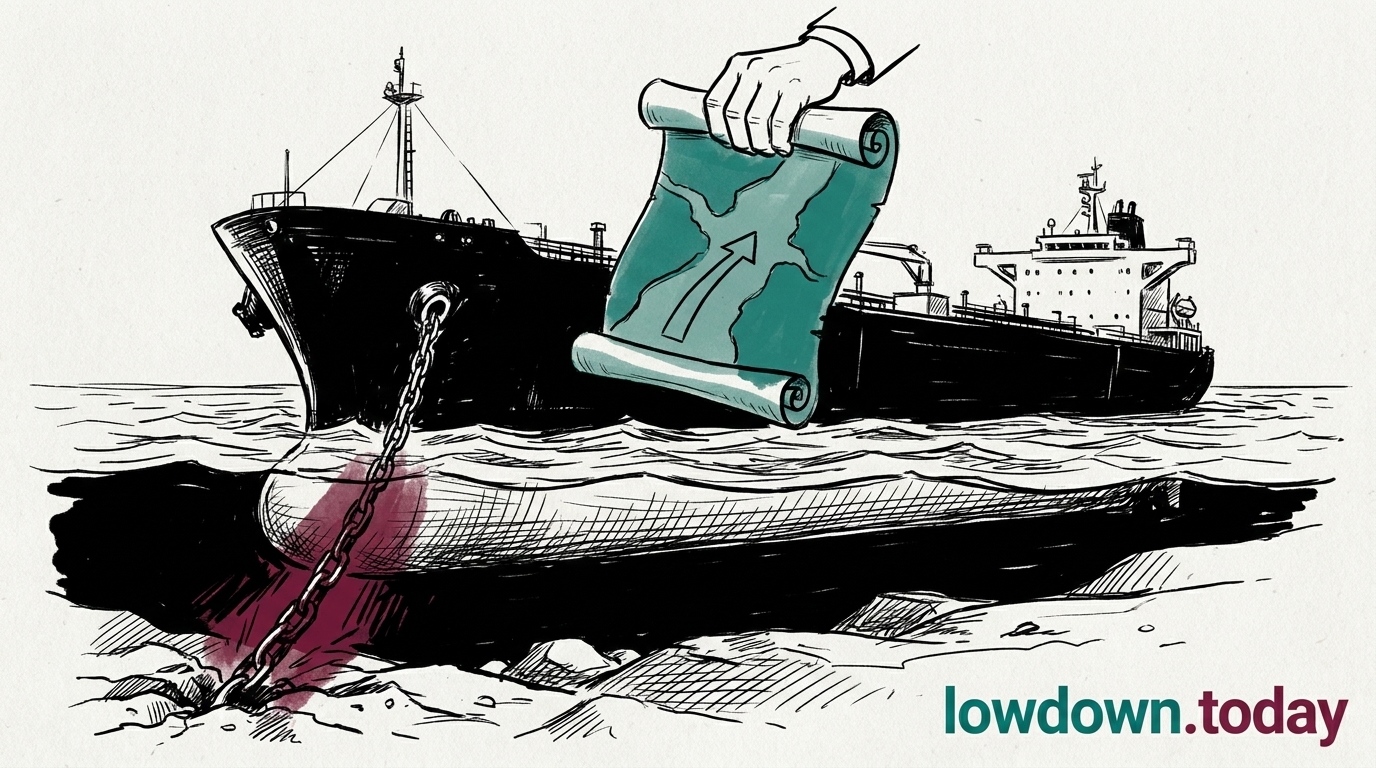
US Central Command put its Iranian port blockade at 49 redirected vessels, two disabled and two boarded, a mix that turns merchant traffic around without wrecking it.

EconomicDeveloping
Key takeaway

CENTCOM is running interdiction as traffic management, keeping escalation in reserve rather than spending it.

CENTCOM (United States Central Command), the American military command covering the Middle East, posted at 17:23 UTC on Thursday 6 August that since its blockade of Iranian ports resumed on Tuesday 14 July it has redirected 49 commercial vessels, disabled two and boarded two 123. The command has published no vessel names, flags or cargoes.

The count itself, and the presidential promise of a reopening that followed it, already sit on this record . Two campaigns now sit close enough to compare by shape rather than size. Across roughly 24 days, 49 redirections works out at about two ships turned around a day, and the April to June operation ran at much the same daily tempo. The two campaigns part company in the kinetic column. That earlier operation disabled roughly one vessel for every 15 it redirected. This one has disabled one for every 25, and the boarding figure has not moved since it was first disclosed.

So comparable numbers of merchant ships are being turned around each day at a little over half the force per hull. Redirecting a vessel costs its charterer a delay and its owner some fuel. Disabling one costs a hull, a crew and an incident no negotiation easily survives. The current mix therefore keeps the pressure inside charterparty economics, the contract between shipowner and cargo hirer, rather than inside hull losses. That is a choice about method, not a limit of capability, and every day the ratio holds is a day Washington can release the pressure with a signature instead of a settlement.


Deep Analysis

In plain English

The US military's Central Command said its blockade of Iranian ports, which resumed on 14 July, has now redirected 49 commercial ships away from Iran, disabled two and boarded two. 'Redirected' means a ship changed course rather than trying to reach an Iranian port. 'Disabled' means the US Navy stopped a ship from moving. The low number of disabled ships compared with redirected ones shows most vessels are choosing to avoid the area rather than being forced to stop.

Deep Analysis
Root Causes

CENTCOM's interdiction runs on its own military timeline, independent of the Oman-mediated Hormuz corridor talks. The blockade resumed on 14 July and its tally keeps accumulating regardless of diplomatic progress, which is why the redirected-vessel count rose again in the same week Trump promised a reopening .

A low disable rate against a high redirect rate, two of 49, suggests the interdiction is designed to reroute traffic rather than physically stop it, keeping pressure on shipping economics without escalating to the kind of confrontation a rising disabled-vessel count would represent.

What could happen next?
  • Consequence

    A rising redirect count without a rising disable count signals CENTCOM is achieving compliance through deterrence rather than force, which keeps the blockade's political cost lower than a series of forced boardings would.

First Reported In

Update #167 · Riyadh names its next targets; Najran is hit

Shafaq News· 7 Aug 2026
Read original
Causes and effects
This Event
CENTCOM turns more ships, breaks fewer
Interdiction run as traffic management holds the option to escalate rather than spending it.
Different Perspectives
Gulf oil producer
Gulf oil producer
Secured OPEC's confirmed 188,000 b/d September increment with the next meeting set for 6 September, but the Secretariat's own 2 August release says nothing about the fourth quarter. Output guidance beyond September remains undisclosed even as delegate sourcing keeps filling that gap.
Money manager positioned in WTI
Added 21,402 lots to a 108,307 net long in NYMEX WTI in the week to 28 July, against just 1,485 added to Brent's 15,740, a roughly fourteen-to-one split. Conviction sits in the American benchmark even as the European diesel story sets the record.
Indian refiner buying Urals
Bought Russian crude at a discount that narrowed to $1-2 a barrel in the week to 29 July from over $10, as Hormuz risk pushed it toward Urals. If that risk eases with the strike now called off, the discount it is currently enjoying could re-widen just as fast.
Russian diesel exporter
Novak tied any lifting of the diesel export ban, due to lapse 31 July, to an unspecified market recovery with no date, and pushed the gasoline ban to end-2026. An open-ended constraint suits an exporter benefiting from the record European crack it feeds.
War-risk underwriter
Withdrew war-risk cover for Saudi-linked hulls on 24 July and has not reinstated it, holding Bab el-Mandeb tanker transits near 7.5 a day. A cancelled strike does not by itself trigger the committee review needed to re-accept the class.
Northwest European refiner
Sources only 17% of diesel imports from Saudi Red Sea ports against the Mediterranean's 24%, so the ARA crack at $85.86 trails the Med print by $5.81. Lower Red Sea exposure is cushioning it against the rerouting cost, not eliminating it.



