Skip to content
You can now search across every topic, entity and event.What's new
European Oil Markets
22JUN

BitBank and Zanjani hit by US sanctions

2 min read
09:55UTC

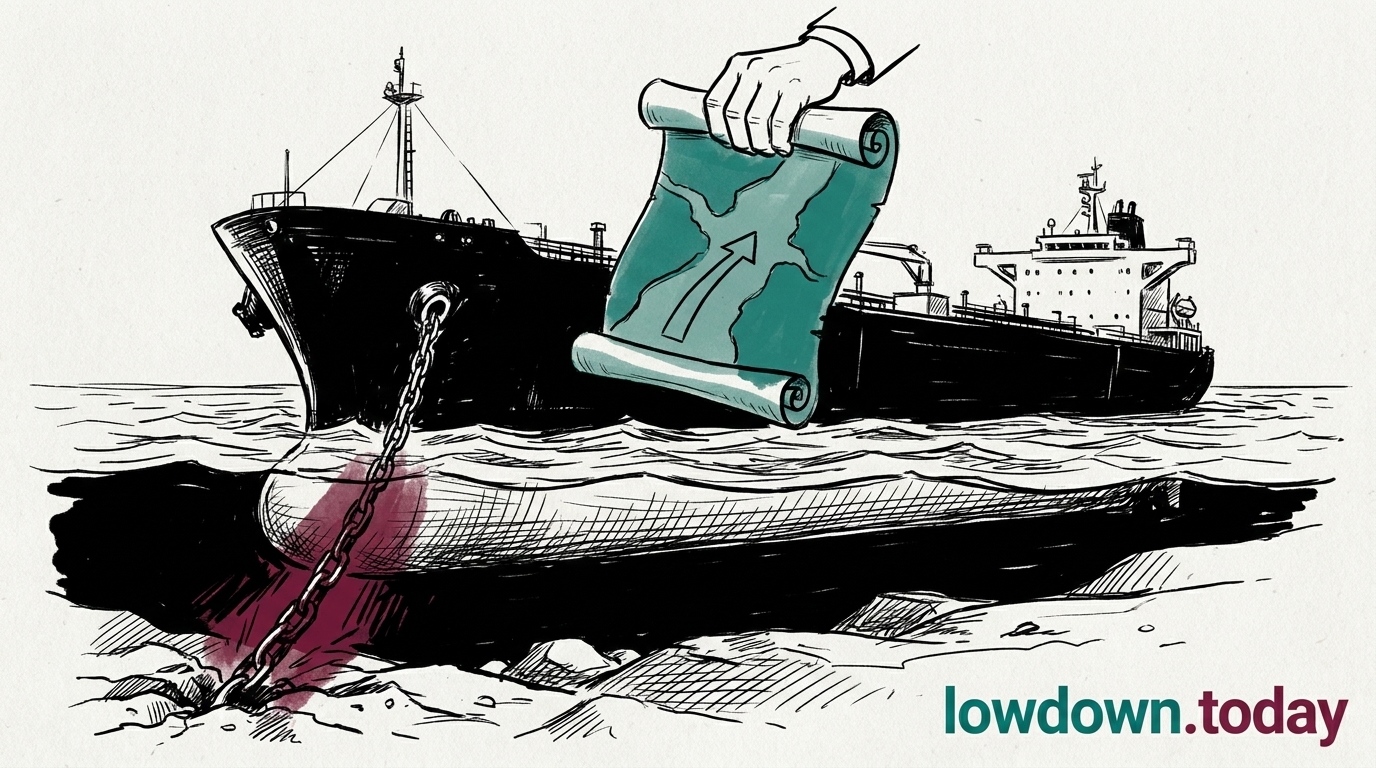
OFAC designated the Iranian crypto exchange BitBank on Thursday 17 September, along with its developer and three associates of Babak Zanjani. Treasury says a sanctioned Hormuz shipping authority has used it since June to pay the Iranian government.

EconomicAssessed
Key takeaway

Iran's sanctioned shipping fees moved onto a crypto exchange, and Treasury has now seized that rail.

OFAC designated BitBank, an Iranian crypto exchange controlled by Babak Zanjani, along with its developer Pishtaz Simorgh Electronic Trade Company and three Zanjani associates on Thursday 17 September, in an action Treasury calls Operation Economic Outcast 1. Treasury says the already-designated Hormuz Safe Marine Services Authority has used BitBank since June 2026 to move payments to the Iranian government, and that Zanjani's network has pushed hundreds of millions of dollars in Bitcoin to the Islamic Revolutionary Guard Corps (IRGC) 2. Treasury asserts both claims and no independent body has tested them.

Read against the shipping file, the designation describes a substitution rather than a discovery. A marine services authority exists to collect fees, and fees have to settle somewhere. Cut off from correspondent banking, that traffic moves onto an exchange, and an exchange is a smaller, more brittle thing to seize than a bank: it has a named operator, a named developer and a handful of addresses. The chain is easier to sanction and easier to rebuild, which is why these actions arrive in sequence.

OFAC hit an earlier Zanjani network under the same executive order on 24 July , so this is a campaign continuing rather than a new front. Nothing in the announcement names a successor exchange, and Treasury has not said how much of the flagged Bitcoin was frozen rather than merely traced, so how fast the network rebuilds cannot be judged from the designation alone.


Deep Analysis

In plain English

BitBank is an Iranian cryptocurrency exchange controlled by Babak Zanjani, a financier who was convicted in 2016 of stealing $2.7 billion in Iranian oil money (his sentence was later reduced). The US Treasury's sanctions arm, OFAC, has now formally blacklisted BitBank, its software developer, and three of Zanjani's associates. Treasury says a shipping authority that operates in the Strait of Hormuz, already under US sanctions, has been using BitBank since June to move money to the Iranian government. Sanctioning BitBank is meant to cut off that specific payment route, using cryptocurrency to get around the traditional banking sanctions Iran already faces.

What could happen next?
  • Meaning

    Treasury has documented, for the first time in this run's record, a specific crypto exchange used by an already-sanctioned Hormuz shipping entity to move government payments, rather than a general crypto-evasion warning.

First Reported In

Update #179 · Russia and China kill Iran's UN monitor

US Department of the Treasury· 21 Sept 2026
Read original
Causes and effects
Different Perspectives
Gulf oil producer
Gulf oil producer
Secured OPEC's confirmed 188,000 b/d September increment with the next meeting set for 6 September, but the Secretariat's own 2 August release says nothing about the fourth quarter. Output guidance beyond September remains undisclosed even as delegate sourcing keeps filling that gap.
Money manager positioned in WTI
Added 21,402 lots to a 108,307 net long in NYMEX WTI in the week to 28 July, against just 1,485 added to Brent's 15,740, a roughly fourteen-to-one split. Conviction sits in the American benchmark even as the European diesel story sets the record.
Indian refiner buying Urals
Bought Russian crude at a discount that narrowed to $1-2 a barrel in the week to 29 July from over $10, as Hormuz risk pushed it toward Urals. If that risk eases with the strike now called off, the discount it is currently enjoying could re-widen just as fast.
Russian diesel exporter
Novak tied any lifting of the diesel export ban, due to lapse 31 July, to an unspecified market recovery with no date, and pushed the gasoline ban to end-2026. An open-ended constraint suits an exporter benefiting from the record European crack it feeds.
War-risk underwriter
Withdrew war-risk cover for Saudi-linked hulls on 24 July and has not reinstated it, holding Bab el-Mandeb tanker transits near 7.5 a day. A cancelled strike does not by itself trigger the committee review needed to re-accept the class.
Northwest European refiner
Sources only 17% of diesel imports from Saudi Red Sea ports against the Mediterranean's 24%, so the ARA crack at $85.86 trails the Med print by $5.81. Lower Red Sea exposure is cushioning it against the rerouting cost, not eliminating it.



