Skip to content
You can now search across every topic, entity and event.What's new
European Oil Markets
18MAY

EC opens DMA cloud probes against AWS and Azure

3 min read
17:30UTC

Brussels extended its gatekeeper enforcement from app stores into cloud infrastructure. Washington called it economic warfare.

EconomicDeveloping
Key takeaway

DMA cloud probes target the switching costs that protect US hyperscalers' 70% European market share.

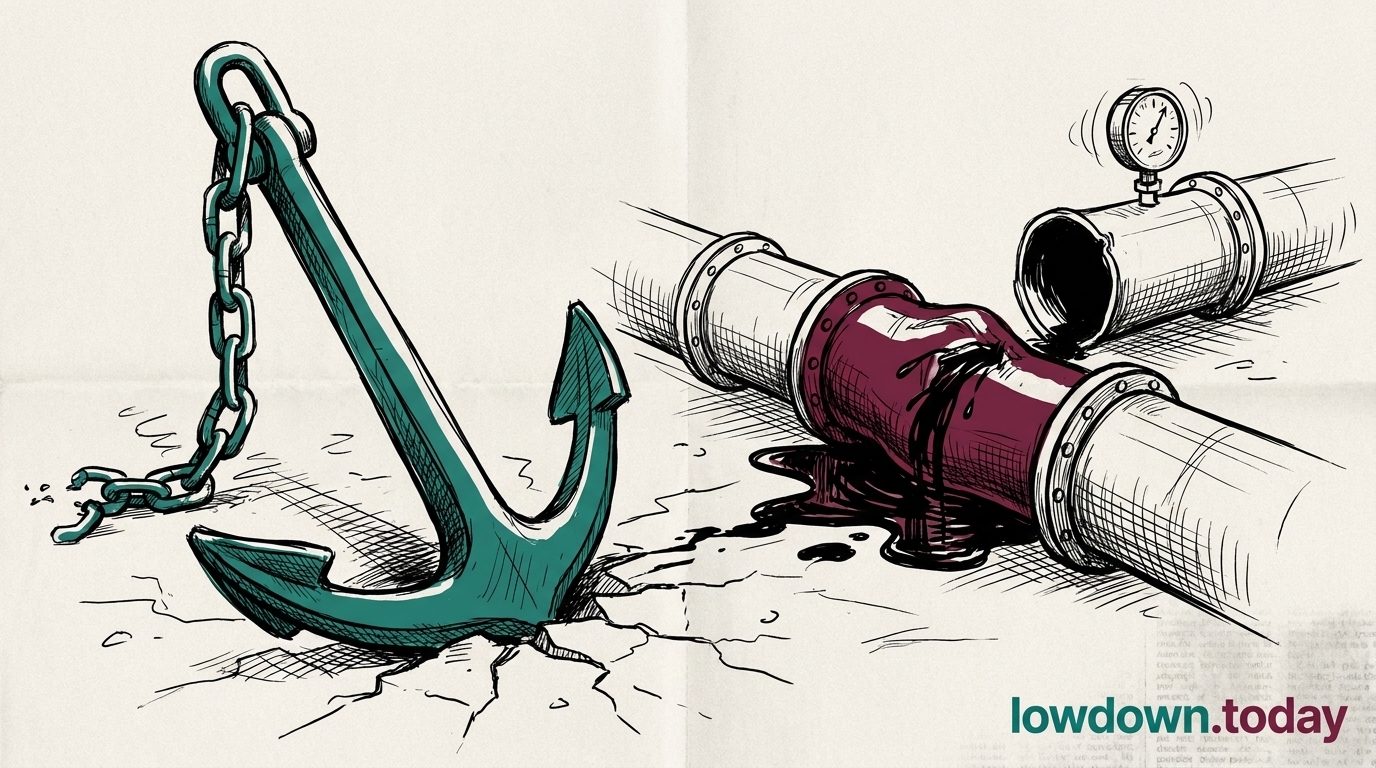
The European Commission opened cloud gatekeeper probes against Amazon and Microsoft in late 2025, extending Digital Markets Act enforcement to cloud infrastructure for the first time 1. The probes could mandate interoperability standards and data portability requirements, lowering switching costs for European enterprises running workloads on AWS and Azure.

The US administration treated the move as an escalation. A Section 301 investigation (a US trade law authorising retaliatory tariffs) explicitly named DMA cloud rules as "economic warfare" 2. Washington's response focused on the cloud probes, not the consumer-facing app store fines, a distinction that reveals which enforcement actions the US considers a genuine threat to its companies' market position.

European cloud providers already compete effectively on price. A Callista benchmark from February 2026 found Hetzner delivers 14.3 times the compute value per unit cost compared to AWS; Scaleway delivers 4.8 times the value per euro 3. The barrier to European cloud adoption is not cost. It is enterprise inertia, migration complexity, and gaps in managed services. DMA interoperability mandates would address the switching cost problem directly, though the timeline from probe to enforceable remedy is measured in years, not months.

EU-native cloud providers hold approximately 15% of the European cloud market against 70% for AWS, Azure, and Google combined 4. If the probes result in enforceable interoperability rules, the price advantage European providers already hold could translate into market share gains that pure competition has not delivered.


Deep Analysis

In plain English

Amazon Web Services (AWS) and Microsoft Azure are the two largest cloud computing companies in the world. A cloud company provides the computing power, storage, and software services that businesses use to run their digital operations; everything from email to product websites to banking systems. The European Commission opened formal investigations into both companies in late 2025 under the Digital Markets Act, the same law used to fine Apple and Meta. The allegation is that AWS and Azure make it too difficult and expensive for businesses to switch to a different cloud provider, locking them in through technical complexity and proprietary data formats. The United States responded by opening a formal trade investigation, calling the EU rules 'economic warfare'. This is an escalating diplomatic and legal dispute about whether the EU can regulate how American technology companies operate within Europe; even if those companies are based in the US.

Deep Analysis
Root Causes

The cloud probe's root cause is the CLOUD Act problem: US law gives American intelligence and law enforcement agencies the right to demand data from US companies regardless of where it is stored.

For European enterprises handling sensitive data, this creates a structural incompatibility with EU data protection law. DMA interoperability mandates are partly a workaround: if switching costs are reduced, European enterprises can move to EU-based cloud providers that are not subject to CLOUD Act jurisdiction.

The Hetzner 14.3x and Scaleway 4.8x cost-performance differentials relative to AWS reflect genuine economic inefficiency in the cloud market, driven partly by AWS/Azure margin extraction from captive customers and partly by the genuine premium for AWS's additional services and global reach.

DMA interoperability mandates would make switching to European providers more viable by reducing the migration cost, which is currently estimated at 18-36 months of engineering effort for large enterprise workloads.

What could happen next?
  • Opportunity

    DMA cloud interoperability mandates could structurally reduce AWS/Azure switching costs, potentially shifting 5-15 percentage points of European cloud market share to EU-native providers over a 5-year horizon.

    Long term · 0.6
  • Risk

    US Section 301 investigation creates trade retaliation risk; tariffs on EU goods or withdrawal from bilateral digital trade agreements; that could force a political compromise limiting DMA cloud enforcement.

    Medium term · 0.65
  • Precedent

    A successful DMA cloud probe outcome establishing interoperability standards would create a replicable regulatory template for cloud market structure globally, potentially triggering similar proceedings in the UK, Japan, and Australia.

    Long term · 0.55
First Reported In

Update #1 · Europe's chip ambitions meet reality

CNBC· 13 Apr 2026
Read original
Causes and effects
This Event
EC opens DMA cloud probes against AWS and Azure
Cloud gatekeeper probes could mandate interoperability standards that lower switching costs for European enterprises, directly benefiting EU-native providers like OVHcloud and Hetzner that already win on price but lose on enterprise inertia.
Different Perspectives
Indian refiners
Indian refiners
Indian refiners kept lifting discounted Urals as the India/Baltic price split widened past $9-10 a barrel, a gap that only grows as GL X1's Iranian wind-down cuts an alternative discounted grade off the market by 17 July. Cheaper Russian feedstock is being locked in while it lasts.
Chinese refiners
Chinese refiners
Chinese refiners gain leverage as the Urals-Brent discount widens, since Beijing's state buyers already source discounted Russian barrels near the fiscal floor unaffected by Western insurance costs. A wider discount, if it holds past 23 July, lets them lock in cheaper term contracts regardless of the cap's outcome.
US money managers (CFTC-tracked)
Managed money trimmed WTI net length into the rally, positioning that reflects doubt the Hormuz premium survives without freight or war-risk confirmation. The Brent-WTI spread widening almost entirely on the Brent leg supports that scepticism about a broad-based repricing.
OPEC+ (Saudi-led subgroup)
Saudi Arabia is defending market share through a fourth straight 188kbd August hike even as OPEC's own July MOMR cut 2026 demand growth for the fourth consecutive month. At a $108-111 fiscal breakeven, every added barrel costs Riyadh revenue it cannot recoup, so the hike reads as a positioning signal, not a demand bet.
Greek shipping registries
Greece, backed by Cyprus and Malta, is pushing a three-month cap-freeze compromise against the Commission's freeze to January 2027 ahead of the 23 July vote. Athens' and Valletta's combined tanker registrations mean a shorter review gives their insurers more frequent chances to reprice risk on Russian cargoes.
Russia (Deputy PM Alexander Novak)
Novak extended the diesel export restriction to producers on 8 July, the first producer-binding curb of the war, protecting the domestic pump price ahead of any refinery repair timeline. Urals still trades below Russia's $59 budget floor even as Brent gained, so the ban trades export revenue for fiscal stability at home.