Skip to content
You can now search across every topic, entity and event.What's new
European Energy Markets
23JUL

Five finance ministers push windfall levy on energy

3 min read
19:31UTC

Germany, Italy, Spain, Portugal and Austria wrote jointly to Commissioner Wopke Hoekstra on 4 April calling for a new EU-wide contribution modelled on the 2022-23 solidarity levy.

EconomicDeveloping
Key takeaway

Five capitals have put a windfall levy on the table before the Commission's April energy calendar closes.

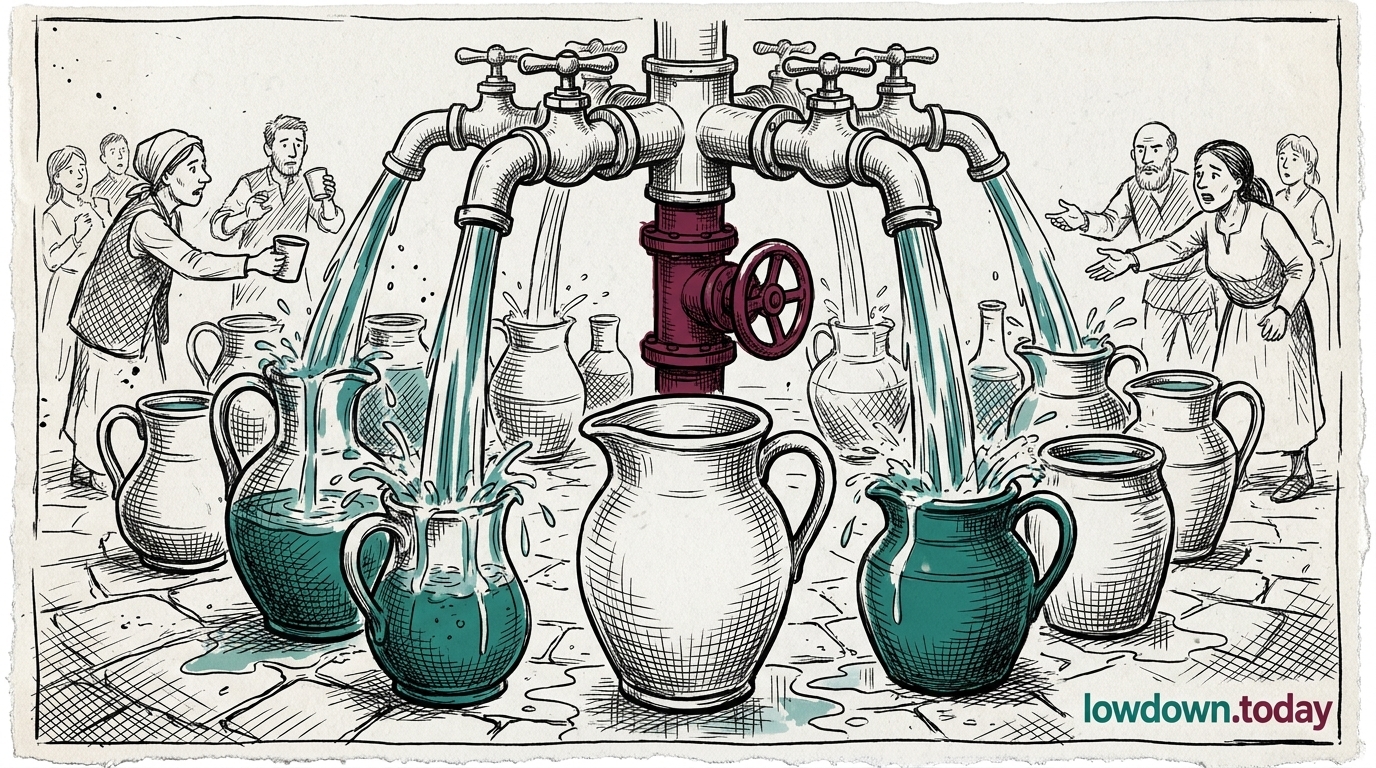
Finance ministers of Germany, Italy, Spain, Portugal and Austria wrote jointly to EU Climate Commissioner Wopke Hoekstra on 4 April calling for a new EU-wide windfall contribution on energy company profits, modelled on the 2022-23 solidarity levy 1. Eurozone inflation rose to 2.5% in March from 1.9% in February, largely on energy.

The political mechanism is familiar from the 2022 solidarity levy: governments facing renewed household cost-of-living pressure look for a revenue instrument that does not require direct fiscal transfer and lands on politically visible corporate profits. The signatories are the five member states running the highest consumer-facing gas tariffs relative to pre-2022 baselines, and the Ember analysis showed EU household gas bills still 16% above 2021 levels .

The Commission's position is more constrained than the 2022 moment. The reduced 80% November storage target is already a concession to the supply-side difficulty of the Bruegel EUR 35 billion refill ; stacking a windfall contribution on top of a Russian LNG ban implementation in the same fortnight compresses the room for negotiation with industry. If adopted, the levy redistributes cost from consumer to energy-profit balance sheets; if deferred, it becomes a campaign issue in member states with 2026 elections on the calendar.

The operational read for energy-sector finance leads is that the 4 April letter is a forward commitment, not a proposal. It places a funded position on the table before the 40th Gas Regulatory Forum convenes in Madrid on 29 April context, which means the Forum's agenda now includes a redistribution argument The Commission did not choose to open.

Deep Analysis

In plain English

When gas prices spike, energy companies making much higher profits than normal on existing contracts and assets receive what are called 'windfall profits'. In 2022-23, during the last major energy crisis, the EU introduced a one-off levy on energy companies to capture some of these extra profits and use them to support consumers. On 4 April 2026, the finance ministers of Germany, Italy, Spain, Portugal, and Austria jointly wrote to the EU's Climate Commissioner calling for a new version of this levy. They cited a rise in eurozone inflation from 1.9% to 2.5% in March, largely driven by energy costs. The proposal faces the same design challenge as last time: if the levy reduces the financial incentive for energy companies to invest in new supply infrastructure, it could worsen the very shortage that is causing the high prices.

What could happen next?
  • Risk

    A hastily designed levy repeating 2022-23's national divergence would face legal challenge across multiple member states, delaying any consumer relief by 12-18 months.

  • Opportunity

    If designed with the UK EPL's investment allowance structure, a 2026 levy could fund consumer relief while preserving incentives for LNG terminal expansion investment that Europe requires to close the 180-cargo structural gap.

First Reported In

Update #2 · TTF EUR 42 as Russian LNG ban enters range

European Commission· 15 Apr 2026
Read original
Different Perspectives
French industrial power consumers
France's day-ahead discount to Germany has nearly closed as TTF and EUA rise together on both sides of the border, eroding the arbitrage French industry relied on through the summer. A standing negative spark removes the German demand buffer that kept that spread wide.
TTF trading desks
TTF trading desks
Desks are reading the inversion as an injection-arbitrage trade: buy TTF at EUR 62.4/MWh now, accept the near-term loss on the spread, and sell into the winter strip once caverns are forced back into the market. The 0.8 GWh/day German print makes that trade increasingly asymmetric.
Oxford Institute for Energy Studies
Two straight sessions of negative clean spark spread confirm gas has stopped setting German power prices cleanly; CCGT dispatch now follows the spread's sign, not storage need. Caverns quitting the prompt bid on 21 July is that mechanism working exactly as the structural read predicts.
European Commission
European Commission
State-aid approval for StromVKG has not been granted, a status Bundesnetzagentur's own scheme page confirms, and Brussels was not consulted before the auction opened. Every award from the 8 September deadline stays exposed to a formal proceeding or clawback once the Commission rules.
Bundesnetzagentur
Bundesnetzagentur
Bundesnetzagentur opened the first 4.5 GW StromVKG capacity auction on 21 July, bids due 8 September, without waiting for EU state-aid clearance. Berlin is treating Germany's 24% share of EU storage as urgent enough to move first on capacity and negotiate the state-aid question with Brussels afterwards.
Marine insurers and AIS trackers covering Hormuz
AIS data shows severe curtailment on 20 July, 479 vessels anchored, 36 dark, 123 still broadcasting inside the strait, not the closure the IRGC claims. War-risk premiums move on the unresolved CENTCOM-IRGC contest itself, since underwriters price the dispute as much as the count.

