Skip to content
European Energy Markets
15APR

Bruegel data: record March LNG was pre-ban loading

2 min read
13:33UTC

EU LNG imports hit a record monthly total in March 2026, including record US deliveries and high Russian volumes.

PoliticsDeveloping
Key takeaway

March's record LNG month was a pre-ban window, not a supply recovery.

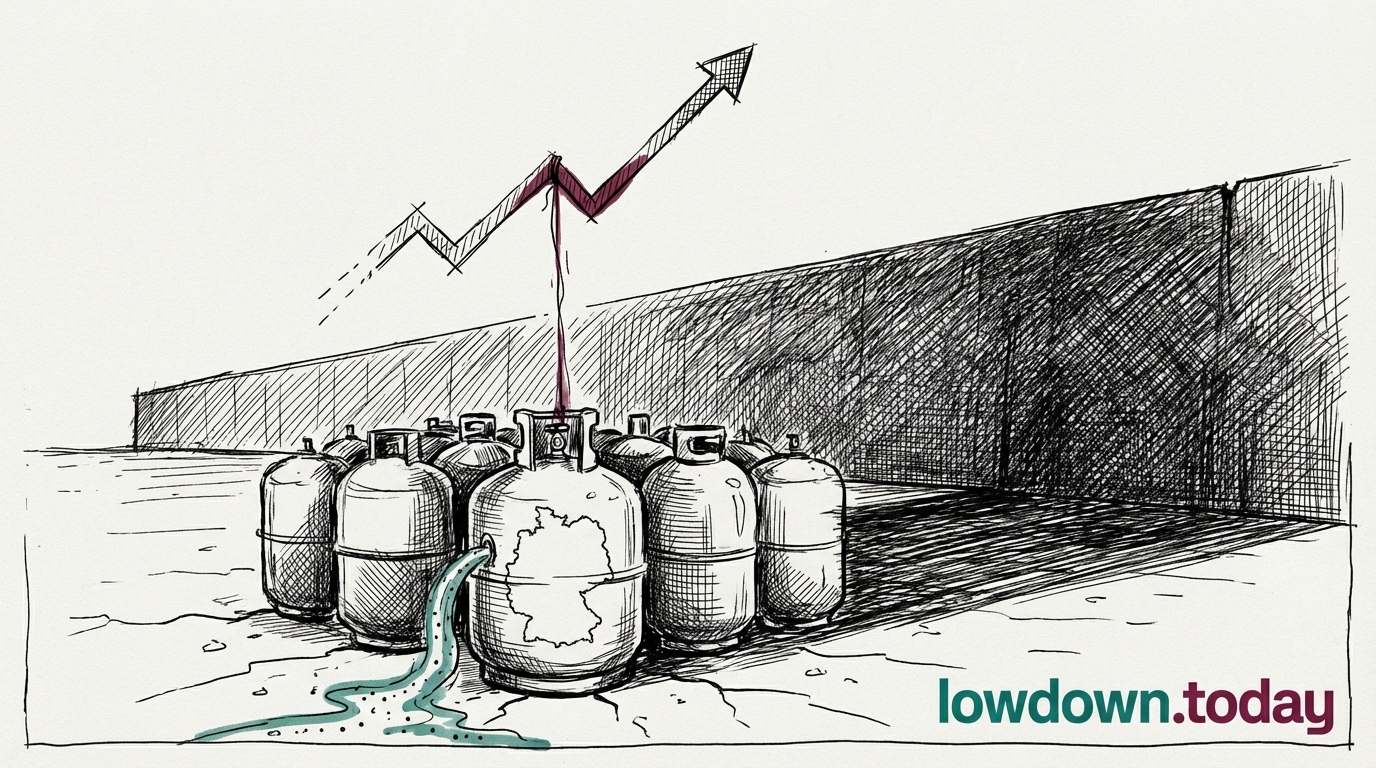
Bruegel's European natural gas imports dataset, updated on 2 April, shows March 2026 was a record month for EU LNG imports, including record US deliveries and high Russian volumes 1. Q1 2026 was a record quarter for US LNG specifically. Aggregate storage remained consistent with the dataset's 28% March fill figure, placing Europe near a seven-year April low even after a record import month.

The composition is the tell. A record monthly total that includes both record US volumes and high Russian volumes, printed three and a half weeks before the Russian LNG cutoff enters force context), is what front-loading looks like in the data. Buyers ran Russian cargoes to the last available contract window; US suppliers ran cargoes to the capacity of the export fleet; terminal arrivals stacked in the same month. The late March transshipment ban did not substantially reduce Russian arrivals at EU terminals per the same dataset, because the instrument addressed re-export, not inbound flow.

The corroborating signal is the ALSI terminal draw . If the March record had been durable supply improvement, terminal inventories would be flat or climbing; instead they are declining into what should be a peak reload window. That is consistent with import volumes falling off as soon as the front-loading window closes, and it is the data point to watch through the ban transition.

For procurement desks the read is that the headline March number is not a floor for April or May. The Bruegel refill calculation cannot carry the additional Russian volume cut on top, and it cannot carry March-level import rates persisting once the front-loading unwinds. The April and May Bruegel updates are now the cleanest read on whether US flexible supply can fill the gap.


Deep Analysis

In plain English

In March 2026, the EU imported more liquefied natural gas than in any previous month, including record volumes from the US and high volumes from Russia. At first glance, this looks like good news for European gas supply. But Bruegel, a Brussels economics think tank that tracks EU energy data, concluded this record was not a genuine supply improvement. Instead, it was front-loading: EU importers rushed to bring in as much Russian LNG as possible before the 25 April ban, and US LNG suppliers offered favourable March slots knowing buyers were in a hurry. Once the ban takes effect, those Russian volumes stop. The March record will be followed by an April-May supply gap, not by a continuation of record volumes. Think of it like consumers bulk-buying a product they know will be banned or scarce: the surge in purchases tells you about the deadline, not about future supply conditions.

Deep Analysis
Root Causes

The structural dynamic behind front-loading is that European importers cannot hold significant uncommitted storage capacity: EU storage tariffs and injection costs mean that buying gas you do not immediately need is expensive. Under normal market conditions, importers buy for near-term delivery on just-in-time principles.

A regulatory ban deadline inverts this: importers are compelled to take delivery before the deadline regardless of just-in-time economics, creating a demand pulse that looks like a supply improvement but is actually intertemporal demand brought forward.

This mechanism is well understood from the EU's experience with coal front-loading before the Russian coal import ban in August 2022: Q1 and Q2 2022 EU coal imports hit records, followed by a sharp drop in Q3 once the ban took effect. The LNG pattern in March 2026 is structurally identical.

What could happen next?
  • Consequence

    April and May 2026 EU LNG arrivals will fall materially below March's record once the Russian LNG ban removes spot contract volumes, creating a supply trough precisely at the start of the critical injection season.

  • Risk

    Terminal inventory drawdowns visible in early April (event-02) confirm the front-loading interpretation: the record March arrivals have already been partially consumed, and the terminal buffer is thinner than the March headline implies.

First Reported In

Update #2 · TTF EUR 42 as Russian LNG ban enters range

Bruegel· 15 Apr 2026
Read original
Different Perspectives
European Commission
European Commission
Commissioner Jorgensen formally acknowledged the post-Russia energy security framework cannot absorb the LNG shock, cutting the mandatory storage target from 90% to 80% and explicitly warning that normalisation is not foreseeable even with immediate peace. The Commission is now dependent on coordinated member state LNG purchasing and demand flexibility to bridge the remaining gap.
Germany
Germany
Germany holds the EU's largest storage estate but entered injection season at 23.32% fill with a 4.3 TWh/day injection ceiling that physically prevents any sprint recovery; the Bundeswirtschaftsministerium has maintained its early warning stage since July 2025. An escalation to Alarmstufe, which would trigger compulsory injection obligations, remains live if storage fails to rise through April.
QatarEnergy
QatarEnergy
QatarEnergy declared force majeure on European LNG contracts citing Ras Laffan strike damage, while the Gulf Research Centre assessed the declaration may also reflect a commercial decision to reallocate volumes toward higher-priced Asian spot markets without triggering breach penalties. Independent engineering confirmation of damage extent has not been published, leaving legal and commercial uncertainty unresolved.
Equinor / Norway
Equinor / Norway
Norway remains the EU's largest pipeline gas supplier and benefits from sustained elevated TTF; Norwegian pipeline capacity has partially offset the Russian supply loss but cannot close the structural gap. Norway Zone 4 power prices at EUR 2/MWh on 13 April illustrate how hydro-dominated systems are structurally decoupled from the gas price shock affecting continental Europe.
Italy
Italy
Italy cleared day-ahead power at EUR 133/MWh on 13 April, four to five times the Iberian equivalent, because gas-fired plants set the marginal price for approximately 90% of generation hours. Italy's circa 40 GW of gas-fired CCGT capacity, built when gas was cheap and nuclear was politically blocked, is now a structural liability at EUR 47/MWh TTF.
Spain
Spain
Spain cleared at EUR 29/MWh on the same day Italy paid EUR 133/MWh, the starkest single-day demonstration that its renewable energy investment is translating directly into price shock insulation for industry. Iberian interconnector constraints at the Pyrenees mean Spain cannot export this advantage to northern European markets at scale.



