Skip to content
You can now search across every topic, entity and event.What's new
European Energy Markets
18JUN

Hegseth tells SASC ceasefire pauses WPR clock

3 min read
09:57UTC

Pete Hegseth told the Senate Armed Services Committee on 30 April 2026 that the War Powers Resolution 60-day clock is paused by the ceasefire, a theory Tim Kaine rejected from the dais.

EconomicDeveloping
Key takeaway

Hegseth's ceasefire-pauses-clock theory is incompatible with the next day's 'not at war' claim, splitting the administration's WPR position.

Pete Hegseth, the US Secretary of Defense, told the Senate Armed Services Committee (SASC) on Thursday 30 April 2026 that "we are in a ceasefire right now, which our understanding means the 60-day clock pauses or stops in a ceasefire" 1. The 60-day clock is the WPR mechanism, the standard congressional check on undeclared hostilities. Tim Kaine (D-VA) rejected the theory directly: "I do not believe the statute would support that."

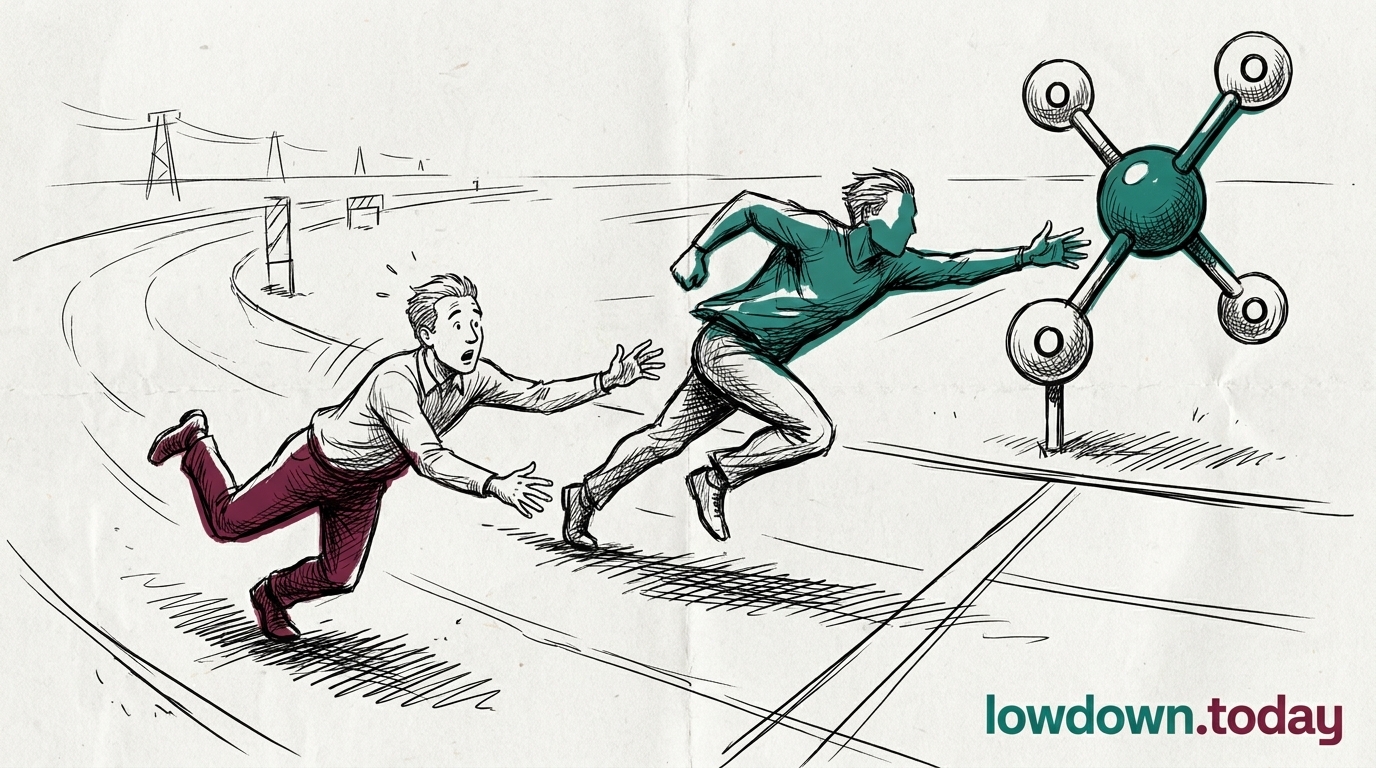
This was the first time The Administration formally argued a clock-pause legal theory before a congressional committee. Twenty-four hours later, the same administration moved past it to a stronger and incompatible position, that the United States is not at war at all captures the procedural context within which the legal theories were aired. A paused clock can resume; a clock that never ran cannot. Hegseth and the 1 May spokesperson now sit on opposite sides of a definitional split that the same congressional record captures.

The political backdrop matters. Lisa Murkowski's drafted Iran AUMF missed its 28 April filing target ; Murkowski has now set the week of 11 May as her new target, conditional on no White House plan in the interim. Hegseth's testimony was The Administration's last chance to offer a unified legal theory before the WPR deadline expired; it offered two.


Deep Analysis

In plain English

When the US started bombing Iran on 28 February 2026, a legal timer started. Under the War Powers Resolution of 1973, the president has 60 days to either get congressional approval for the war or start pulling troops out. That timer ran out on 1 May 2026. Defence Secretary Pete Hegseth appeared before the Senate Armed Services Committee on 30 April, the day before the deadline, and argued that a ceasefire between the US and Iran had paused the timer, the way pausing a stopwatch works. Senator Tim Kaine pushed back immediately, saying the law does not say anything about ceasefires pausing anything. The problem is that the very next day, the White House said something different: that the US is 'not at war' with Iran at all, meaning the timer never started in the first place. These two arguments contradict each other. Both are now officially on record, which makes it very hard to know what the administration's legal position actually is.

Deep Analysis
Root Causes

The ceasefire-pause theory emerged because the administration committed to a ceasefire narrative without legal preparation for how that ceasefire intersected with the WPR clock. The February-March SNSC (Iranian Security Council) ceasefire discussions were conducted as diplomatic communication; the legal team did not construct a WPR tolling argument at the time.

Hegseth's SASC appearance on 30 April 2026 produced the first attempt to construct a WPR tolling argument, entered retroactively into the congressional record without prior OLC vetting.

A second structural cause: the WPR's 1973 legislative history contains no discussion of ceasefire scenarios because the statute was designed for the Vietnam model, undeclared war with no ceasefire. The gap is genuine; no prior administration has litigated it because no prior administration faced an active ceasefire during an ongoing unauthorised war.

What could happen next?
  • Precedent

    Two mutually incompatible executive branch legal positions on the WPR are now entered into the congressional record within 24 hours, creating a precedent confusion that complicates any future OLC analysis.

  • Risk

    Senator Kaine's direct rejection of the ceasefire-pause theory on the congressional record provides standing for potential future legal challenges if any senator pursues them.

First Reported In

Update #85 · "Not at war": three claims, no treaty

Spectrum News· 1 May 2026
Read original
Different Perspectives
Cross-border power traders
The France-Germany day-ahead spread flipped from a EUR 17.20 German premium on 1 August to a EUR 4.15 French premium on 3 August, the same day French curtailment peaked. They cannot yet attribute the flip to curtailment alone, since a like-for-like overnight comparison shows French nuclear output rising while wind fell and demand returned on the weekday step.
EDF
EDF
River-cooling limits took 7.6 GW, 12 per cent of its fleet, offline on 3 August, the highest curtailment since the heatwave began, with an easing forecast to 4.3 GW on 4 August and 3 GW after. It manages the cut as a recurring seasonal constraint, expecting it to lift with river temperature, not repair.
Gasunie
Gasunie
TTF, the Dutch hub it operates, drifted to roughly EUR 55 to 58 per MWh across the window, staying inside its recent range through both the German spark reversal and the French curtailment. It reads a flat hub price as evidence that neither event this window carried enough weight to move the fuel leg on its own.
German gas-fired generators
Record German solar of 18,761 MW on 2 August pushed the clean spark spread to minus 18.48 EUR/MWh, a loss-making day, before it returned to plus 16.20 on 3 August. They now price dispatch against post-solar residual load rather than wind alone, since the sign flipped inside 48 hours on unchanged fuel and carbon costs.
European Commission (DG Energy)
Its implementing-measures register logged transposition notices from only Portugal and Slovakia against Wednesday's Article 94 deadline for Directive (EU) 2024/1788, with 25 states silent. It expects the register to fill only gradually, since filing routinely lags legislating and any infringement track against non-notifying states runs on a slower clock than the deadline itself.
Spain's LNG terminal operators
Spain's 9,145 GWh terminal inventory is the largest single stock in the EU LNG network, an option value that can reroute cargoes wherever the winter strip pays best rather than a cavern gas obligation tied to a fixed date. That flexibility matters more as Germany's cavern shortfall pushes more of the winter security question onto import infrastructure.



