Skip to content
You can now search across every topic, entity and event.What's new
European Energy Markets
15JUN

WPR wind-down hits 1 June cliff

3 min read
12:23UTC

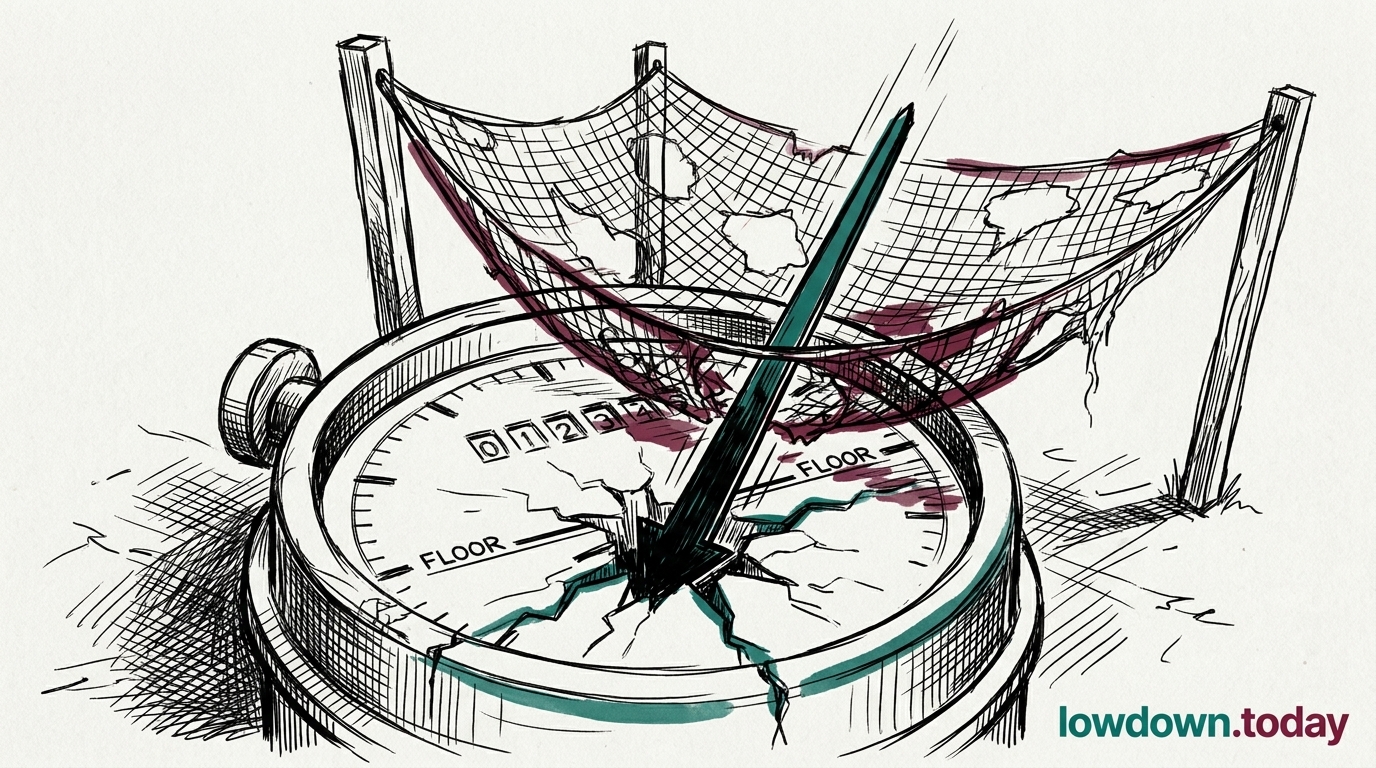
The War Powers Resolution 30-day wind-down expires 1 June, with Pete Hegseth's claim that the ceasefire pauses the 60-day clock having no basis in the 1973 text and Senator Lisa Murkowski's draft Iran AUMF still unfiled behind it.

EconomicDeveloping
Key takeaway

The WPR wind-down expires 1 June against an administration interpretation the 1973 statute does not support.

The War Powers Resolution 30-day wind-down provision expires on 1 June 2026, CBS News confirmed. Trump notified Congress of Operation Epic Fury on 2 March; the 60-day clock under the 1973 statute reached the 1 May deadline; the WPR's additional 30-day wind-down for orderly withdrawal of forces runs out two weeks after the present briefing 1.

Secretary of War Pete Hegseth told senators in mid-May that the ceasefire 'pauses or stops' the 60-day clock. The 1973 text contains no such provision, CBS News noted, and the position was deployed in the same testimony where Hegseth's Article 2 argument destroyed the rationale Senator Lisa Murkowski had been building for her draft Iran AUMF (Authorisation for Use of Military Force) . Seven war-powers votes have failed during the conflict; Murkowski's defection to support the seventh resolution (49-50 on 13 May) was the first time a Republican crossed . Her AUMF remains unfiled.

The 1 June expiry therefore arrives without a Senate vehicle behind it. If the administration treats the wind-down provision the same way it has treated the 60-day clock, the war continues with no statutory authorisation Congress has voted to grant, defended by an interpretation the WPR text does not authorise. The institutional cliff is procedurally identical to the one Murkowski crossed on, only this time the deadline is the statute's own and not a privileged resolution. Whether an eighth war-powers vote materialises before 1 June, or whether the AUMF leaves Murkowski's drawer, is now the binding question for Congress's role in the conflict.


Deep Analysis

In plain English

The War Powers Resolution is a 1973 US law that says the president must get Congress to approve a war within 60 days, or start pulling troops out. An extra 30-day wind-down period takes the deadline to 1 June 2026. After that, the operation is legally in breach unless Congress passes an authorisation. The defence secretary claimed the ceasefire pauses the clock, but legal experts say the law does not allow that. The Senate has voted seven times to challenge the war and failed each time. Senator Lisa Murkowski has been drafting an authorisation bill but has not filed it. After 1 June, every further US military action in the Iran conflict will be operating without any clear legal authority under the 1973 statute.

Deep Analysis
Root Causes

The WPR 1 June cliff has three structural components that make it the most legally exposed moment of the conflict.

First, the 30-day wind-down is not discretionary. Section 1544(b) does not give the president authority to extend it by declaration, executive order, or verbal announcement the only legal mechanism for continuing operations past 1 June is an AUMF or a constitutional finding that the WPR itself is unconstitutional (a finding no federal court has made).

Second, Hegseth's ceasefire-pause theory has been formally rejected by Senator Tim Kaine on the Senate floor and has no supporting case law. Courts have not affirmed it; the administration has merely asserted it.

Third, Murkowski's AUMF draft remains behind the cliff as the next institutional option, but it has been rendered procedurally awkward by Hegseth's Article 2 testimony: an AUMF that passes implicitly concedes the war needs authorisation, contradicting the administration's own legal doctrine and creating a White House veto risk.

Escalation

The 1 June WPR cliff is an institutional escalation point, not a kinetic one. The risk is that post-1 June operations generate litigation and legislative challenges that constrain command flexibility at moments requiring rapid response.

What could happen next?
  • Risk

    Post-1 June, every CENTCOM action in the Iran conflict is legally unsupported by the WPR framework; a successful congressional challenge could force an operational pause at a moment of active military engagement.

    Immediate · 0.75
  • Consequence

    If Murkowski files and passes an AUMF after 1 June, the implicit concession that authorisation was needed undermines the Hegseth Article 2 doctrine and establishes a congressional-approval precedent for future executive military actions.

    Short term · 0.68
  • Precedent

    A successful operation past the WPR 1 June cliff without an AUMF if courts decline to adjudicate would effectively complete the WPR's transformation from a hard constraint to an advisory mechanism, removing the primary post-Vietnam statutory check on undeclared wars.

    Long term · 0.72
First Reported In

Update #102 · Iran signs Hormuz toll; Trump posts a cancelled strike

Investing.com / ICE· 19 May 2026
Read original
Causes and effects
This Event
WPR wind-down hits 1 June cliff
The next hard institutional cliff for the war's legal architecture arrives in 13 days, and the administration's stated interpretation of the statute is not one the statute supports.
Different Perspectives
Spain's LNG terminal operators
Spain's 9,145 GWh terminal inventory is the largest single stock in the EU LNG network, an option value that can reroute cargoes wherever the winter strip pays best rather than a cavern gas obligation tied to a fixed date. That flexibility matters more as Germany's cavern shortfall pushes more of the winter security question onto import infrastructure.
European Commission
European Commission
Brussels holds the bloc to 90% on a flexible window while Germany, holding roughly a quarter of EU storage capacity, tracks toward missing its own lower 80% figure by 21 points. A national shortfall this size in the anchor market matters more to bloc security than the flexible timetable alone can absorb.
French power exporters and CRE
French day-ahead rose in step with Germany but by less, reopening a EUR 7-17 premium that makes northward export flows commercially attractive again after the EUR 43.09 discount evaporated in days. CRE separately authorised RTE and Enedis to buy flexibility locally, betting the coming winter's binding constraint is grid congestion rather than a shortage of firm capacity.
TTF trading desk
TTF trading desk
A visible national shortfall like Germany's 21-point gap is a directional signal, not noise, for a desk holding the summer-winter spread. TTF's flat EUR 58-60 range through this week's German price swings says the market has not yet chosen to reprice refill risk into the front of the curve.
German cavern and CCGT operators
German caverns kept buying prompt gas at TTF near EUR 58-60 through the inversion; the wind collapse to 2.4 GW then flipped the spark spread to plus EUR 29 and put turbines back in the same queue. Every day turbines win that bid, injection at a third of the 877 GWh/day pace needed falls further behind.
Slovakia
Slovakia
Slovakia says it dropped its hold-out on the 21st sanctions package only after Ursula von der Leyen personally signed written gas-price and supply guarantees. The Council of the European Union's own 17,238-character release on the package names neither Slovakia nor any guarantee, leaving Bratislava's account unconfirmed by the institutional record.



