Skip to content
You can now search across every topic, entity and event.What's new
European Energy Markets
15JUN

Iran war cancels Istanbul peace talks

3 min read
12:23UTC

US envoys Witkoff and Kushner pulled out of the third trilateral on 4 March. A week later, no replacement date exists — and each day of suspension shifts the military balance toward Russia.

EconomicDeveloping
Key takeaway

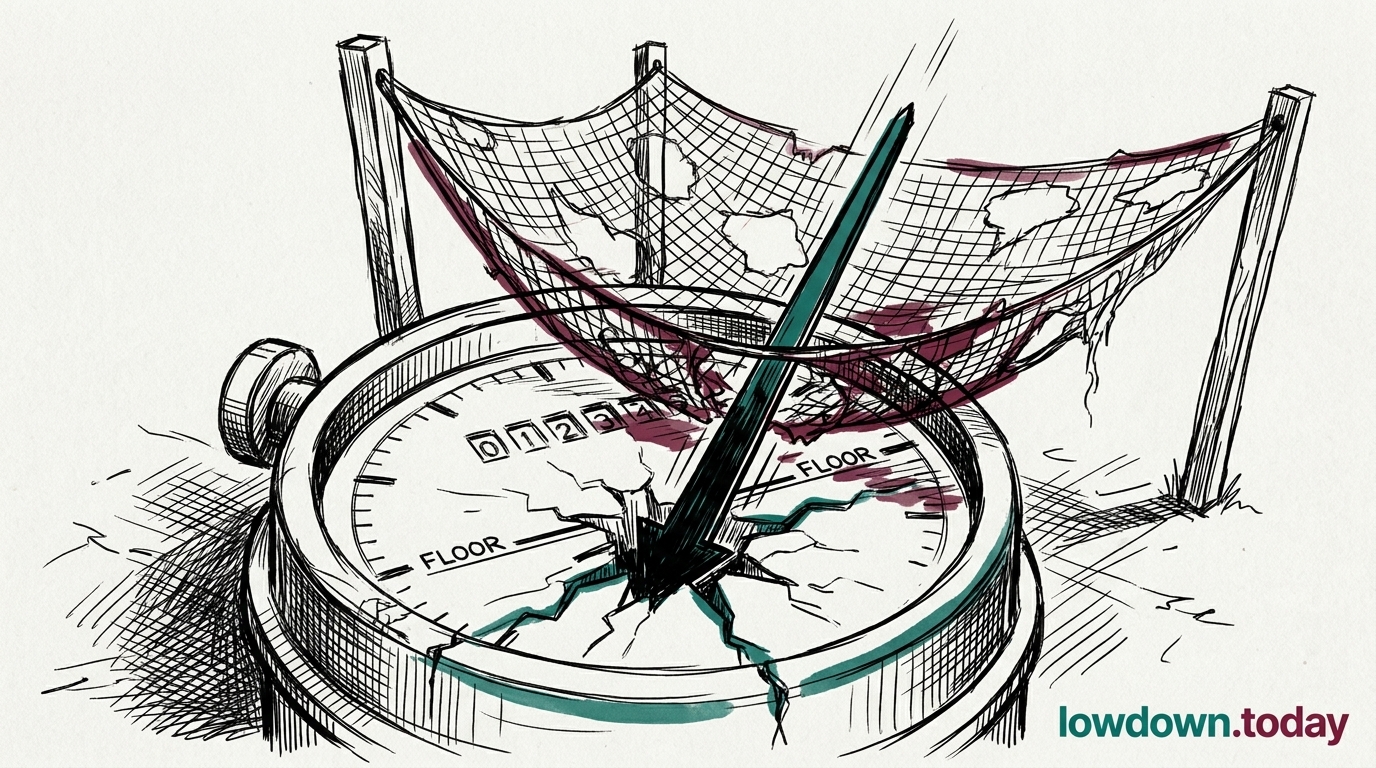
Each week the trilateral stalls, Russia consolidates ground that negotiators were meant to freeze.

On the evening of 4 March, US envoys Steve Witkoff and Jared Kushner informed Kyiv they would not travel to Istanbul for the third US-Russia-Ukraine trilateral 1. President Zelenskyy confirmed the suspension the following day: "Because of the situation around Iran, there were not yet the necessary signals for a trilateral meeting" 2. He named Geneva and Istanbul as viable alternatives when conditions allow.

Ukrainska Pravda reported on 7 March that talks "may take place next week" — the week of 9 March — but no date, venue, or agenda followed 3. That week passed without movement. The format had already been under pressure: Bloomberg reported in late February that Russia was weighing a full suspension unless Ukraine pre-committed to ceding four oblasts , and the Abu Dhabi venue was ruled out days earlier because of the wider Middle East conflict . The Iran war gave the format's sceptics — in Moscow and Washington alike — a reason to pause without formally abandoning it.

The freeze strands the technical progress negotiators achieved at Abu Dhabi, where Round 2 produced advances on ceasefire monitoring before deadlocking on territory . Each week without an active track shifts the military balance. Russian forces have pressed toward the KramatorskSloviansk fortress belt since Pokrovsk fell in December 2025 , and a diplomatic vacuum removes whatever restraining effect the prospect of talks might impose on Russian operational tempo. The 121 combat engagements and 9,837 kamikaze drones recorded on 8 March suggest Moscow sees no reason to slow down.

German Chancellor Friedrich Merz told Trump on 3 March that Europe holds an effective veto over any deal it did not help negotiate . That message gains force as a format that already excludes Europe stalls before producing anything for Europe to endorse or reject. Trump had told Zelenskyy in late February he wanted the war ended "in a month" . The trilateral was the vehicle for that ambition. Without it, the deadline is hollow — and the suspension hands time to the side with the stronger ground position.


Deep Analysis

In plain English

The US, Russia, and Ukraine had been holding secret talks aimed at stopping the fighting. Washington's two lead negotiators — Steve Witkoff and Jared Kushner — were due in Istanbul when Iran came under US military attack and they turned around. Peacemaking requires sustained political attention, and Washington now has a more urgent crisis consuming it. Ukraine publicly confirmed the pause and suggested Geneva or Istanbul as future venues. But no new date was set, and the week that was floated passed with nothing. The longer this pause lasts, the harder it becomes to restart — momentum in diplomacy, once lost, rarely returns on its own.

Deep Analysis
Synthesis

The suspension exposes that the trilateral was always a fair-weather format, contingent on Middle Eastern stability and a US administration with surplus bandwidth. Neither condition now obtains. Europe's exclusion, which Merz flagged as a ratification problem, compounds under suspension: if talks restart without European participation, they produce an agreement that Europe must implement without having shaped — a structural defect that grows more acute the longer the pause lasts.

Root Causes

The trilateral format was structurally fragile because it was designed around continuous US diplomatic focus — a resource that was never formally ring-fenced or protected from competing crises. Washington's simultaneous exposure to Iran, residual Gaza-adjacent diplomacy, and domestic political demands created a single point of failure in the peace architecture that no contingency provision addressed.

Escalation

Suspension structurally favours Russia. Russian forces are advancing near Kramatorsk whilst the diplomatic track is frozen, shifting the eventual negotiating baseline against Ukraine. No countervailing mechanism exists to halt Russian ground pressure during the pause.

What could happen next?
  • Risk

    Russia consolidates ground around Kramatorsk during the freeze, worsening Ukraine's territorial position before any talks resume.

    Short term · Assessed
  • Risk

    The trilateral format loses credibility if it fails to reconvene before late March, incentivising parties to seek alternative frameworks less favourable to Kyiv.

    Short term · Suggested
  • Consequence

    European states face a potential fait accompli — endorsing a deal they did not shape or blocking one that ends the fighting.

    Medium term · Assessed
  • Opportunity

    If an Iran ceasefire stabilises quickly, Washington could redirect envoys to the Ukraine track carrying Gulf diplomatic capital accumulated during the Iran campaign.

    Short term · Suggested
First Reported In

Update #3 · Iran war halts talks, drains air defences

Bloomberg· 9 Mar 2026
Read original
Causes and effects
Different Perspectives
Spain's LNG terminal operators
Spain's 9,145 GWh terminal inventory is the largest single stock in the EU LNG network, an option value that can reroute cargoes wherever the winter strip pays best rather than a cavern gas obligation tied to a fixed date. That flexibility matters more as Germany's cavern shortfall pushes more of the winter security question onto import infrastructure.
European Commission
European Commission
Brussels holds the bloc to 90% on a flexible window while Germany, holding roughly a quarter of EU storage capacity, tracks toward missing its own lower 80% figure by 21 points. A national shortfall this size in the anchor market matters more to bloc security than the flexible timetable alone can absorb.
French power exporters and CRE
French day-ahead rose in step with Germany but by less, reopening a EUR 7-17 premium that makes northward export flows commercially attractive again after the EUR 43.09 discount evaporated in days. CRE separately authorised RTE and Enedis to buy flexibility locally, betting the coming winter's binding constraint is grid congestion rather than a shortage of firm capacity.
TTF trading desk
TTF trading desk
A visible national shortfall like Germany's 21-point gap is a directional signal, not noise, for a desk holding the summer-winter spread. TTF's flat EUR 58-60 range through this week's German price swings says the market has not yet chosen to reprice refill risk into the front of the curve.
German cavern and CCGT operators
German caverns kept buying prompt gas at TTF near EUR 58-60 through the inversion; the wind collapse to 2.4 GW then flipped the spark spread to plus EUR 29 and put turbines back in the same queue. Every day turbines win that bid, injection at a third of the 877 GWh/day pace needed falls further behind.
Slovakia
Slovakia
Slovakia says it dropped its hold-out on the 21st sanctions package only after Ursula von der Leyen personally signed written gas-price and supply guarantees. The Council of the European Union's own 17,238-character release on the package names neither Slovakia nor any guarantee, leaving Bratislava's account unconfirmed by the institutional record.



