Skip to content
You can now search across every topic, entity and event.What's new
European Energy Markets
15JUN

TD3C hits WS372 as hull cover reaches 5%

3 min read
12:23UTC

The Baltic Exchange assessed the Middle East Gulf to China VLCC route at WS372 on 17 July, and Hormuz war-risk hull cover widened the same day to a 3-10% band with 5% the emerging norm.

EconomicDeveloping
Key takeaway

War-risk cover at 5% of hull adds roughly $2.50 a barrel to a Gulf cargo, twice the late-June loading.

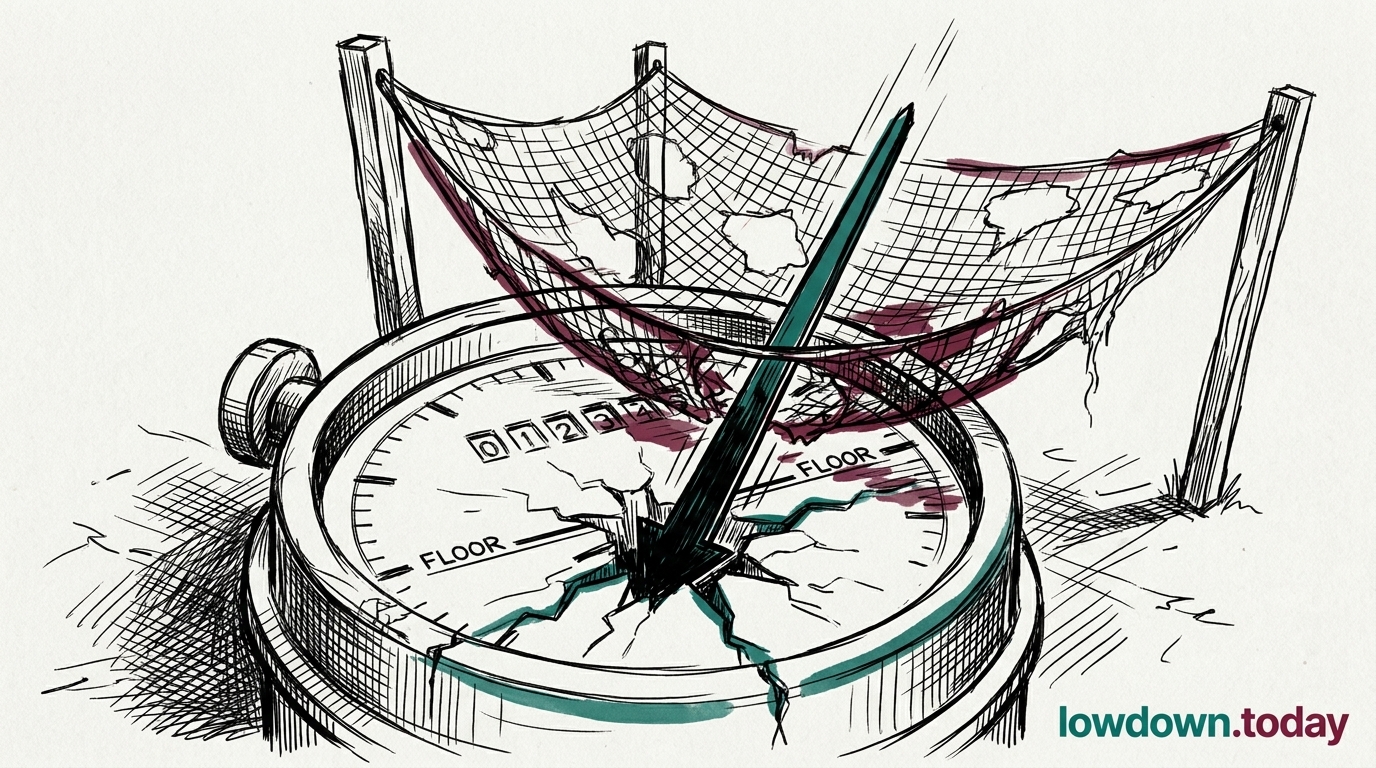
The Baltic Exchange assessed the TD3C Middle East Gulf to China VLCC route at WS372 on Friday 17 July, roughly 15 Worldscale points above the previous Friday and about 27% above the WS293.89 print of 3 July 1. War-risk hull cover for Hormuz transits widened the same day to 3-10% of hull value, with 5% emerging as the market norm 2, against the 3-4% baseline this desk recorded in late June .

Put that in cash. On a $100m VLCC, 5% is $5m a voyage against roughly $250,000 before the war, or about $2.50 a barrel across a 2m-barrel cargo. The loading has doubled from the $1 to $1.50 range of a month ago, and it sits on top of the freight rate rather than inside it.

War-risk cover is the slowest instrument in the complex to move and the hardest to talk down, because it reprices on the London market's read of loss frequency rather than on political signalling. The Lloyd's Joint War Committee listed-areas mechanism compounds that: a single insurable casualty inside a designated zone moves the whole quoted band, which is how 3-4% became 3-10% in one step instead of drifting. Underwriters moved when two UAE supertankers were actually hit, and not when ministers issued statements about the strait.

This breaks the pattern the desk has traded since late June, when the TD3C 4Q26 forward sat at $181,163 a day and would not budge while Brent shed 8% . Charterers who took that forward cover are now materially in the money against a WS372 spot, so paper freight length is quietly subsidising physical programmes. The reverse trade deserves naming too: both legs can retrace far faster than a premium priced into the curve, and if the strike tempo slows, freight and hull cover come off before the flat price does.


Deep Analysis

In plain English

Shipping companies charge more to move oil through dangerous waters, and insurance companies charge more to cover ships that might get attacked. For weeks, both prices stayed calm even as oil itself got more expensive, because nobody had actually been hit. Then real ships were struck in the Gulf, and both the shipping cost (TD3C) and the insurance cost (war-risk cover) jumped at once, showing the danger had become real rather than just talked about.

Deep Analysis
Root Causes

War-risk hull cover resets on the Lloyd's Joint War Committee's listed-areas framework, which prices a designated zone on evidence of loss frequency rather than on political announcements; two UAE supertankers struck supplied the actuarial trigger that six weeks of diplomacy could not.

Freight lagged separately because owners holding 4Q26 forward cover at $181,163/day were pricing a physical Hormuz recovery in months, a bet that two strikes in one week directly undercut.

What could happen next?
  • Consequence

    A European refiner buying a Gulf VLCC cargo now pays flat price plus roughly $2.50 a barrel in insurance plus the WS372 freight uplift, raising the delivered cost floor independent of any further crude price move.

  • Risk

    If the strike tempo continues, hull cover could move toward the top of its quoted 3-10% band, since the Joint War Committee mechanism reprices on each new casualty rather than settling at a fixed level.

First Reported In

Update #18 · Brent tops $90 and freight follows this time

The Edge Malaysia (republishing Baltic Exchange)· 20 Jul 2026
Read original
Different Perspectives
Spain's LNG terminal operators
Spain's 9,145 GWh terminal inventory is the largest single stock in the EU LNG network, an option value that can reroute cargoes wherever the winter strip pays best rather than a cavern gas obligation tied to a fixed date. That flexibility matters more as Germany's cavern shortfall pushes more of the winter security question onto import infrastructure.
European Commission
European Commission
Brussels holds the bloc to 90% on a flexible window while Germany, holding roughly a quarter of EU storage capacity, tracks toward missing its own lower 80% figure by 21 points. A national shortfall this size in the anchor market matters more to bloc security than the flexible timetable alone can absorb.
French power exporters and CRE
French day-ahead rose in step with Germany but by less, reopening a EUR 7-17 premium that makes northward export flows commercially attractive again after the EUR 43.09 discount evaporated in days. CRE separately authorised RTE and Enedis to buy flexibility locally, betting the coming winter's binding constraint is grid congestion rather than a shortage of firm capacity.
TTF trading desk
TTF trading desk
A visible national shortfall like Germany's 21-point gap is a directional signal, not noise, for a desk holding the summer-winter spread. TTF's flat EUR 58-60 range through this week's German price swings says the market has not yet chosen to reprice refill risk into the front of the curve.
German cavern and CCGT operators
German caverns kept buying prompt gas at TTF near EUR 58-60 through the inversion; the wind collapse to 2.4 GW then flipped the spark spread to plus EUR 29 and put turbines back in the same queue. Every day turbines win that bid, injection at a third of the 877 GWh/day pace needed falls further behind.
Slovakia
Slovakia
Slovakia says it dropped its hold-out on the 21st sanctions package only after Ursula von der Leyen personally signed written gas-price and supply guarantees. The Council of the European Union's own 17,238-character release on the package names neither Slovakia nor any guarantee, leaving Bratislava's account unconfirmed by the institutional record.



