Skip to content
You can now search across every topic, entity and event.What's new
European Energy Markets
15JUN

Pakistan pledges to continue mediating alone

1 min read
12:23UTC

Deputy PM Ishaq Dar confirmed Pakistan will continue its mediator role despite the Islamabad breakdown.

EconomicDeveloping
Key takeaway

Pakistan holds the mediator role alone, with 10 days to produce a follow-up session.

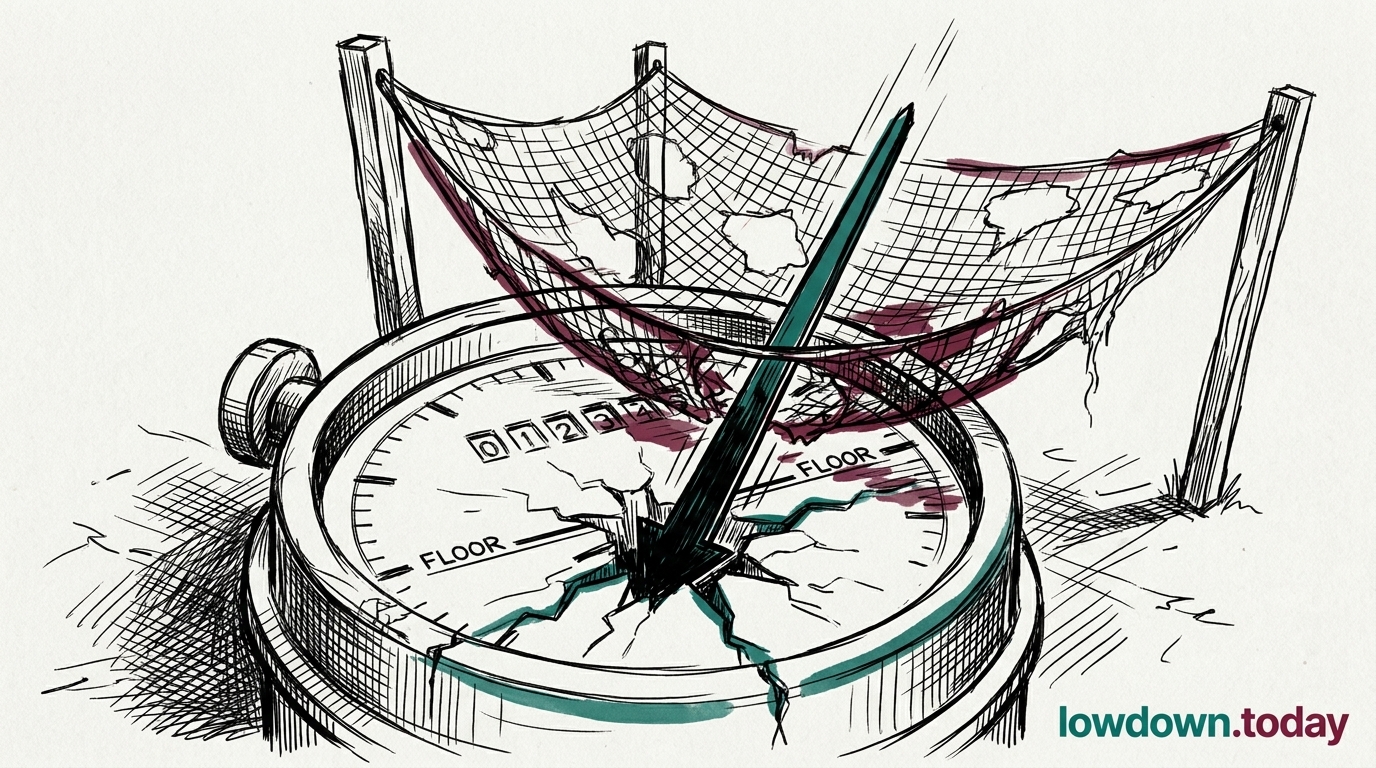
Pakistan's Deputy Prime Minister Ishaq Dar confirmed on 12 April that Islamabad will continue mediating between the US and Iran despite the talks producing no agreement. Dar stated: "Islamabad has been and will continue" as mediator. Iran's Foreign Ministry signalled willingness to continue but proposed no date.

Pakistan hosted the talks by invoking the precedent of the 1988 Geneva Accords, when it hosted proximity negotiations between the Soviet Union and Afghanistan. Pakistani officials logged more than 25 high-level contacts in the days preceding the talks to arrange the format. Sessions shifted from proximity to direct, with Pakistani officials mediating in the room.

Vance's departure leaves Pakistan as the only state with an active claim to the mediator role. Oman, which facilitated earlier indirect channels, has not publicly offered to host a next round. Egypt relayed a truce offer in early April but has not been part of the Islamabad format. Pakistan now has roughly 10 days to produce a follow-up session before the ceasefire expires around 22 April.

Pakistan's neutrality took damage during the talks themselves. Defence Minister Khawaja Asif posted anti-Israel content on social media during the opening session , an unforced error that compromised the host country's image of impartiality. Whether that incident weakens Islamabad's standing as a future venue remains to be seen.


Deep Analysis

In plain English

Pakistan offered to host the talks and serve as a go-between because it has diplomatic relations with both the US and Iran, and because it wanted to establish itself as a regional power broker. After the talks failed to produce a deal, Pakistan's Deputy PM Ishaq Dar said his country would keep trying. The problem is that Pakistan's value as a mediator depends on being trusted by both sides. During the talks, Pakistan's Defence Minister posted on social media calling Israel 'a cancerous state'. Israel immediately said Pakistan could not be a neutral mediator. That controversy has not been resolved. Pakistan needs another round of talks to happen in Islamabad to prove the first round was not a one-off. If no second round is scheduled before the ceasefire expires, Pakistan's diplomatic investment is wasted.

What could happen next?
  • Consequence

    Pakistan's mediating credibility is contingent on producing a second round before the ceasefire expires; without a scheduled session, Islamabad's role as a diplomatic channel becomes a historical footnote rather than an active mechanism.

  • Risk

    The Pakistan Defence Minister's social media post calling Israel 'a cancerous state' remains unresolved; Netanyahu's office specifically stated Pakistan cannot be a neutral arbiter, which limits Islamabad's ability to serve as a venue if the US-Israel relationship constrains the format.

First Reported In

Update #66 · Islamabad collapses: 10 days to expiry

NPR· 12 Apr 2026
Read original
Causes and effects
This Event
Pakistan pledges to continue mediating alone
Pakistan is now the only active mediator with a stated commitment to continue, but its credibility depends on producing a follow-up session before the ceasefire expires.
Different Perspectives
Spain's LNG terminal operators
Spain's 9,145 GWh terminal inventory is the largest single stock in the EU LNG network, an option value that can reroute cargoes wherever the winter strip pays best rather than a cavern gas obligation tied to a fixed date. That flexibility matters more as Germany's cavern shortfall pushes more of the winter security question onto import infrastructure.
European Commission
European Commission
Brussels holds the bloc to 90% on a flexible window while Germany, holding roughly a quarter of EU storage capacity, tracks toward missing its own lower 80% figure by 21 points. A national shortfall this size in the anchor market matters more to bloc security than the flexible timetable alone can absorb.
French power exporters and CRE
French day-ahead rose in step with Germany but by less, reopening a EUR 7-17 premium that makes northward export flows commercially attractive again after the EUR 43.09 discount evaporated in days. CRE separately authorised RTE and Enedis to buy flexibility locally, betting the coming winter's binding constraint is grid congestion rather than a shortage of firm capacity.
TTF trading desk
TTF trading desk
A visible national shortfall like Germany's 21-point gap is a directional signal, not noise, for a desk holding the summer-winter spread. TTF's flat EUR 58-60 range through this week's German price swings says the market has not yet chosen to reprice refill risk into the front of the curve.
German cavern and CCGT operators
German caverns kept buying prompt gas at TTF near EUR 58-60 through the inversion; the wind collapse to 2.4 GW then flipped the spark spread to plus EUR 29 and put turbines back in the same queue. Every day turbines win that bid, injection at a third of the 877 GWh/day pace needed falls further behind.
Slovakia
Slovakia
Slovakia says it dropped its hold-out on the 21st sanctions package only after Ursula von der Leyen personally signed written gas-price and supply guarantees. The Council of the European Union's own 17,238-character release on the package names neither Slovakia nor any guarantee, leaving Bratislava's account unconfirmed by the institutional record.



