Skip to content
You can now search across every topic, entity and event.What's new
European Energy Markets
15JUN

OPEC cuts 2026 demand a fourth time

2 min read
12:23UTC

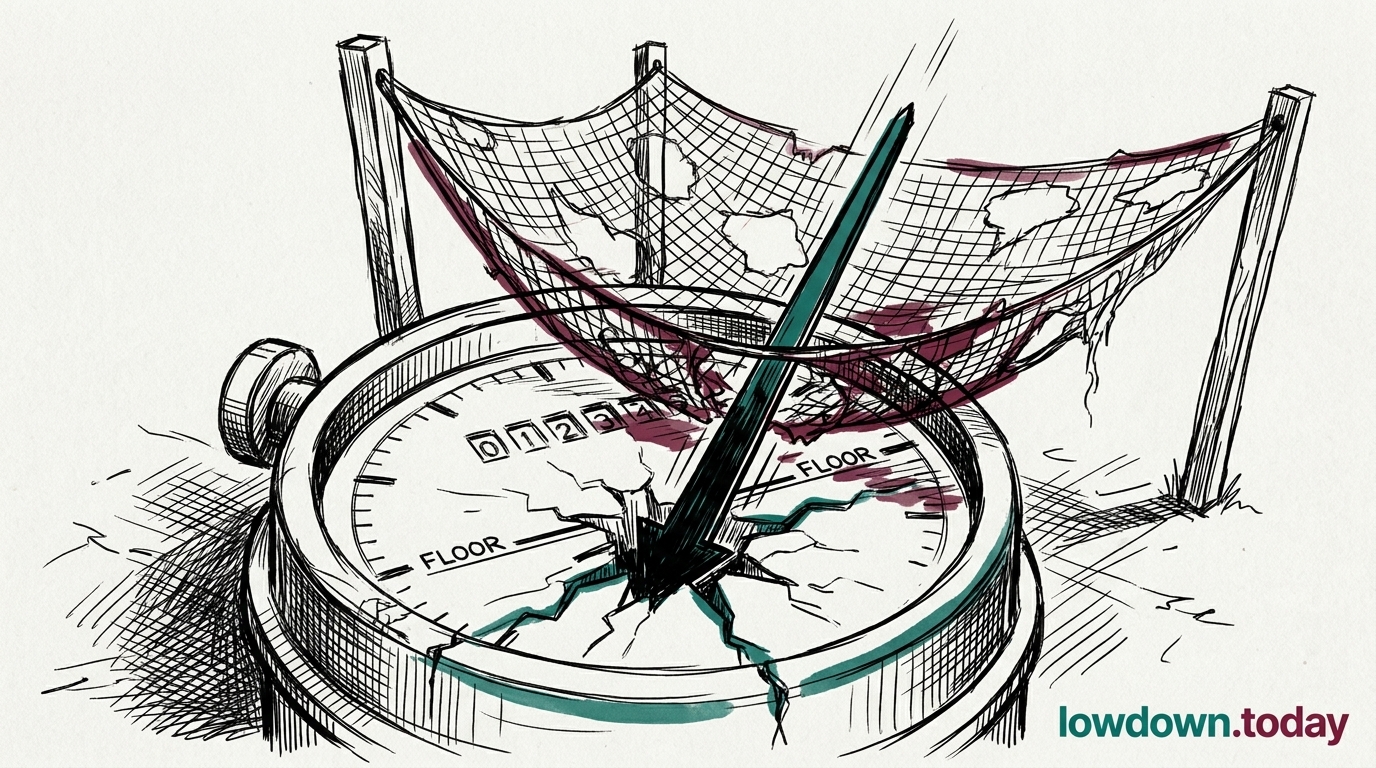
OPEC trimmed its 2026 demand-growth call to +0.8mbd, a fourth straight downgrade, even as OPEC+ pushes a fourth consecutive August supply hike.

EconomicAssessed
Key takeaway

OPEC cut demand growth to +0.8mbd yet keeps hiking supply, a market-share defence over price.

OPEC trimmed its 2026 demand-growth call to +0.8mbd in the July Monthly Oil Market Report (MOMR), a fourth straight downgrade, with non-OECD barrels carrying 740kbd of the 800kbd total and China cut 110kbd 1. The MOMR is OPEC's Vienna-published monthly demand-and-supply assessment, the producer-side counterpart to the IEA's report.

That softening call sits against OPEC+'s fourth consecutive August hike , deepening the market-share-versus-price tension Riyadh has run since the 5 July vote. Cutting the demand forecast while lifting the supply quota leaves the alliance defending barrels it can sell now against a price it is helping to erode.

Saudi Arabia takes the largest slice of each increment below its own fiscal breakeven, so the vote reads as a market-share signal against non-OPEC supply rather than a bet on higher near-term output. The China cut of 110kbd does most of the work in the revision, and with the non-OECD block carrying the rest, the demand story the alliance is pricing is an Asian one.


Deep Analysis

In plain English

OPEC, the group of oil-producing countries that includes Saudi Arabia, publishes a monthly forecast for how much more oil the world will want to buy next year. In July, it cut that forecast to just 0.8 million barrels a day of growth for 2026, the fourth month in a row it has trimmed the number down. Most of the remaining growth, 740,000 of the 800,000 barrels, is expected to come from countries outside the OECD group of wealthy nations, while China's expected growth was cut by 110,000 barrels a day. A shrinking demand forecast, published while the group keeps raising how much it produces, points to a widening gap between supply and expected buyers.

Deep Analysis
Root Causes

OPEC+ faces a market-share-versus-price trade-off it has not resolved: continuing four straight monthly output hikes while its own demand forecast falls a fourth time suggests defending volume matters more to the group right now than defending price, a stance that echoes Saudi Arabia's fiscal pressure to keep barrels moving even at a lower per-barrel return.

China's 110kbd downward revision is not incidental: it reflects a structural shift in Chinese oil demand as electric-vehicle uptake and slower industrial activity reduce the marginal barrel China needs, a trend that shows up as a recurring drag in each successive OPEC forecast rather than a one-off adjustment.

What could happen next?
  • Risk

    Continued output hikes against a falling demand call risk a supply overhang later in 2026 if the downgrades prove accurate

First Reported In

Update #17 · EU freezes the cap a week; Brent-WTI gaps to $5.13

OPEC· 16 Jul 2026
Read original
Causes and effects
This Event
OPEC cuts 2026 demand a fourth time
A fourth demand downgrade against a fourth supply hike sharpens the market-share-versus-price bind for Saudi Arabia.
Different Perspectives
Spain's LNG terminal operators
Spain's 9,145 GWh terminal inventory is the largest single stock in the EU LNG network, an option value that can reroute cargoes wherever the winter strip pays best rather than a cavern gas obligation tied to a fixed date. That flexibility matters more as Germany's cavern shortfall pushes more of the winter security question onto import infrastructure.
European Commission
European Commission
Brussels holds the bloc to 90% on a flexible window while Germany, holding roughly a quarter of EU storage capacity, tracks toward missing its own lower 80% figure by 21 points. A national shortfall this size in the anchor market matters more to bloc security than the flexible timetable alone can absorb.
French power exporters and CRE
French day-ahead rose in step with Germany but by less, reopening a EUR 7-17 premium that makes northward export flows commercially attractive again after the EUR 43.09 discount evaporated in days. CRE separately authorised RTE and Enedis to buy flexibility locally, betting the coming winter's binding constraint is grid congestion rather than a shortage of firm capacity.
TTF trading desk
TTF trading desk
A visible national shortfall like Germany's 21-point gap is a directional signal, not noise, for a desk holding the summer-winter spread. TTF's flat EUR 58-60 range through this week's German price swings says the market has not yet chosen to reprice refill risk into the front of the curve.
German cavern and CCGT operators
German caverns kept buying prompt gas at TTF near EUR 58-60 through the inversion; the wind collapse to 2.4 GW then flipped the spark spread to plus EUR 29 and put turbines back in the same queue. Every day turbines win that bid, injection at a third of the 877 GWh/day pace needed falls further behind.
Slovakia
Slovakia
Slovakia says it dropped its hold-out on the 21st sanctions package only after Ursula von der Leyen personally signed written gas-price and supply guarantees. The Council of the European Union's own 17,238-character release on the package names neither Slovakia nor any guarantee, leaving Bratislava's account unconfirmed by the institutional record.



