Skip to content
You can now search across every topic, entity and event.What's new
European Energy Markets
15JUN

Murkowski's Iran AUMF collapses after Hegseth Article 2 testimony

3 min read
12:23UTC

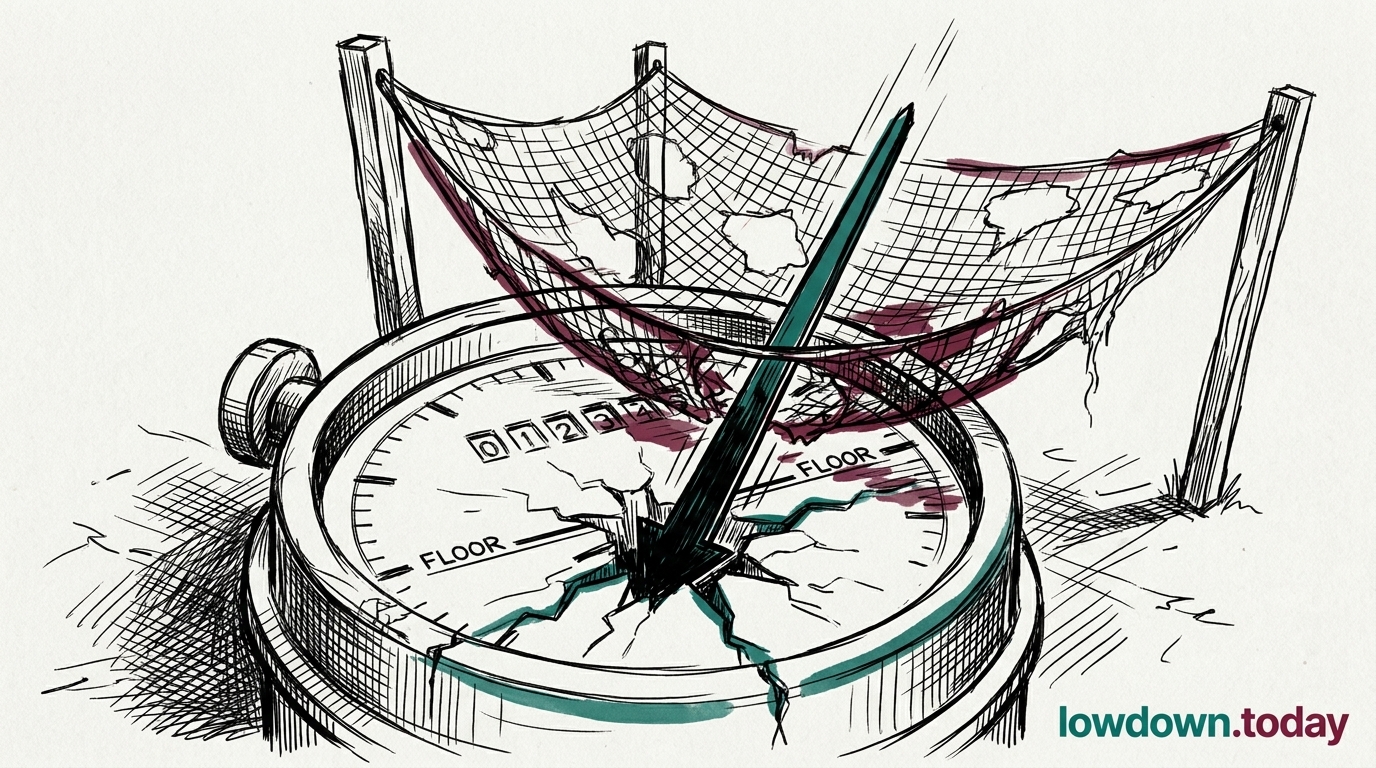
Lisa Murkowski's bipartisan Authorization for Use of Military Force on Iran remained unfiled as of 13 May after Pete Hegseth testified under oath that Article 2 of the Constitution makes an AUMF unnecessary, removing the rationale for the only legislative vehicle she had built.

EconomicDeveloping
Key takeaway

Hegseth's Article 2 argument won the legal case and collapsed Murkowski's bipartisan war-authorisation bill in the same week.

Senator Lisa Murkowski's bipartisan Iran authorization for use of military force (AUMF), drafted alongside Senator Todd Young with a 9 May filing target, remained unfiled on 13 May . The AUMF had first stalled on 11 May without explanation ; its political rationale was then removed entirely by Secretary of Defense Pete Hegseth's testimony on 12 May .

Hegseth testified under oath that Article 2 of the Constitution already covers the Iran strikes and that a Congressional AUMF is "unnecessary" 1 2. That argument collapsed the bipartisan vehicle Murkowski had spent weeks constructing. An AUMF exists to authorise what the executive has not yet claimed authority for; Hegseth's testimony placed the strikes firmly inside Article 2, making the AUMF a redundant instrument in executive-branch logic. An administration that argued itself out of the AUMF route simultaneously argued itself out of the legislative vehicle that would have imposed six limiting conditions on the war.

The causal chain is direct: Hegseth testimony on 12 May removed the AUMF's rationale; Murkowski's AUMF remained unfiled on 11 May and continued unfiled on 13 May ; Murkowski, left without a vehicle she had drafted, moved to the Democratic war-powers resolution instead. She did not invent the Democratic option on a whim; The Administration foreclosed her own option first.

Murkowski had also co-drafted the AUMF with Rand Paul ally Young and targeted a filing date that passed without action . With the AUMF stalled and WPR resolutions failing by one vote, Donald Trump faces no formal Congressional constraint on Iran operations through the 1 June WPR deadline . The war continues on Article 2 grounds, with no authorisation instrument filed and no limiting conditions codified.


Deep Analysis

In plain English

Senators can pass a law called an AUMF, an 'Authorization for Use of Military Force', to formally set conditions on how a war is fought. Senator Murkowski spent weeks writing one with conditions attached, such as requiring the president to report to Congress regularly. Then Defense Secretary Hegseth testified that the president already had all the authority he needed under the constitution. His testimony made the authorisation bill pointless. Murkowski shelved her bill, leaving Trump's Iran war running on Hegseth's Article 2 claim with no written Congressional conditions attached.

Deep Analysis
Root Causes

Hegseth's Article 2 testimony was not inadvertent; it was the logical endpoint of a 76-day pattern in which the administration ran the war entirely through verbal statements and Treasury-Commerce staff actions rather than presidential instruments.

An AUMF with six limiting conditions, including Murkowski's proposed congressional-notification requirements, would have imposed the first written constraint on executive war conduct since 28 February. The testimony foreclosed that constraint before it could be filed.

The causal chain is direct: Hegseth testifies Article 2 is sufficient; Murkowski's AUMF loses its rationale because the administration it was meant to authorise has argued it needs no authorisation; Murkowski moves to the Democratic war-powers resolution as the only remaining vehicle. The administration's legal position foreclosed its own moderate Republican off-ramp.

What could happen next?
  • Consequence

    With the AUMF shelved and war-powers resolutions failing 49-50, Congress has no formal vehicle to impose limiting conditions on Operation Epic Fury through the 1 June WPR deadline, leaving the executive with full operational discretion.

    Immediate · 0.85
  • Precedent

    Hegseth's under-oath Article 2 testimony closes the moderate Republican legislative off-ramp: future bipartisan AUMF efforts face the same structural obstacle, since the executive has publicly argued it needs no authorisation at all.

    Medium term · 0.71
  • Risk

    An administration running an authorised-under-Article-2 blockade faces different coalition management pressures than one with a bipartisan AUMF: allied governments providing forces under NATO or coalition frameworks may require a written legal authority from Washington as a condition of continued participation.

    Medium term · 0.62
First Reported In

Update #97 · Chips for Beijing, no paper for Iran

Time· 14 May 2026
Read original
Different Perspectives
Spain's LNG terminal operators
Spain's 9,145 GWh terminal inventory is the largest single stock in the EU LNG network, an option value that can reroute cargoes wherever the winter strip pays best rather than a cavern gas obligation tied to a fixed date. That flexibility matters more as Germany's cavern shortfall pushes more of the winter security question onto import infrastructure.
European Commission
European Commission
Brussels holds the bloc to 90% on a flexible window while Germany, holding roughly a quarter of EU storage capacity, tracks toward missing its own lower 80% figure by 21 points. A national shortfall this size in the anchor market matters more to bloc security than the flexible timetable alone can absorb.
French power exporters and CRE
French day-ahead rose in step with Germany but by less, reopening a EUR 7-17 premium that makes northward export flows commercially attractive again after the EUR 43.09 discount evaporated in days. CRE separately authorised RTE and Enedis to buy flexibility locally, betting the coming winter's binding constraint is grid congestion rather than a shortage of firm capacity.
TTF trading desk
TTF trading desk
A visible national shortfall like Germany's 21-point gap is a directional signal, not noise, for a desk holding the summer-winter spread. TTF's flat EUR 58-60 range through this week's German price swings says the market has not yet chosen to reprice refill risk into the front of the curve.
German cavern and CCGT operators
German caverns kept buying prompt gas at TTF near EUR 58-60 through the inversion; the wind collapse to 2.4 GW then flipped the spark spread to plus EUR 29 and put turbines back in the same queue. Every day turbines win that bid, injection at a third of the 877 GWh/day pace needed falls further behind.
Slovakia
Slovakia
Slovakia says it dropped its hold-out on the 21st sanctions package only after Ursula von der Leyen personally signed written gas-price and supply guarantees. The Council of the European Union's own 17,238-character release on the package names neither Slovakia nor any guarantee, leaving Bratislava's account unconfirmed by the institutional record.



