Skip to content
You can now search across every topic, entity and event.What's new
European Energy Markets
15JUN

Hegseth: Article 2 covers Iran war

3 min read
12:23UTC

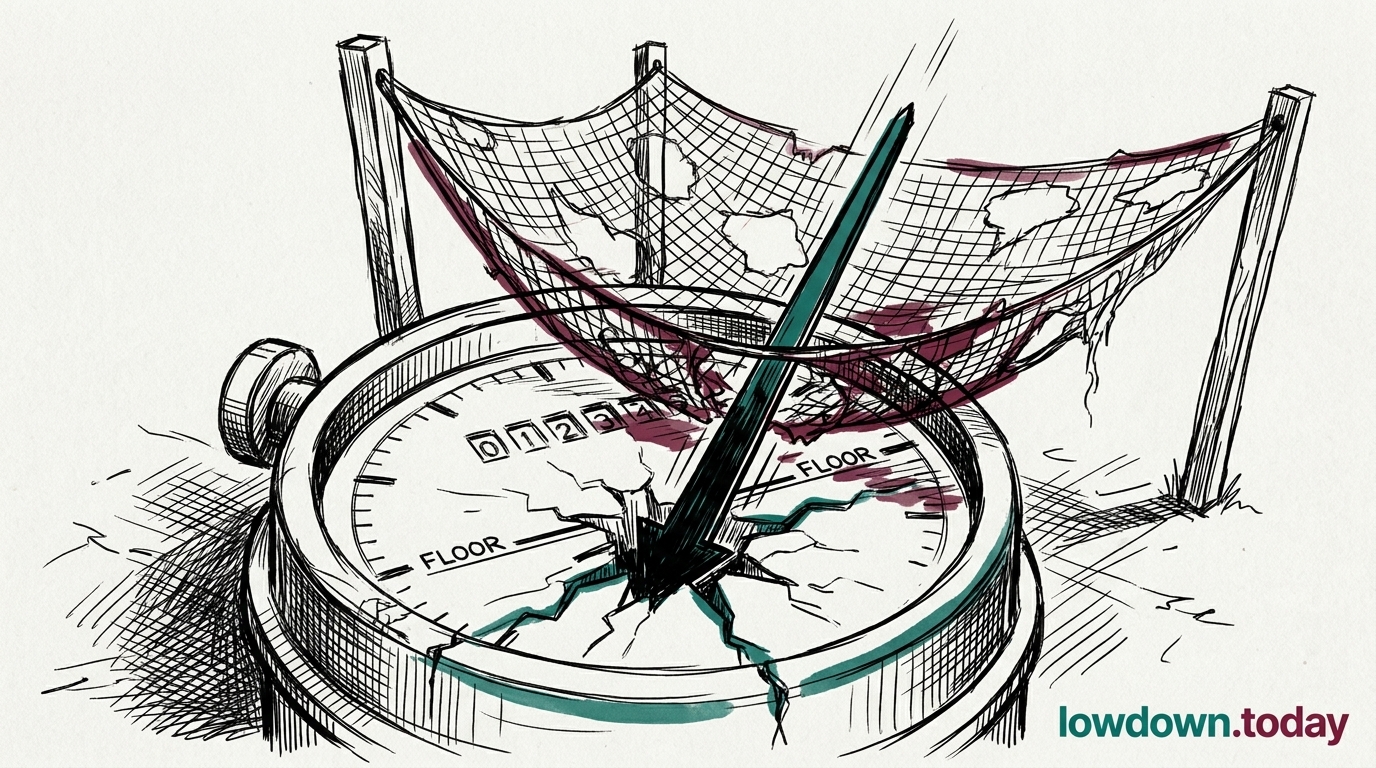
Defence Secretary Pete Hegseth told Senate Appropriations on 12 May that Donald Trump has 'all the authorities he needs under Article 2' and an Iran AUMF is unnecessary. The single line, delivered under oath on $29 billion of war spending, converts 75 days of unsigned Iran paper from oversight into stated doctrine.

EconomicDeveloping
Key takeaway

Hegseth told Senate Appropriations on 12 May that Article 2 covers Iran strikes, making any AUMF unnecessary.

Pete Hegseth, the US Secretary of Defense, testified to the Senate Appropriations Committee on 12 May 2026 that Donald Trump has "all the authorities he needs under Article 2" and that an Authorisation for the Use of Military Force (AUMF) on Iran is not required 1. The reply came under oath, on $29 billion of war spending, in answer to a question from Lisa Murkowski about whether an AUMF would help the President. "We don't need it," Hegseth said. The Washington Post described the appearance as marked by "intense bipartisan frustration".

The Senate Appropriations Committee is the panel that writes the Pentagon's cheques, not the panel that authorises war. That jurisdictional setting matters. Rand Paul and Susan Collins, who crossed the floor on the 30 April War Powers Resolution vote alongside Murkowski's four co-sponsors, were not in the room. The doctrinal moment landed in front of the committee that funds the operation rather than the committee that would constrain it. Article 2 of the US Constitution is the Commander-in-Chief clause; the executive branch has historically reserved Article 2 self-defence claims for short-window operations, not for 75-day sustained campaigns with declared blockades and 15,000 deployed personnel.

The testimony supersedes Murkowski's threatened Iran AUMF, still unfiled after the 9 May deadline passed , and rereads Trump's three contradictory 8 May Truth Social posts as the rhetorical surface of a settled administration position rather than a communications muddle. In practical terms the 60-day War Powers Resolution clock and the 30-day wind-down clock both lose their bite: if no AUMF is required, no clock can run out on a missing authorisation. The last US coercive Iran action before Hegseth spoke was OFAC's 11 May Hong Kong sweep , a Treasury-initiated package rather than a signed presidential instrument 2.

Hegseth's appearance is the first time a cabinet officer has named the verbal-track method as policy rather than denied it. Every prior Trump pronouncement on the war ran through Truth Social or the briefing room. This one was sworn testimony in front of the appropriators. The constitutional weight depends on whether the Office of Legal Counsel, if asked, matches the position; the political weight does not.


Deep Analysis

In plain English

In the United States, only Congress can formally declare war. But a 1973 law called the War Powers Resolution was supposed to give Congress a way to stop the president from fighting wars indefinitely without approval. It says the president must get congressional sign-off within 60 days. Pete Hegseth is the man in charge of the US military. On 12 May, he sat before a Senate committee and said, under oath, that President Trump does not need Congress's approval to keep fighting in Iran. He said the president already has all the authority he needs under Article 2 of the Constitution, which is the part that makes the president commander in chief. That matters because the US has been fighting Iran for 75 days with no formal paperwork: no signed executive order, no congressional authorisation, nothing. Hegseth's testimony converts what looked like a paperwork delay into a deliberate legal strategy; the administration is saying it simply does not need the paperwork.

Deep Analysis
Root Causes

The structural condition enabling Hegseth's testimony is a legal gap the War Powers Resolution never closed: the statute defines "hostilities" as triggering the 60-day clock, but provides no mechanism to compel a president to acknowledge that hostilities exist.

The five WPR votes on Iran each required the losing side to accept the executive's characterisation as final. No court has ever ruled that the President must accept a concurrent congressional resolution as binding; Morrison v. Olson (1988) and Zivotofsky v. Kerry (2015) both reserved the war-powers question explicitly.

The second structural cause is jurisdictional: Hegseth testified before Senate Appropriations, which controls Pentagon funding but cannot deauthorise a war. Senator Collins chairs that committee. Under the administration's own logic, the appropriators can defund but cannot deauthorise, giving Congress a brake but not a veto. By placing the doctrinal statement in front of the spending panel, the administration acknowledged financial leverage while denying constitutional constraint.

What could happen next?
  • Precedent

    A sworn cabinet testimony naming the verbal-track method as Article 2 doctrine sets a precedent that future administrations can cite for sustained military campaigns without signed instruments.

    Long term · 0.8
  • Consequence

    The War Powers Resolution 60-day and 30-day clocks lose effective force if no court will compel the executive to acknowledge "hostilities", rendering the statute unenforceable absent a congressional funding cut.

    Short term · 0.85
  • Risk

    The Office of Legal Counsel, if asked to produce a formal opinion, may not match Hegseth's position, creating an internal executive branch contradiction that opposing counsel could exploit.

    Medium term · 0.6
First Reported In

Update #96 · Hegseth: no AUMF needed. Trump flies east

CNBC· 13 May 2026
Read original
Different Perspectives
Spain's LNG terminal operators
Spain's 9,145 GWh terminal inventory is the largest single stock in the EU LNG network, an option value that can reroute cargoes wherever the winter strip pays best rather than a cavern gas obligation tied to a fixed date. That flexibility matters more as Germany's cavern shortfall pushes more of the winter security question onto import infrastructure.
European Commission
European Commission
Brussels holds the bloc to 90% on a flexible window while Germany, holding roughly a quarter of EU storage capacity, tracks toward missing its own lower 80% figure by 21 points. A national shortfall this size in the anchor market matters more to bloc security than the flexible timetable alone can absorb.
French power exporters and CRE
French day-ahead rose in step with Germany but by less, reopening a EUR 7-17 premium that makes northward export flows commercially attractive again after the EUR 43.09 discount evaporated in days. CRE separately authorised RTE and Enedis to buy flexibility locally, betting the coming winter's binding constraint is grid congestion rather than a shortage of firm capacity.
TTF trading desk
TTF trading desk
A visible national shortfall like Germany's 21-point gap is a directional signal, not noise, for a desk holding the summer-winter spread. TTF's flat EUR 58-60 range through this week's German price swings says the market has not yet chosen to reprice refill risk into the front of the curve.
German cavern and CCGT operators
German caverns kept buying prompt gas at TTF near EUR 58-60 through the inversion; the wind collapse to 2.4 GW then flipped the spark spread to plus EUR 29 and put turbines back in the same queue. Every day turbines win that bid, injection at a third of the 877 GWh/day pace needed falls further behind.
Slovakia
Slovakia
Slovakia says it dropped its hold-out on the 21st sanctions package only after Ursula von der Leyen personally signed written gas-price and supply guarantees. The Council of the European Union's own 17,238-character release on the package names neither Slovakia nor any guarantee, leaving Bratislava's account unconfirmed by the institutional record.



