Skip to content
You can now search across every topic, entity and event.What's new
European Energy Markets
15JUN

EU cap fight turns on months, not price

2 min read
12:23UTC

EU foreign ministers vote on 13 July on the 21st sanctions package, two days before a deadline that would auto-lift the $44.10 Russian oil cap; Greece, Cyprus and Malta want a shorter freeze than Brussels.

EconomicDeveloping
Key takeaway

EU ministers vote 13 July on whether to freeze the Russian oil cap three months or to January 2027.

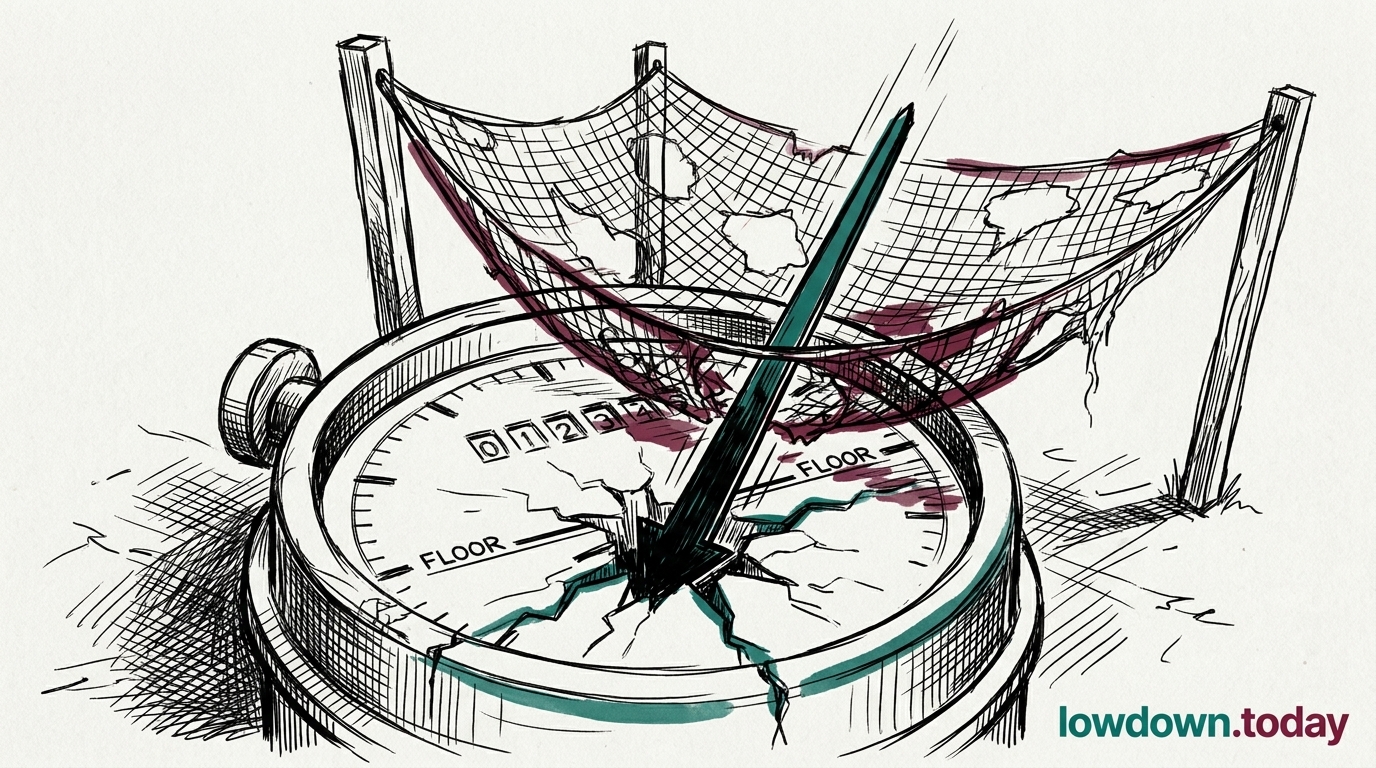
EU foreign ministers are set to vote on the bloc's 21st sanctions package on 13 July, two days before a 15 July deadline that would otherwise auto-lift the $44.10 cap on Russian oil. The Kyiv Independent reported the schedule, citing EU diplomats. 1 The cap bars Western insurers and shippers from servicing Russian crude sold above the set ceiling; letting it lapse would remove that ceiling and loosen the constraint on Moscow's barrels.

The package advances the proposal the Commission tabled in late June , but the fight has narrowed to duration. Greece, backed by Cyprus and Malta, is pushing a three-month freeze to be revisited in the autumn, against The Commission's plan to hold the cap to January 2027 . Both sides accept the level; they disagree only on how long to hold it.

A freeze to January 2027 locks the cap through the first quarter of next year; the three-month version reopens it for review around October. That is a materially shorter runway for any Urals-linked hedge than the desk has been pricing, and the outcome lands inside a week. Whichever way the vote goes, it resets how long traders can rely on the cap rather than the physical market to bound Russian barrels.


Deep Analysis

In plain English

The EU has capped the price other countries can pay for Russian oil at $44.10 a barrel since early 2026, to limit how much Moscow earns from oil exports. That cap is due to lift automatically on 15 July unless EU foreign ministers vote to freeze it first, and they are now set to vote on 13 July. Greece, Cyprus and Malta, all major shipping nations, want a shorter three-month freeze reviewed again in the autumn rather than dropping the cap itself. The European Commission wants the freeze locked until January 2027 instead. Whichever wins shapes how confidently traders can plan around Russian oil for the rest of the year.

Deep Analysis
Root Causes

Greece's and Malta's shipping registries carry a combined 37% of world merchant tonnage, roughly 20% Greek-flagged and 17% Maltese-flagged. Much of that fleet earns revenue carrying cargo, including sanctioned barrels, that a stricter or longer freeze could put at commercial risk.

That fleet economics, more than any view on Russia policy, explains why Athens and Valletta keep pushing the shorter compromise: a freeze reopened in the autumn gives their registries and insurers more frequent chances to reprice risk than one locked to January 2027.

What could happen next?
  • Precedent

    If Greece, Cyprus and Malta again force a shorter compromise, as they did on the 20th package's maritime ban, it confirms shipping-registry economics as a structural veto point on EU energy sanctions rather than a one-off objection.

First Reported In

Update #14 · Brent-WTI blows out as the hike lands priced

Kyiv Independent· 6 Jul 2026
Read original
Different Perspectives
Spain's LNG terminal operators
Spain's 9,145 GWh terminal inventory is the largest single stock in the EU LNG network, an option value that can reroute cargoes wherever the winter strip pays best rather than a cavern gas obligation tied to a fixed date. That flexibility matters more as Germany's cavern shortfall pushes more of the winter security question onto import infrastructure.
European Commission
European Commission
Brussels holds the bloc to 90% on a flexible window while Germany, holding roughly a quarter of EU storage capacity, tracks toward missing its own lower 80% figure by 21 points. A national shortfall this size in the anchor market matters more to bloc security than the flexible timetable alone can absorb.
French power exporters and CRE
French day-ahead rose in step with Germany but by less, reopening a EUR 7-17 premium that makes northward export flows commercially attractive again after the EUR 43.09 discount evaporated in days. CRE separately authorised RTE and Enedis to buy flexibility locally, betting the coming winter's binding constraint is grid congestion rather than a shortage of firm capacity.
TTF trading desk
TTF trading desk
A visible national shortfall like Germany's 21-point gap is a directional signal, not noise, for a desk holding the summer-winter spread. TTF's flat EUR 58-60 range through this week's German price swings says the market has not yet chosen to reprice refill risk into the front of the curve.
German cavern and CCGT operators
German caverns kept buying prompt gas at TTF near EUR 58-60 through the inversion; the wind collapse to 2.4 GW then flipped the spark spread to plus EUR 29 and put turbines back in the same queue. Every day turbines win that bid, injection at a third of the 877 GWh/day pace needed falls further behind.
Slovakia
Slovakia
Slovakia says it dropped its hold-out on the 21st sanctions package only after Ursula von der Leyen personally signed written gas-price and supply guarantees. The Council of the European Union's own 17,238-character release on the package names neither Slovakia nor any guarantee, leaving Bratislava's account unconfirmed by the institutional record.



