Skip to content
You can now search across every topic, entity and event.What's new
European Energy Markets
15JUN

ACER calls EU gas congestion normal

4 min read
12:23UTC

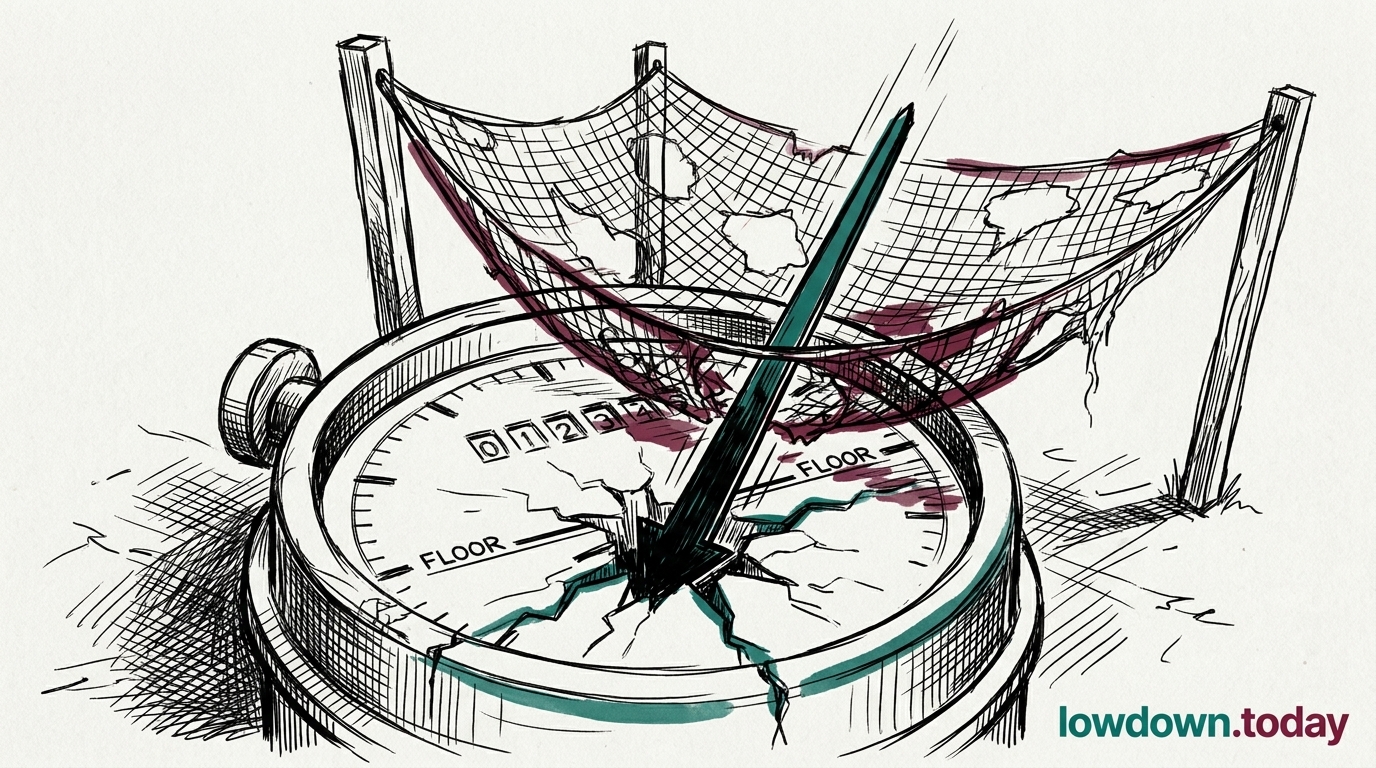
ACER's 29 May report framed a 'new equilibrium': congested network sides down to about 24 from roughly 50 in 2022, revenue stabilised near EUR 140m. The spot hub basis tells a different story.

EconomicDeveloping
Key takeaway

The choke point has moved from pipeline capacity to storage volume, where ACER's healthy-network metric does not look.

ACER, the EU Agency for the Cooperation of Energy Regulators, published its gas wholesale congestion report on Friday 29 May and framed a "new equilibrium". 1 Contractually congested network sides have fallen to around 24, down from roughly 50 at the 2022 crisis peak, and congestion revenue has stabilised near EUR 140m. On the regulator's metric, the European pipeline network has normalised.

That institutional read collides with the spot signal. ACER's own winter analysis put Central European hub premiums above EUR 2/MWh over TTF , the Dutch Title Transfer Facility that prices the European benchmark. A basis that wide says delivered gas east of the benchmark still costs more than the headline. Both readings hold because they measure different things: congestion revenue prices the pipe, while the hub basis prices the molecule arriving where it is needed.

The reframe matters for where risk now sits. Falling congestion revenue and a stable network describe interconnection that allocates capacity efficiently. A persistent delivered-cost premium over TTF describes a market where the squeeze has migrated from how much gas can flow to how much can be stored. With pipeline capacity no longer binding, the structural choke points are the 17 June EU pipeline-supply cliff, which Hungary and Slovakia are litigating at the Court of Justice of the European Union , and the autumn storage landing, not the network ACER has declared healthy.


Deep Analysis

In plain English

ACER is the EU's energy market watchdog. On 29 May it published a report saying gas pipeline congestion across Europe has improved considerably since the 2022 crisis: down from roughly 50 problem points to about 24, with revenue from constrained pipelines stable at EUR 140 million. That improvement covers only one type of constraint: instances where a specific pipeline border point was overbooked. Europe has built more import terminals on its western coast since 2022, so overbooked border points have genuinely fallen. A different type of constraint has grown at the same time: underground gas storage east of the main hubs is under-filled, so gas delivered to Hungary, Slovakia or Austria costs EUR 2 or more per megawatt-hour above the benchmark Dutch price, even when the pipelines themselves are not overbooked. ACER's own winter analysis documented this premium; its congestion report did not flag it as a contradiction of the 'new equilibrium' claim.

Deep Analysis
Root Causes

Congestion revenue (EUR 140m) and congested network sides (~24) both measure the same thing: instances where capacity at a specific physical border point was oversubscribed and capacity had to be auctioned, generating revenue. This metric was designed for a pipeline-dominated gas market where the binding constraint was throughput capacity at physical interconnectors.

The structural shift since 2022 is that European gas supply has re-centred on western LNG entry points (Zeebrugge, Montoir, South Hook, Eemshaven, Revithoussa) rather than eastern pipeline entry points (Baumgarten, Velke Kapusany). LNG enters western hubs cheaply. The binding constraint now sits not at getting gas into western hubs but at getting gas from those hubs to Central European storage and end-use markets.

Central European hub premiums above EUR 2/MWh over TTF (Hungary EUR 123.23/MWh day-ahead on 12 May, per ) reflect a locational basis that is storage-volume-driven rather than pipeline-capacity-driven: there is insufficient stored gas east of the Alpine-Carpathian arc to buffer seasonal demand swings at Central European hubs, and the TTF-indexed contract structure of much Central European supply means buyers pay TTF prices for gas that costs EUR 2/MWh more to deliver physically.

Congestion revenue counts oversubscribed border-point capacity auctions. It does not count the locational spread between a western hub price and an eastern delivered-gas price when no single pipeline interconnector is the bottleneck; when the bottleneck is distributed across multiple storage sites and entry routes simultaneously, the congestion metric registers nothing.

Escalation

The ACER 'new equilibrium' framing is bureaucratically stabilising but analytically premature. The structural bottleneck has migrated rather than resolved. With the 17 June pipeline ban approaching and Hungary and Slovakia litigating at the CJEU, the basis premium above EUR 2/MWh is the forward indicator to track: a widening past EUR 3/MWh would contradict the equilibrium framing within weeks of the report's publication.

What could happen next?
  • Risk

    ACER's 'new equilibrium' framing may reduce political urgency for further network investment or storage mandates in Central European member states, leaving the locational basis premium structurally unaddressed through the 2026-27 winter.

    Medium term · Assessed
  • Opportunity

    Short TTF, long CEGH or PSV is the structural basis trade the storage-volume constraint supports; 17 June pipeline ban and Hungary/Slovakia CJEU challenge are the near-term catalysts for basis widening.

    Short term · Suggested
  • Precedent

    ACER's failure to update its congestion metric to capture storage-volume locational basis sets a precedent for the 'new equilibrium' framing surviving regulatory scrutiny even as physical market premiums contradict it; a measurement-framework gap that could persist until the next winter stress event.

    Long term · Assessed
  • Consequence

    Central European industrial offtakers on TTF-indexed contracts face delivered-gas costs EUR 2/MWh above the headline benchmark in a market the regulator has framed as normalised, reducing the likelihood of contract renegotiation or regulatory relief in the near term.

    Short term · Assessed
First Reported In

Update #14 · Germany's TSOs call the refill model dead

ACER· 1 Jun 2026
Read original
Different Perspectives
Equinor
Equinor
Equinor stacked a 13-16 June planned maintenance window on Hammerfest LNG directly atop the unresolved compressor fault running since 22 April, creating two simultaneous live stoppages at 4.3 mtpa capacity for the first time. The 10 July return target carries overrun risk: the same compressor class slipped 24 days in the 2025 maintenance cycle.
EDF and French nuclear-anchored power buyers
EDF's fleet repriced French July contracts roughly 10% in two days on cooling-water curtailment risk, flipping the FR-DE spread to France EUR 1.6 above Germany after a EUR 96.20 record in the other direction a week earlier. Industrial buyers long France against short Germany face EUR 97.7/MWh of spread swing in seven calendar days.
Hungary and Slovakia supply-security ministries
Hungary's Tisza government has reframed Russian gas dependency as a systemic risk, removing Budapest as a co-plaintiff in the CJEU challenge; MVM's 3.5 bcm long-term TurkStream contract remains exempt to September 2027, so Budapest's near-term supply is intact. Slovakia under Fico presses its QMV challenge alone and faces a 3-4 bcm/year short-term supply gap with no contracted LNG alternative.
LNG spot traders and cargo routers
At JKM-TTF of USD 5.26/MMBtu, every uncommitted Atlantic cargo loading in late June routes east; the arb sits roughly twice the OIES-assessed diversion threshold of USD 2.50-3.00/MMBtu after freight. European storage terminals are the losing bid in the cargo auction until TTF recovers or JKM eases.
European Commission / ACER
The Commission structured Regulation 2026/261 as a QMV trade measure to resist Article 194 unanimity challenges; the six-origin prior-authorisation waiver acknowledges that LNG capacity cannot substitute pipeline gas within the legislative window. ACER's cross-border enforcement powers activate in H2 2026, but jurisdiction over the Kipi entry point is legally contested.
German CCGT capacity planners
Capacity planners at Uniper and RWE face the StromVKG Wirtschaftsausschuss scrutiny as the decisive near-term fork: if the Greens' hydrogen-conversion amendment passes, the September 2026 auction becomes unbiddable on technology risk grounds and the capacity-payment fix delays into winter. Plants that have run at -EUR 44 spark spread for weeks cannot commercially sustain extended shut-in.



