Skip to content
Briefings are running a touch slower this week while we rebuild the foundations.See roadmap
European Energy Markets
8JUN

Renewables pass fossil fuels, gas bill rises

3 min read
12:01UTC

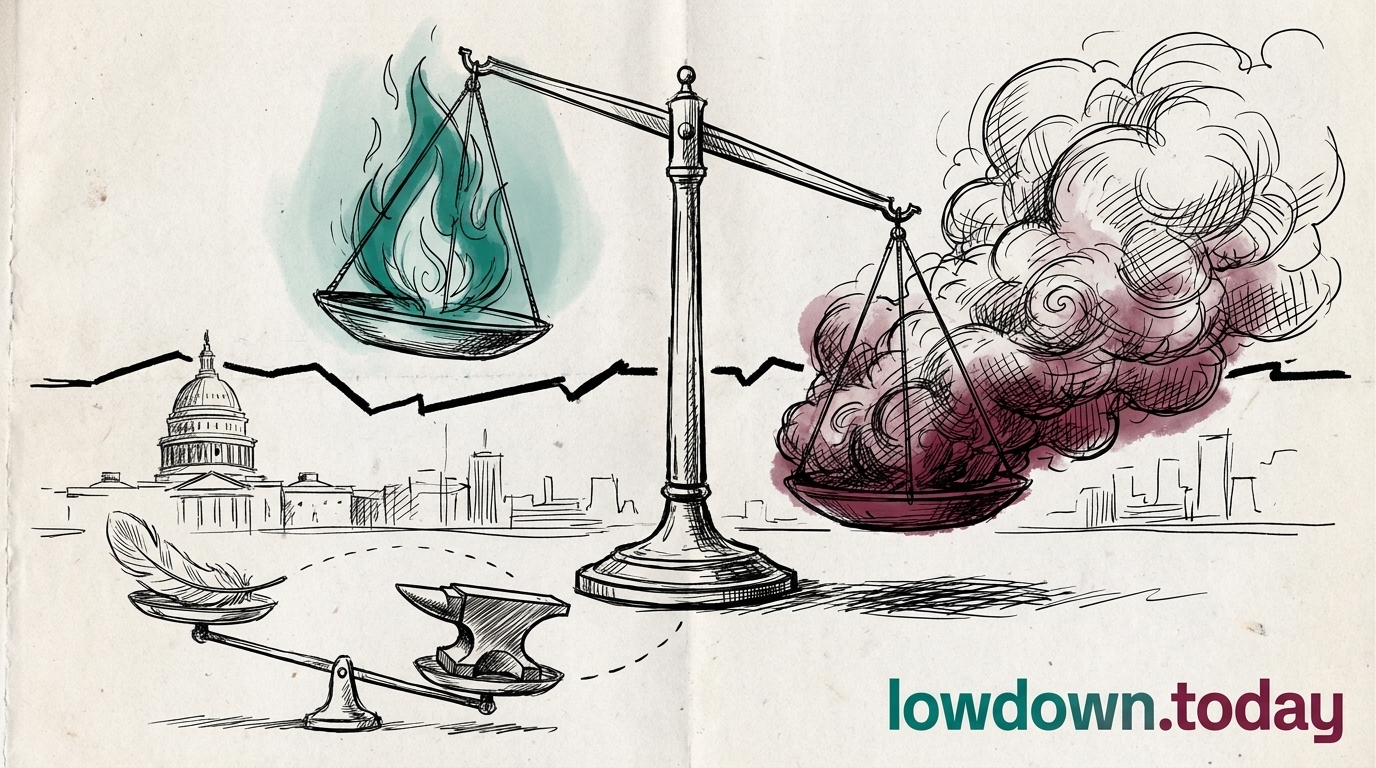
Wind and solar generated more EU electricity than fossil fuels for the first time in 2025, yet the power sector's gas bill still climbed 16%.

EconomicDeveloping
Key takeaway

Wind and solar hit 30% of EU generation in 2025, but the gas bill still rose 16% on hydro shortfalls.

Ember published its European Electricity Review showing wind and solar exceeded fossil fuels in EU electricity generation for the first time in 2025: renewables at thirty percent against fossil fuels' share. The milestone marks a structural shift in the generation mix. But the EU power sector's gas import bill still reached EUR 32 billion in 2025, up 16% year-on-year, because gas generation itself rose 8% to compensate for reduced hydro output.

The transition insulates unevenly. Spain is largely protected from TTF pass-through; Italy, the Netherlands, and Belgium are fully exposed. Ember's data confirms that the merit order mechanism, where the most expensive fuel needed to meet demand sets the price for all generation, means gas retains pricing power far beyond its share of actual generation. In markets where gas sets the marginal price most hours (Italy being the clearest case), the rising renewables share delivers environmental benefit but limited consumer price relief.

The structural implication for traders: EU-wide renewables statistics overstate the degree to which the bloc is insulated from gas price shocks. Market-by-market merit order composition, not aggregate generation share, determines price exposure.


Deep Analysis

In plain English

In 2025, for the first time ever, European wind turbines and solar panels produced more electricity than all fossil fuels combined. This sounds like a major milestone for clean energy, and in generation terms it is. But here is the complication: Europe's gas import bill for electricity still went up by 16%, to EUR 32 billion. This is because wind and solar do not blow and shine all the time. When they stop, something else needs to fill in quickly, and right now gas stations are the primary backup. Gas is now used less for routine power but more for emergency top-ups, which happen to be at the most expensive market hours.

Deep Analysis
Root Causes

The simultaneous achievement of renewable majority and rising gas bills reflects the merit order's structural mechanics: wind and solar push gas out of baseload hours but increase gas's role in marginal hours, where gas must provide rapid ramping to cover renewable generation shortfalls.

Gas-fired plants running fewer hours but at higher marginal prices can generate the same or higher revenue, and their fuel costs per unit of production are higher because they operate less efficiently at low capacity factors.

The hydro shortfall is the second structural factor. European reservoir hydro output fell 8% in 2025 due to below-average Alpine snowpack and drought in Iberia's river basins. Gas compensated for this on an essentially unplanned basis, at spot prices, because the hydro shortfall was not foreseeable six months in advance when storage injection contracts were placed.

What could happen next?
  • Consequence

    The EUR 32 billion gas bill for power generation creates a permanent structural argument for accelerating battery storage and interconnection investment, as each alternative capacity unit reduces the volume of spot gas purchased at peak prices.

  • Risk

    If Alpine hydro output continues below long-run averages due to climate-related snowpack decline, gas compensation demand will remain a structural feature of EU electricity markets regardless of renewable capacity growth.

First Reported In

Update #1 · Europe's thinnest gas cushion since 2018

Bruegel· 13 Apr 2026
Read original
Causes and effects
This Event
Renewables pass fossil fuels, gas bill rises
The paradox of rising renewables share alongside a rising gas bill exposes the merit order's structural flaw: even a minority fuel can set prices for the majority of hours.
Different Perspectives
Hungary and Slovakia (Central European supply-security bloc)
Nine days from the 17 June short-term pipeline ban, neither Hungary's February CJEU challenge nor Slovakia's signalled application has produced a stay; the legal route has not bought the supply-protection time it was intended to. After 17 June, Hungary's long-term Gazprom-TurkStream contract to 2036 becomes the sole remaining Russian pipeline import route for both states.
LNG spot traders and cargo routers
Monday's EUR 50.83 TTF close narrows the JKM-TTF arb from USD 1.225/MMBtu toward USD 0.75/MMBtu on a sustained basis, which is the threshold at which Atlantic spot cargoes compete on equal terms with Asian demand. The next weekly laycan window is the operative data point; at USD 1.225 the arb still points Asia but only barely.
EU institutions (European Commission, ACER)
ACER's 11 June REMIT workshop and the 12 June guidance lock signal the surveillance regime is entering its first full enforcement cycle under expanded cross-border powers, with 204 suspicious-transaction reports in 2025 already doubling the prior year before the new powers activated. The Article 207 TFEU pipeline ban framing has produced no CJEU stay, validating the trade-measure classification strategy.
EDF and French nuclear-anchored buyers
The EUR 96.20 record spread flows directly to French industrials via the CRE's VNU mechanism, delivering near the EUR 28 day-ahead print at the factory gate. The advantage reverses from September when Flamanville-3's overhaul removes 1.6 GW; the spread will compress mechanically as heating-season demand rises and French surplus narrows.
German industrial buyers and capacity planners
The cabinet-approved StromVKG is a direct acknowledgement that EUR 124/MWh day-ahead power and a EUR -8 spark spread make Germany's grid unfinanceable on market terms alone; the 2031 first-capacity date is five years of exposure before relief arrives. At EUR 96 below French factory-gate power prices, the competitiveness gap is real and widening.
TTF traders / Amsterdam hub desks
TTF broke its 38-session EUR 46-47 band on 2 June to EUR 48.9 on stalled Iran diplomacy and an unconfirmed Troll A restart; Dutch EBN mandates carry storage trajectory while commercial injection books nothing. The 17 June pipeline expiry is the next binary level: Central European hub premium above EUR 2/MWh widens sharply on any physical step-down.
