Skip to content
You can now search across every topic, entity and event.What's new
European Energy Markets
8JUN

German caverns quit the prompt-gas bid

3 min read
12:01UTC

German net cavern injection collapsed from 530.7 GWh a day to 0.8 on 21 July, the session Germany stopped being Europe's marginal gas buyer while EU aggregate fill still climbed.

EconomicDeveloping
Key takeaway

German caverns stopped injecting at 0.8 GWh/day on 21 July, pushing winter-refill risk onto peripheral estates.

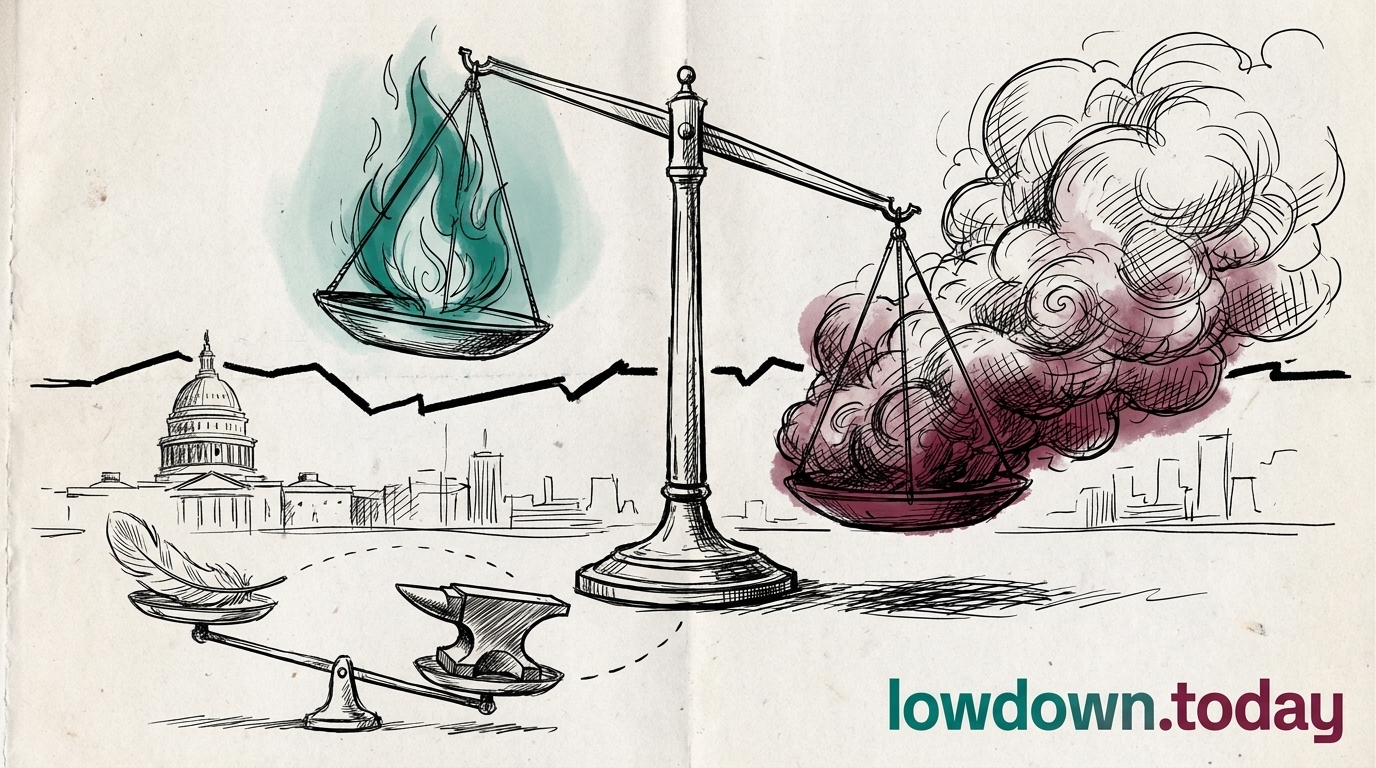
Germany's net gas storage injection collapsed from 530.7 gigawatt-hours a day on Sunday 19 July to 0.8 GWh/day on Tuesday 21 July, effectively flat, on GIE AGSI+ data, the daily platform Gas Infrastructure Europe runs 1. National fill barely moved, 45.43% to 45.53% across the two days. The stall lands on the 20 July session when Germany's clean spark spread turned negative .

The EU aggregate kept climbing, reaching 54.41% on 21 July 2, up from 50.03% on 5 July . France was still net injecting 147 GWh/day the same day 3. The bloc's refill now runs on peripheral estates rather than the German anchor. At a negative spark, cavern injection economics sit underwater at the same gas print that pushes a German CCGT out of the money, so the gas Germany neither burns nor stores goes unbought.

That shifts the inverted spark from a generation-margin story to a winter-supply one. German withdrawal capacity of roughly 7 TWh a day outstrips injection capacity of roughly 4.3 TWh a day, so refill delayed into autumn cannot be recovered at the same daily pace. A July stall does not net out by November.

The stall spans only two gas days, 19 to 21 July, too short to call a structural halt. It could be a weekend gas-day effect or a single maintenance blip, and one week of AGSI+ prints will not settle it. What tilts the reading toward the economics is the EU-aggregate divergence: the injection that vanished is German-specific, and it vanished on the day the spark inverted. Treat it as a coincidence worth watching, not proof of a halt.


Deep Analysis

In plain English

Germany has huge underground caverns, old salt mines and depleted gas fields, that it fills every summer so there is enough gas for winter heating. Energy firms usually get paid to do this: buy cheap summer gas, store it, sell it dear in winter. That trade stopped working in July because gas and the EU's carbon permits (a cost added to any power plant burning fossil fuel) both got expensive at once, so storing gas no longer turns a profit. Germany has a law, the Gasspeichergesetz, that sets fill targets, 85% by October, but the law doesn't force anyone to buy gas at a loss to hit them. If July's stall drags on, the German gas-market operator can step in and buy the shortfall itself later in the year, but that costs money too, and that cost typically lands on ordinary bills rather than the traders who sat out.

Deep Analysis
Root Causes

The Gasspeichergesetz's fill targets bind the aggregate trajectory, not any individual shipper's daily buying decision. THE administers the law but has no standing authority to force commercial injection when the clean spark spread runs negative; its only lever is to authorise its own strategic purchases, a step it has historically taken only once a shortfall against the calendar becomes visible, not pre-emptively.

Germany also holds the EU's largest single storage estate, close to a quarter of aggregate EU working-gas capacity. That concentration means a German-specific stall cannot be fully offset by peripheral injection at the bloc level: France, the Netherlands and others do not hold enough spare capacity, individually or combined, to substitute for the anchor estate's full injection rate without running their own trajectories ahead of target.

What could happen next?
  • Risk

    If the German stall persists past August, Trading Hub Europe's own-account strategic purchases historically step in to close the trajectory gap, converting a market-driven pause into a consumer-funded catch-up cost.

    Short term · Reported
  • Consequence

    Peripheral estates (France, the Netherlands) absorbing Germany's forgone injection volume enter autumn with less individual headroom, since neither holds capacity comparable to Germany's roughly quarter-share of EU storage.

    Medium term · Reported
  • Precedent

    The 2022 Gasspeichergesetz was written specifically because a 2021 German storage stall proved unrecoverable without intervention, establishing the template regulators are likely to reach for again if the 2026 stall extends.

    Long term · Reported
First Reported In

Update #29 · Germany's caverns stop buying gas

Gas Infrastructure Europe· 23 Jul 2026
Read original
Causes and effects
Different Perspectives
French industrial power consumers
France's day-ahead discount to Germany has nearly closed as TTF and EUA rise together on both sides of the border, eroding the arbitrage French industry relied on through the summer. A standing negative spark removes the German demand buffer that kept that spread wide.
TTF trading desks
TTF trading desks
Desks are reading the inversion as an injection-arbitrage trade: buy TTF at EUR 62.4/MWh now, accept the near-term loss on the spread, and sell into the winter strip once caverns are forced back into the market. The 0.8 GWh/day German print makes that trade increasingly asymmetric.
Oxford Institute for Energy Studies
Two straight sessions of negative clean spark spread confirm gas has stopped setting German power prices cleanly; CCGT dispatch now follows the spread's sign, not storage need. Caverns quitting the prompt bid on 21 July is that mechanism working exactly as the structural read predicts.
European Commission
European Commission
State-aid approval for StromVKG has not been granted, a status Bundesnetzagentur's own scheme page confirms, and Brussels was not consulted before the auction opened. Every award from the 8 September deadline stays exposed to a formal proceeding or clawback once the Commission rules.
Bundesnetzagentur
Bundesnetzagentur
Bundesnetzagentur opened the first 4.5 GW StromVKG capacity auction on 21 July, bids due 8 September, without waiting for EU state-aid clearance. Berlin is treating Germany's 24% share of EU storage as urgent enough to move first on capacity and negotiate the state-aid question with Brussels afterwards.
Marine insurers and AIS trackers covering Hormuz
AIS data shows severe curtailment on 20 July, 479 vessels anchored, 36 dark, 123 still broadcasting inside the strait, not the closure the IRGC claims. War-risk premiums move on the unresolved CENTCOM-IRGC contest itself, since underwriters price the dispute as much as the count.
