Skip to content
You can now search across every topic, entity and event.What's new
European Energy Markets
4JUN

JKM-TTF spread narrows to USD 2.30

2 min read
10:45UTC

The JKM-TTF spread narrowed to roughly USD 2.30/MMBtu in the week to 7 May 2026, down from USD 2.90 to 3.30/MMBtu a fortnight earlier, reducing but not eliminating Asia's price advantage for flexible Atlantic LNG cargoes.

EconomicDeveloping
Key takeaway

Asia's LNG premium narrowed but did not flip; flexible Atlantic cargoes still clear east.

The JKM-TTF spread narrowed to roughly USD 2.30/MMBtu in the week to 7 May 2026, down from USD 2.90 to 3.30/MMBtu a fortnight earlier 1. JKM is the Platts Japan Korea Marker, the Asian LNG spot benchmark; TTF is the European wholesale gas reference. The spread is the headline arbitrage input for flexible Atlantic LNG cargoes deciding between east and west routing.

The spread remains positive. Asia still carries the premium, so flexible cargoes still route east on routing-cost arithmetic alone. The narrowing is constructive for Europe's competitive position on the marginal spot cargo, but it does not reverse the underlying picture. The TTF-set arithmetic at EUR 47 and the storage deficit sit unchanged beneath the spread move.

European procurement desks read the move as incremental, not structural. A spread compression of roughly USD 0.60 per MMBtu at the upper end shifts the breakeven on a marginal voyage but not the directional bias. Atlantic cargo bidding will adjust at the margin, while flexible cargoes continue to clear at the Asian premium. The cleaner trigger for a routing reversal would be a JKM-TTF flip into negative territory or a spread compression below the voyage cost differential, neither of which has materialised in the week to 7 May.


Deep Analysis

In plain English

LNG (liquefied natural gas) is gas cooled to liquid form so it can be shipped by tanker. Unlike pipeline gas, LNG tankers can go anywhere in the world. Buyers in Japan and South Korea (tracked by a price called JKM) and buyers in Europe (tracked by TTF) compete for the same tankers. When Asia pays more, tankers head east; when Europe pays more, they head west. Right now Japan and South Korea are paying about USD 2.30 per unit of energy more than European buyers. So most LNG tankers from the US and elsewhere still route to Asia. The gap narrowed from about USD 3 a fortnight ago, which means Europe is getting slightly more competitive. Until the gap falls much further, European buyers will not attract most of the flexible supply they need for summer storage filling.

What could happen next?
  • Opportunity

    If Asian spring demand continues to ease, the JKM-TTF spread could compress below USD 1.50/MMBtu by June, at which point Atlantic-origin flexible cargoes face a meaningful routing reversal toward European terminals.

  • Risk

    If the spread compression stalls at USD 2.00+ through June, European injection pace cannot be rescued by cargo diversion and the 73% November storage trajectory becomes increasingly confirmed.

First Reported In

Update #9 · Storage 35% met, 80% trajectory still missed

Canada LNG Group· 12 May 2026
Read original
Causes and effects
This Event
JKM-TTF spread narrows to USD 2.30
Asia still carries the premium and flexible cargoes still route east; the narrowing is constructive for Europe's competitive position but does not reverse the TTF-set arithmetic at EUR 47.
Different Perspectives
Marine insurers and AIS trackers covering Hormuz
AIS data shows severe curtailment on 20 July, 479 vessels anchored, 36 dark, 123 still broadcasting inside the strait, not the closure the IRGC claims. War-risk premiums move on the unresolved CENTCOM-IRGC contest itself, since underwriters price the dispute as much as the count.
QatarEnergy
QatarEnergy
Ras Laffan has run at minimum output under force majeure into August since 9 July, a constraint already priced before this week's claim. The 17-20 July move is risk premium stacked on that standing loss, not a new physical loss at the plant.
ACER and the European Commission
ACER opened the REMIT reporting consultation on schedule on 16 July, giving firms to 11 September before a quarter to build systems against Regulation 648/2012. Brussels' separate silence on StromVKG state-aid clearance leaves Berlin's own capacity mechanism without legal authorisation.
EDF and French grid operator RTE
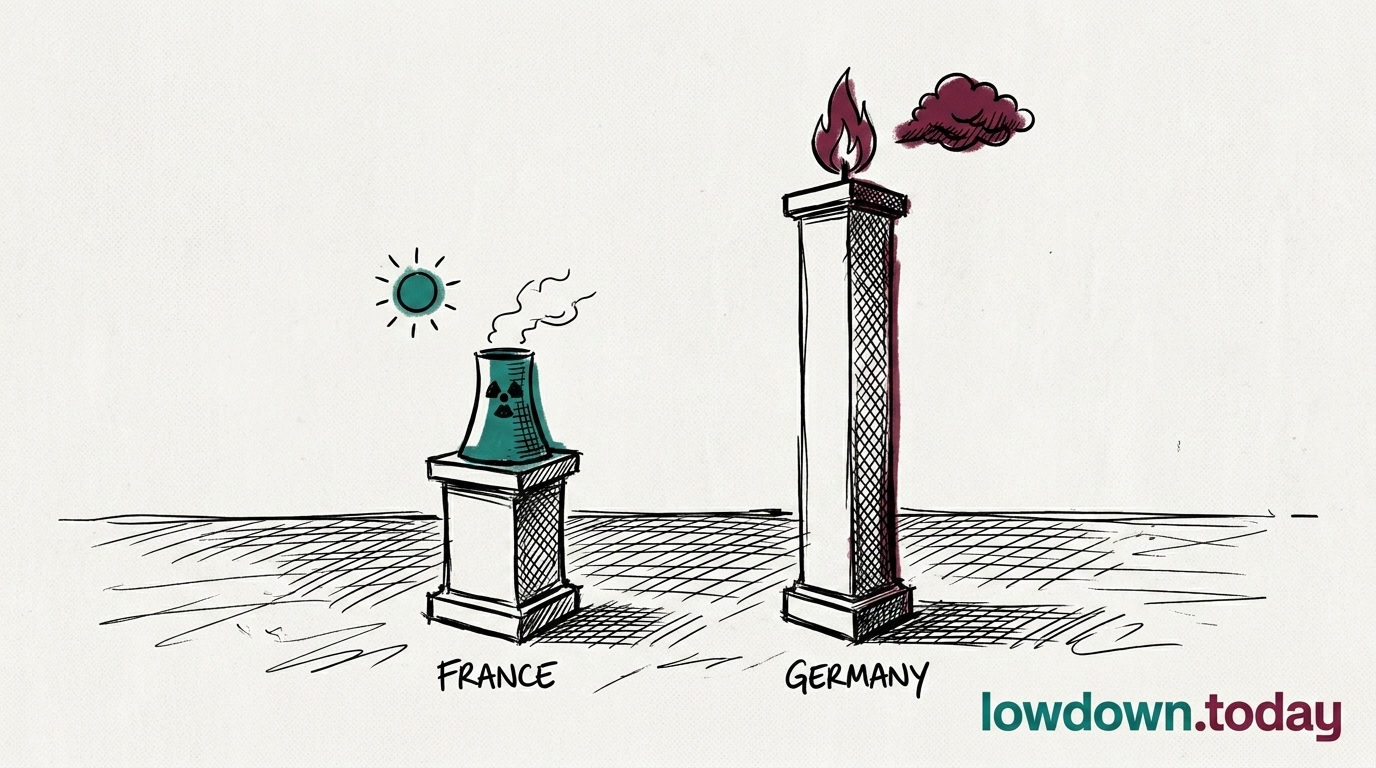
France's discount to Germany rests on an ASNR derogation from the 28C river-cooling limit at Bugey that expires today, not on a nuclear recovery; Chooz, Golfech and Bugey restarts run to 25 July. The cheap leg holds only as long as regulators keep waiving the limit each heatwave.
German CCGT operators and grid balancers
German gas plants went off-merit on 20 July as the clean spark spread inverted to minus EUR 15 to minus EUR 21/MWh, sidelining the flexible capacity storage injection needs. Operators are pricing 2027-28 capacity revenue against Bundesnetzagentur's own admission that Brussels has not cleared the 9 GW StromVKG auctions.
LNG spreads desk
LNG spreads desk
The JKM-TTF arb flipped to a TTF premium of roughly USD 0.6/MMBtu on 15 July, the first time this cycle Europe has outbid Asia, yet no Atlantic cargo has rerouted west. Until a cargo actually moves, the desk reads the Hormuz premium as unconfirmed and the EUR 55 print as vulnerable to a fast reversal.
