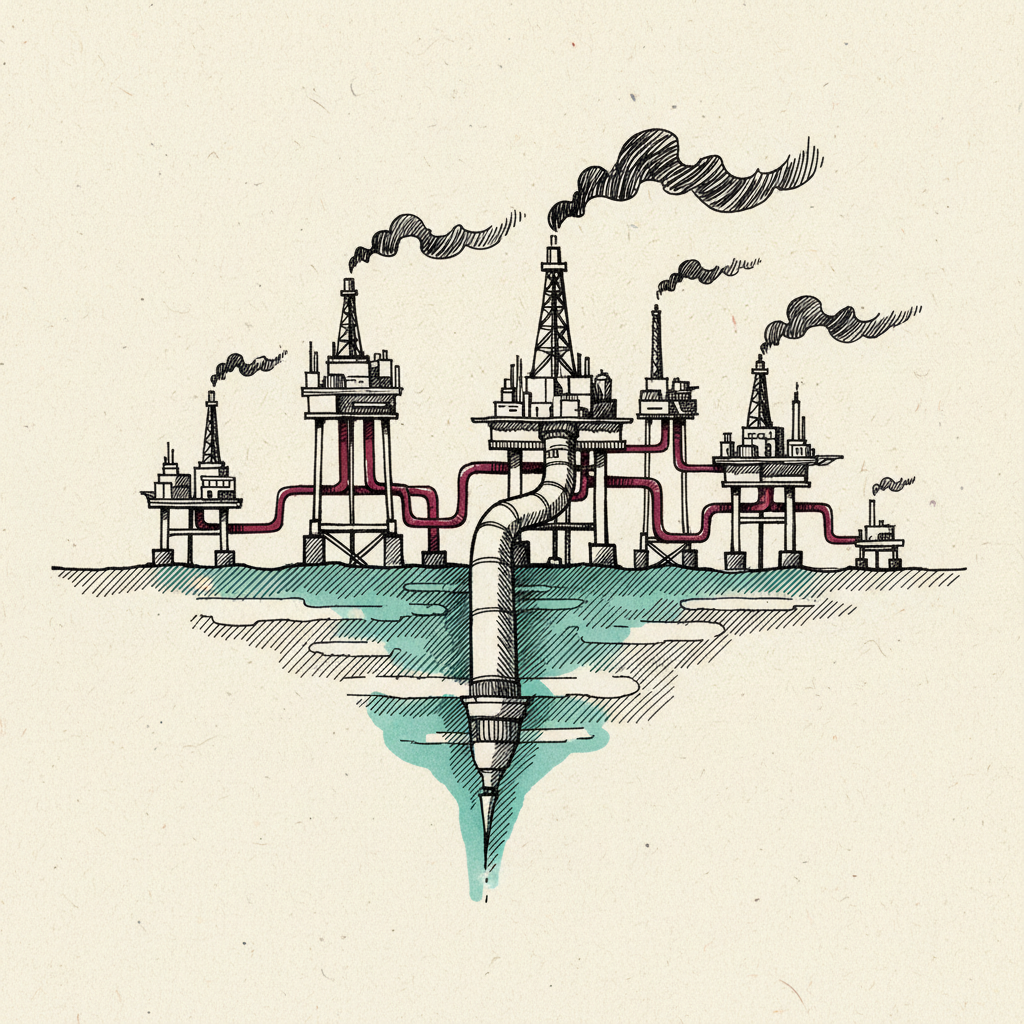
Norwegian Continental Shelf
Norway's offshore E&P zone; supplies ~25-30% of EU gas via pipeline; recording consecutive monthly production declines.
Gas sales from the Norwegian Continental Shelf slipped to 10.2 bcm in April 2026, after March's 10.8 bcm marked a second straight monthly fall; a Troll A compressor fault then removed up to 50.8 mcm/day at the 30-31 May peak.
Last refreshed: 28 September 2026 · Appears in 1 active topic
Can the Norwegian Continental Shelf compensate for the loss of Qatari and Russian gas to Europe?
Timeline for Norwegian Continental Shelf
Mentioned in: Troll A extended to 31 May; 51 mcm/day worst case
European Energy MarketsServed as the production area for the Equinor-Aker BP partnership and Sodir production statistics
European Energy Markets: Equinor locks in five-year retail stripRecorded production increase of 10% year-on-year in Q1 2026
European Energy Markets: [RETRACTED] Equinor Q1 closes; Hammerfest silence heldMentioned in: Equinor 17bn Norwegian kroner drilling; Eirin first gas
European Energy MarketsMentioned in: Eirin field starts; 27.6 mmboe to Gassled
European Energy MarketsBackground
The Norwegian Continental Shelf spans the North Sea, the Norwegian Sea and the Barents Sea, and it is Europe's largest source of pipeline gas. Pipelines from the shelf land in Britain, Belgium, Germany and France, supplying roughly 25-30% of EU gas consumption. The Norwegian Offshore Directorate regulates activity on the shelf and publishes its monthly production figures.
Output is concentrated: the Troll field alone supplies around 30% of Norwegian gas, so a fault on one platform can move European prices. Operators continue to invest: Equinor signed 17bn Norwegian kroner of drilling contracts on the shelf in the first quarter of 2026, and its Eirin field began producing on 5 May 2026, extending the life of the Gina Krog platform to 2036.
The shelf matters because it is the one large source of EU gas supply that sits outside the sanctions and shipping-lane risks attached to Russian and Middle Eastern gas. Its monthly production figures, which fell in both February and March 2026, therefore feed directly into how much LNG Europe must buy to fill storage.
Monthly gas sales keep slipping
Gas sales from the shelf reached 10.8 bcm in March 2026, an average of 349.3 mcm/day that was 1.6% below February and 0.8% below March 2025. March's 10.8 bcm was the second monthly decline in a row. April brought another fall, to 10.2 bcm, and new supply arrived only at the margin: the Eirin field began producing on 5 May, with 27.6 million barrels of oil equivalent, mostly gas, to send into the pipeline network.
Late May then tested how much slack the shelf has. A compressor fault on Troll A cut 34.6 mcm/day from 26 May, the outage was extended to 31 May, and the loss reached 50.8 mcm/day at the 30-31 May peak. One platform fault removed roughly a seventh of the shelf's March daily rate.
Can Norway increase gas output to cover the Qatari LNG shortage?
What happens to European gas prices if Norwegian production keeps falling?
How much of Europe's gas comes from Norway?
How much of Europe's gas supply comes from the Norwegian Continental Shelf?

Written with AI from Lowdown's published reporting. Not individually reviewed by an editor. Updated 28 September 2026. Editorial standards.