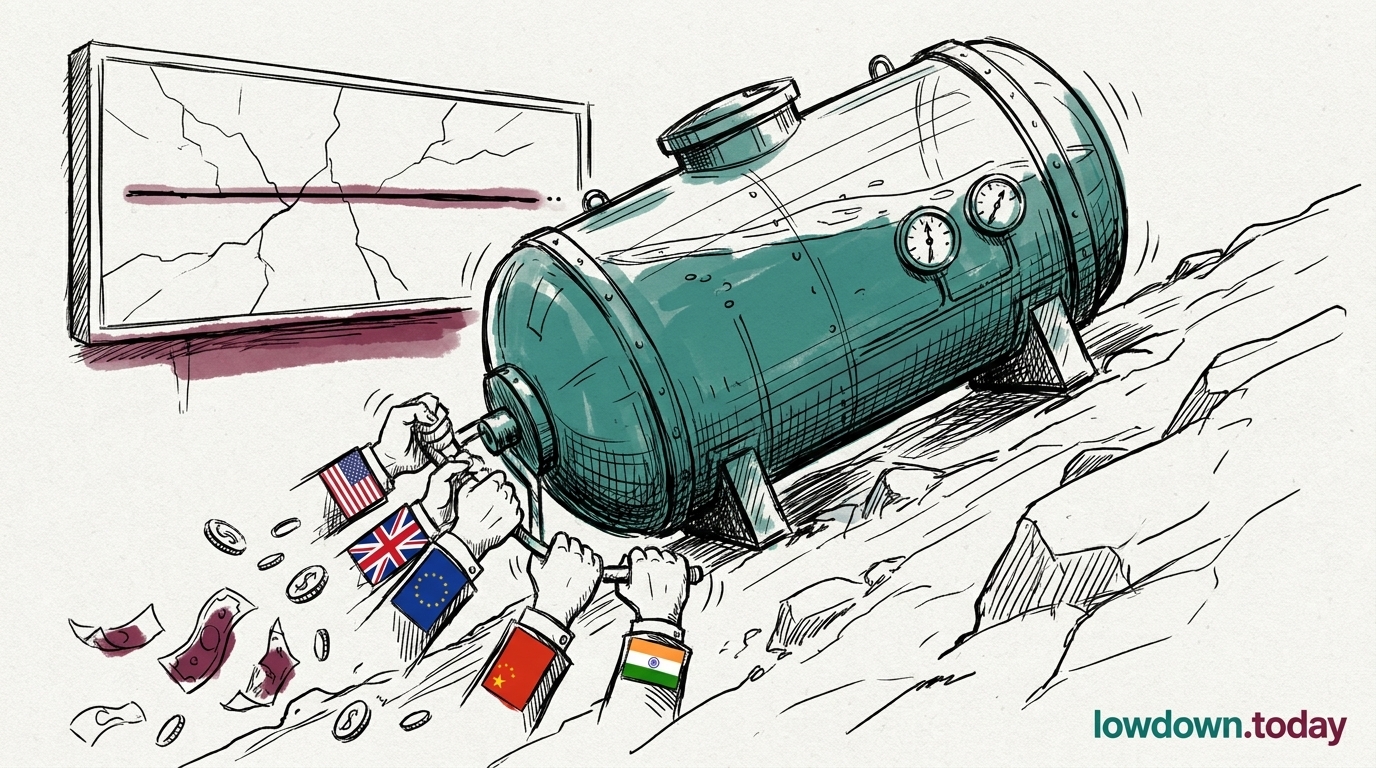
Golfech Unit 2 shut at 23:45 on 22 June when cooling water in the Garonne neared the 28°C regulatory limit, and Nogent-sur-Seine ramped a reactor down on the Seine the next day1. EDF, France's state nuclear utility, may run the reactors; what it cannot do is breach the discharge derogation that caps how much heat they may add to a river already near record temperature. France logged 44.3°C at Pissos on 23 June, its hottest reading since 19472. A transformer fault at Ergué-Gabéric then cut power to 68,000 homes in Finistère, peaking at 106,000 customers on 24 June.
German day-ahead cleared €207.84/MWh and a 23 June quarter-hour auction printed €615/MWh3, while Belgium ran above €1,000/MWh at sunset on 24 June, its highest since the 2022 crisis4. The German clean spark spread, the margin a gas plant earns after paying for gas and carbon, hit a 2026 high near +€110/MWh. Four sessions earlier it had only just clawed back to +€30 as EDF restored output, recovering from the trough that shut combined-cycle plants on 15 June.
The cheap-France position the desk carried into the week lost both legs at once. French nuclear surplus had held France €17.29 below Germany on 22 June; river heat pulled the cheap leg's supply while cooling demand bid its price up. This is the mirror image of 3 June, when a heatwave solar surge collapsed French day-ahead toward €9 and blew the spread to a record on cheap France. The mechanism flipped from surplus to curtailment, and the French side ran dear rather than near zero.
Flamanville-3, EDF's newest reactor, was already booked for a one-year overhaul from September that strips roughly 1.6 GW at the start of the heating season. June delivered the same supply hole three months early, on hydrology rather than a planned outage. German day-ahead mean-reverted to €133.54 the following day as the heat broke, but the basis did not: the September overhaul now arrives onto a fleet the market has just watched buckle to weather.




