Skip to content
Briefings are running a touch slower this week while we rebuild the foundations.See roadmap
European Energy Markets
26MAY

Germany net-withdrew 459 GWh on 13 April

3 min read
12:01UTC

Four days into the injection season the EU's largest storage estate is still drawing down, not refilling.

EconomicDeveloping
Key takeaway

Germany is still emptying, not filling, and cannot accelerate its way out later.

Bundesnetzagentur-fed AGSI+ data shows Germany recorded a net gas storage withdrawal of 459 GWh on the 13 April gas day, leaving national storage at 23.27%, fractionally below the 23.32% posted on 12 April 1. Four days into what should have flipped to sustained injection, the country's cavern network was still running a net draw.

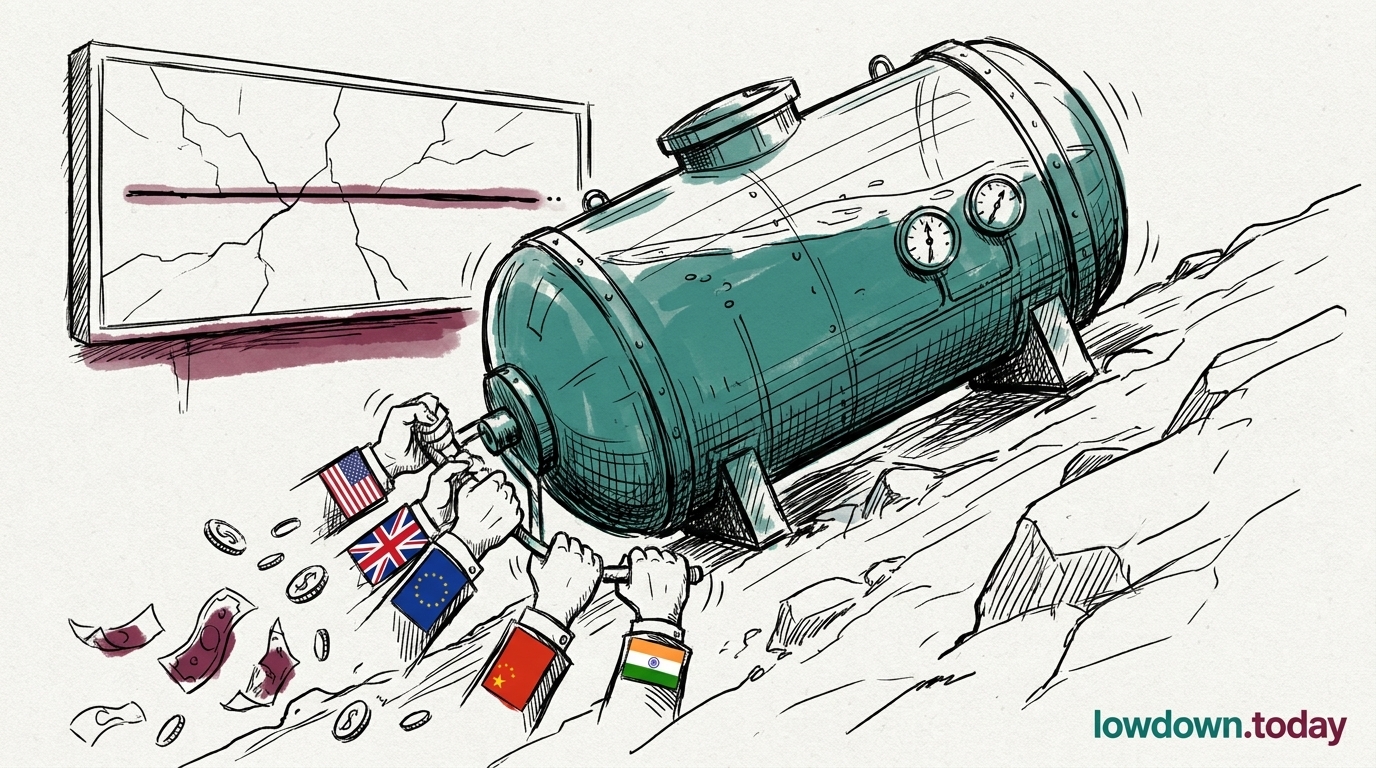
German injection capacity is fixed at 4,274 GWh/day against 7,047 GWh/day of withdrawal; the asymmetry means the pipelines can empty the caverns faster than they can fill them. A late start is not recoverable by acceleration, only by running closer to the injection ceiling for longer, which leaves no headroom for the next supply shock.

The EU aggregate is still on pace against the reduced November target , , but it is running on periphery injection while the anchor drifts. Bruegel's refill estimate assumed Germany at net-injection by mid-April; that assumption has not held.

For winter-26 gas portfolios, this is the only domestic data point on the calendar that matters as much as the Hormuz ceasefire call ; it is also the only one that cannot be hedged with a headline.

Deep Analysis

In plain English

Gas storage works like a giant underground tank that Europe fills during summer when demand is low, then draws down during winter when heating demand is high. By early April the heating season should be winding down and the refilling should have started. Germany has the biggest gas storage network in the EU, so its behaviour sets the pace for the whole bloc. On 13 April it was still drawing gas out (459 GWh net), not putting it in, even though the storage season officially began on 1 April. That is a problem because Germany's filling equipment can only push gas in so fast. A late start cannot be made up by filling faster later. The tank is already unusually empty at 23.27%, about half the level it would be at this time in a normal year.

Deep Analysis
Root Causes

Germany's storage deficit has two structural causes distinct from the current Hormuz crisis. First, the Nord Stream pipeline destruction in September 2022 removed roughly 55 bcm per year of German-destined capacity, forcing Germany onto spot LNG and Norwegian pipeline at premium prices and preventing the pre-winter fill rates achievable before 2022.

Second, Germany's cavern storage geology (predominantly salt caverns with fast-cycle capability) means its working gas volumes are disproportionately small relative to its consumption. France and Italy hold a higher share of depleted-field storage with larger working volumes; Germany's estate is sized for rapid response, not strategic reserve depth.

What could happen next?
  • Risk

    If Germany remains in net withdrawal through late April, EU aggregate storage will miss the trajectory required for 80% by November, even with the target reduced from 90% (ID:2355).

  • Consequence

    Industrial demand curtailment orders in Germany, the EU's largest manufacturing economy, would amplify Cefic's reported 37Mt capacity loss by depressing output further in chemicals, steel, and glass.

First Reported In

Update #2 · TTF EUR 42 as Russian LNG ban enters range

Gas Infrastructure Europe· 15 Apr 2026
Read original
Different Perspectives
Cefic and European industrial gas offtakers
Chemical manufacturers running at 62-68% utilisation face mandate-funded storage that secures volume at above-commercial prices without reducing gas costs. A EUR 35bn refill bill, if confirmed, flows back through regulated network tariffs, adding directly to industrial energy costs already named by BASF and INEOS as structural.
OIES and energy research institutions
Bruegel and OIES have not published a revised refill cost model at EUR 47-51 TTF with sub-0.4 pp/day pace. The EUR 35bn mid-range is drifting into use as the operative sub-80% November consensus, and the 11 June ACER workshop is the next venue where EU-level storage instrument advocacy can surface.
Equinor upstream gas
The Troll A compressor fault removed 34.6 mcm/day, stacked on Hammerfest, yet TTF fell 8.1% on Iran news the same day. Norwegian supply disruptions carry no price premium while Hormuz dominates; Equinor's 31 May Troll restart is a first estimate and the 2025 Hammerfest compressor fault of the same class slipped 24 days.
German Economy Ministry and Bundesnetzagentur
Berlin confirmed on 20 May it will not introduce a summer injection-incentive scheme, leaving Germany as the EU's only major unincentivised market after the storage levy lapsed on 1 January 2026. Commercial injectors apparently used the 18 May EUR 50 spike to lock winter supply cost rather than book against a structurally negative strip.
CRE and French gas operators
CRE's 100% mandatory booking order funds French injection regardless of the inverted strip, providing the EU aggregate cover that masks Germany's gap. The French position is insulated from TTF price moves but exposed to CRE's annual renewal cycle, a political risk rather than a commercial one.
Amsterdam-Rotterdam gas trading desks
TTF's 8.1% crash on a deal headline despite 50-plus mcm/day of verified Norwegian outages settled the EUR 50 question: it is a diplomatic ceiling, not a floor, and the short EUR 50-strike summer position keeps paying until Iran resolves. EBN's price-insensitive mandate buying tightens the prompt but the EUR 233m budget cap is a known position risk.

