Skip to content
Briefings are running a touch slower this week while we rebuild the foundations.See roadmap
European Energy Markets
18MAY

Renewables pass fossil fuels, gas bill rises

3 min read
11:11UTC

Wind and solar generated more EU electricity than fossil fuels for the first time in 2025, yet the power sector's gas bill still climbed 16%.

EconomicDeveloping
Key takeaway

Wind and solar hit 30% of EU generation in 2025, but the gas bill still rose 16% on hydro shortfalls.

Ember published its European Electricity Review showing wind and solar exceeded fossil fuels in EU electricity generation for the first time in 2025: renewables at thirty percent against fossil fuels' share. The milestone marks a structural shift in the generation mix. But the EU power sector's gas import bill still reached EUR 32 billion in 2025, up 16% year-on-year, because gas generation itself rose 8% to compensate for reduced hydro output.

The transition insulates unevenly. Spain is largely protected from TTF pass-through; Italy, the Netherlands, and Belgium are fully exposed. Ember's data confirms that the merit order mechanism, where the most expensive fuel needed to meet demand sets the price for all generation, means gas retains pricing power far beyond its share of actual generation. In markets where gas sets the marginal price most hours (Italy being the clearest case), the rising renewables share delivers environmental benefit but limited consumer price relief.

The structural implication for traders: EU-wide renewables statistics overstate the degree to which the bloc is insulated from gas price shocks. Market-by-market merit order composition, not aggregate generation share, determines price exposure.


Deep Analysis

In plain English

In 2025, for the first time ever, European wind turbines and solar panels produced more electricity than all fossil fuels combined. This sounds like a major milestone for clean energy, and in generation terms it is. But here is the complication: Europe's gas import bill for electricity still went up by 16%, to EUR 32 billion. This is because wind and solar do not blow and shine all the time. When they stop, something else needs to fill in quickly, and right now gas stations are the primary backup. Gas is now used less for routine power but more for emergency top-ups, which happen to be at the most expensive market hours.

Deep Analysis
Root Causes

The simultaneous achievement of renewable majority and rising gas bills reflects the merit order's structural mechanics: wind and solar push gas out of baseload hours but increase gas's role in marginal hours, where gas must provide rapid ramping to cover renewable generation shortfalls.

Gas-fired plants running fewer hours but at higher marginal prices can generate the same or higher revenue, and their fuel costs per unit of production are higher because they operate less efficiently at low capacity factors.

The hydro shortfall is the second structural factor. European reservoir hydro output fell 8% in 2025 due to below-average Alpine snowpack and drought in Iberia's river basins. Gas compensated for this on an essentially unplanned basis, at spot prices, because the hydro shortfall was not foreseeable six months in advance when storage injection contracts were placed.

What could happen next?
  • Consequence

    The EUR 32 billion gas bill for power generation creates a permanent structural argument for accelerating battery storage and interconnection investment, as each alternative capacity unit reduces the volume of spot gas purchased at peak prices.

  • Risk

    If Alpine hydro output continues below long-run averages due to climate-related snowpack decline, gas compensation demand will remain a structural feature of EU electricity markets regardless of renewable capacity growth.

First Reported In

Update #1 · Europe's thinnest gas cushion since 2018

Bruegel· 13 Apr 2026
Read original
Causes and effects
This Event
Renewables pass fossil fuels, gas bill rises
The paradox of rising renewables share alongside a rising gas bill exposes the merit order's structural flaw: even a minority fuel can set prices for the majority of hours.
Different Perspectives
US LNG exporter (Sabine Pass / Corpus Christi)
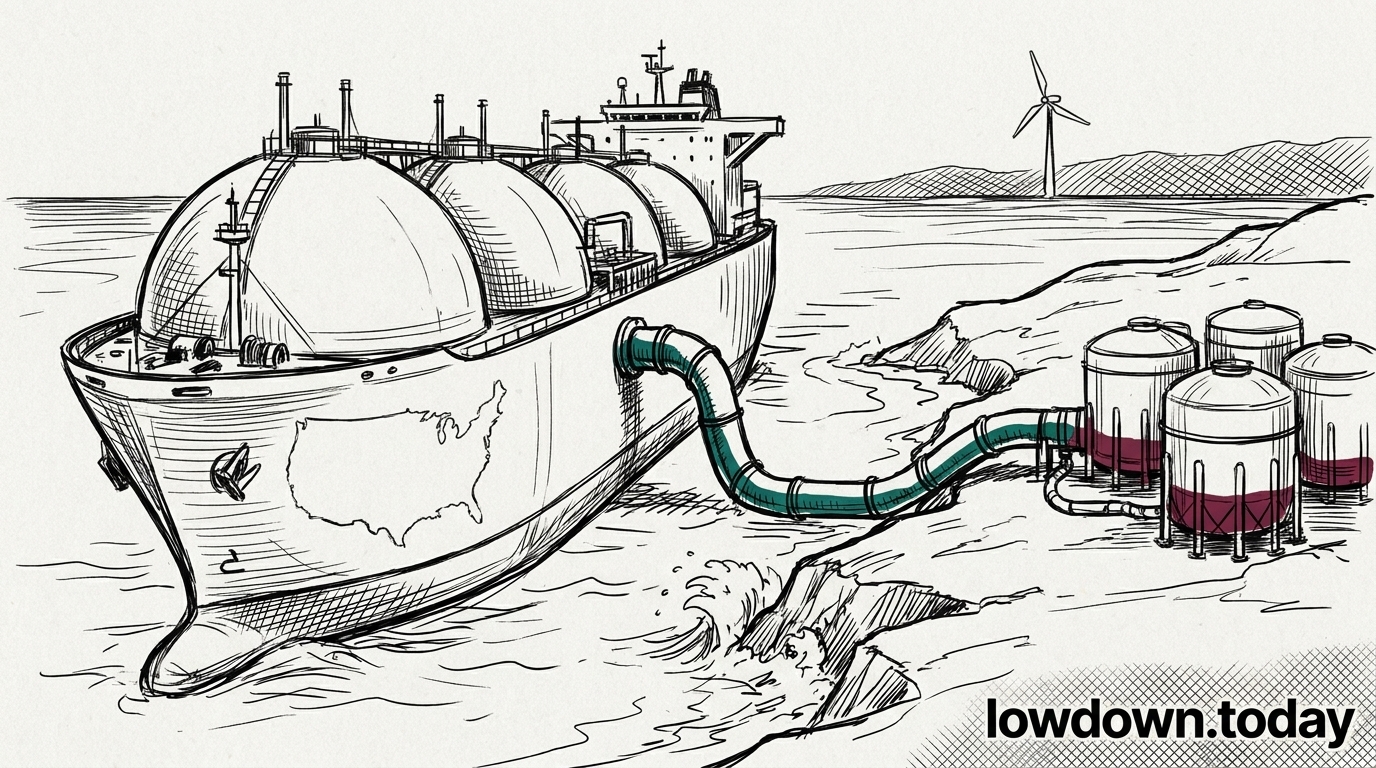
The 58% EU import share confirmed by ACER, heading toward 65% in 2026, represents a structural long-term offtake position that European terminal operators are now willing to underwrite against the German 2031 gas-demand floor. Ribera's warning lands inside a commercial relationship that is expanding, not contracting.
Teresa Ribera, European Commission EVP
Ribera warned Europe should 'avoid replacing one energy dependency with another', framing the ACER 58% US LNG figure as a supply-security risk in the same week TTF broke EUR 50. Her institution has spent EUR 117 billion on US LNG since 2022.
Yara International (ammonia producer)
Front-month TTF at EUR 50+ touches the demand-destruction threshold at which ammonia output curtailments have historically been triggered. Yara faces the same lock-or-ride binary as financial desks, but the downside is production loss rather than mark-to-market exposure.
Katherina Reiche, German Economy Minister
Reiche confirmed the 12 GW hydrogen-ready gas tender is formally agreed with the EU Commission, with first auctions in 2026 and all units operational by 2031. The confirmation closes three years of SPD environment-ministry obstruction and anchors German gas demand through the early 2030s.
European gas trader (Amsterdam desk)
The EUR 50 break is a watershed signal, not a squeeze: the forward curve at EUR 55.21 twelve months out implies the market has repriced structural winter risk, not a positioning overshoot. The lock-or-ride decision on winter hedges closes in June when injection-pace data for May lands.
Hungarian and Slovak gas buyers and regulators
Hungary cleared EUR 123.23/MWh on 12 May, EUR 54 above Spain's same-day clearing and the largest single-market premium of the briefing series, as ACER named it among seven NRAs in TurkStream derogation opinions with the 5 August EC ruling pending. A denial of derogation removes the only available pipeline substitute for Russian LNG banned since 25 April.
