Skip to content
You can now search across every topic, entity and event.What's new
Drones: Industry & Defence
20AUG

US Army gates a counter-drone marketplace

2 min read
16:38UTC

US Army Secretary Dan Driscoll led nine nations in signing a counter-drone marketplace letter of intent at Eurosatory on 16 June, with a mandatory data standard that quietly pre-selects US-integrated vendors.

TechnologyDeveloping
Key takeaway

Common data standards work as a market filter favouring C-UAS vendors already integrated with US architectures.

Dan Driscoll, the US Army Secretary, led nine nations in signing a counter-uncrewed-aircraft-system letter of intent at Eurosatory on 16 June 2026: Sweden, Denmark, Norway, France, Poland, the UK, the Netherlands, Italy and Lithuania 1. Counter-UAS, written C-UAS, covers the detection and defeat of hostile drones, and the plan is a shared marketplace of combat-proven kit targeting 25 nations by the end of summer 2026. The nine signatures represent roughly 36% of that goal, with one season left to close the gap.

A March 2026 US-UK declaration made common C-UAS data standards a mandatory condition for any system listed in the marketplace 2. That rule does more than keep the data tidy. A vendor whose sensors and effectors cannot speak the common format cannot get onto the shelf, however capable the hardware, which makes the standard a pre-qualification filter favouring suppliers already wired into US-led architectures.

The mechanism is a quieter form of market power than a sole-source contract, because it reads as technical hygiene rather than industrial policy. Whoever controls the data standard controls shelf access. Global C-UAS procurement had already reached $29 billion in the first quarter of 2026 , and an entry rule rather than the contest itself now decides which vendors reach that spend. The marketplace opens access to detectors, radars, low-collateral interceptors and electronic-warfare systems; the standard decides who is allowed to offer them.

Deep Analysis

In plain English

NATO allies are trying to build a shared shopping list for counter-drone systems. The idea is that if all 25 nations use the same technical standards, their drone-defence equipment will be compatible with each other. US Army Secretary Dan Driscoll led nine countries in signing a letter of intent at the Eurosatory defence exhibition in Paris on 16 June. The catch is that a technical standard set by the US and UK in March 2026 is now a mandatory entry requirement. Companies whose equipment does not meet that standard cannot be listed in the shared marketplace, even if their hardware works well. Nine of the 25 target nations have signed; 16 remain.

Deep Analysis
Root Causes

The marketplace's architecture reflects a US decision to use procurement standards rather than export licensing as the primary mechanism for maintaining influence over allied counter-drone capability.

US-integrated vendors (Dedrone, Anduril, DroneShield operating under US partnership agreements) already meet the March 2026 US-UK data standard because they were built against it. European and Ukrainian vendors who developed their data interfaces independently face a re-qualification cost that amounts to a market-entry barrier, even if their kinetic performance exceeds the marketplace threshold.

The 25-nation target by end of summer 2026 also creates a first-mover dynamic: nations that sign early shape the technical requirements for the next data standards revision, while late signatories inherit the existing standard without input.

What could happen next?
  • Consequence

    Counter-drone vendors whose data interfaces were built outside the US-UK standard face a re-engineering cost to enter the marketplace, creating a two-tier market between US-aligned and independent suppliers.

    Short term · Assessed
  • Risk

    Reaching 25 signatories by end of summer 2026 requires 16 more nations in approximately ten weeks; failure to meet the target weakens the marketplace's credibility as an alliance-wide mechanism.

    Immediate · Assessed
  • Precedent

    Using a bilateral US-UK technical declaration as the entry standard for a multilateral procurement marketplace sets a model that the US could replicate in other capability domains, reducing Allied Command Transformation's role in defining NATO technical standards.

    Long term · Assessed
First Reported In

Update #13 · Air Force shuts primes out of drone wingman

US Army· 25 Jun 2026
Read original
Causes and effects
This Event
US Army gates a counter-drone marketplace
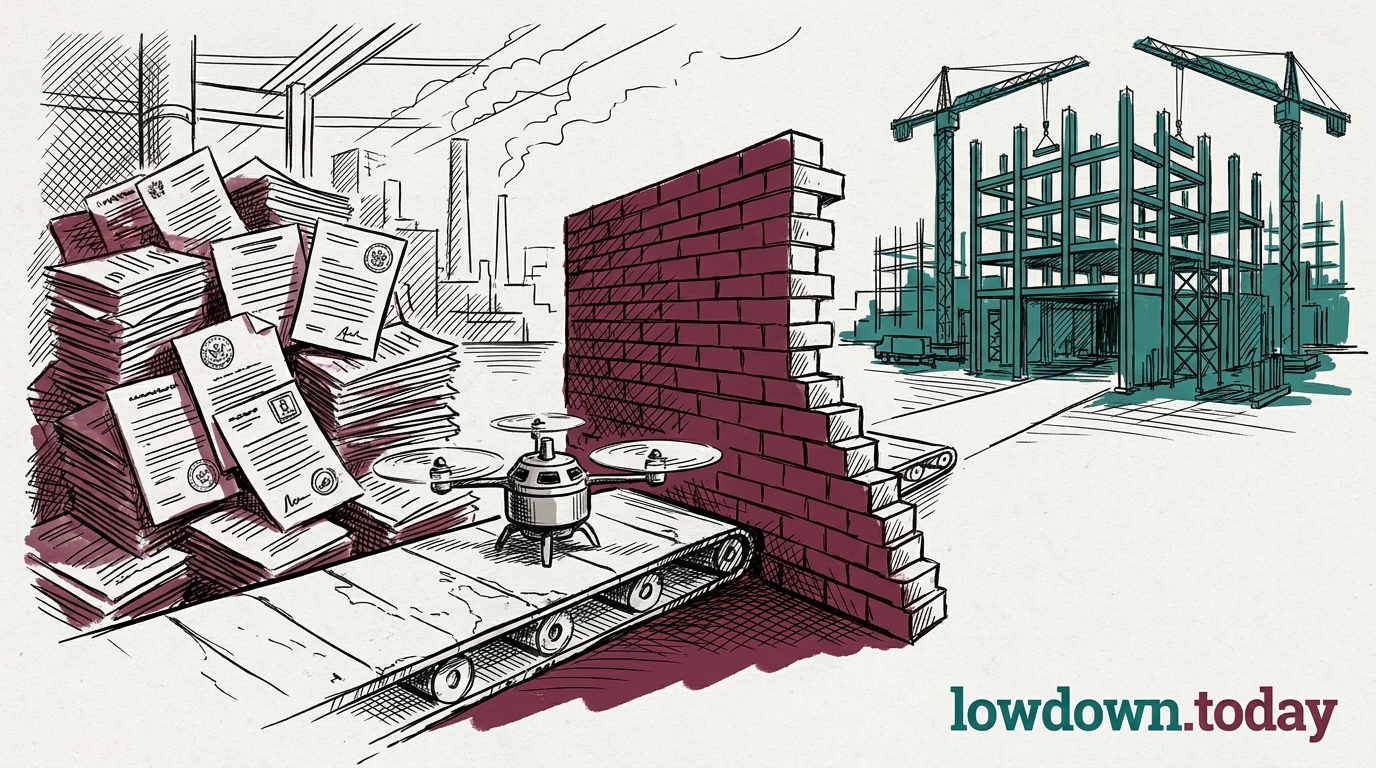
A common data standard set as a marketplace entry condition functions as a gatekeeping filter, deciding who may sell counter-drone kit before any contest of hardware quality begins.
Different Perspectives
South Korea's Defense Acquisition Program Administration
DAPA folded drone and roadside-bomb jammers into an 18-year, KRW 3.448 trillion K2 tank upgrade approved 11 August, rather than fund counter-drone kit as its own programme. Seoul is treating the threat as permanent enough to write into a platform's lifecycle, not urgent enough to buy ahead of it.
NATO Support and Procurement Agency
NSPA named five pre-qualified counter-drone suppliers under new framework contracts on 27 July, giving allies a purchasing route with no published budget attached. A framework without committed money is an instrument waiting for a spending decision, not a guarantee one is coming.
Ukraine's Ministry of Defence
Ukraine's forces strike with more than 70 AI and computer-vision systems drawn from over 200 domestic producers, the ministry said on 18 August, a supplier base neither Washington's tariff fight nor Beijing's export licence touches. Kyiv is scaling capability faster than either government is writing rules for it.
A European drone-component manufacturer
A European manufacturer selling components into the United States faces the same 100 per cent tariff and 3 September deadline as any other foreign supplier, with the duty-free onshoring carve-out available only to firms building on American soil. That leaves it to absorb the cost, relocate assembly, or cede the US market rather than shop around a rival supply chain.
Chinese drone component exporters
Exporters now need a case-by-case licence for each US-bound dual-use shipment after MOFCOM's 5 August order, with no published review clock. The same week Shenzhen logged nearly 200,000 domestic logistics-drone sorties and Hunan reported record spraying coverage, a home market large enough to absorb what the licence regime slows from leaving the country.
US drone manufacturers
The onshoring carve-out protects Performance Drone Works' $820 million War Department loan, but the same 3 September deadline hits Red Cat Holdings and Unusual Machines, both filing over 500 per cent revenue growth on 6 August, on Chinese-sourced components with no qualified domestic substitute yet.
