SpektreWorks' LUCAS (Low-Cost Uncrewed Combat Attack System) became the first US-manufactured loitering munition to see combat on 28 February 2026, deployed during Operation EPIC FURY. Pentagon chief technology officer Emil Michael confirmed the inventory stood at "dozens."1
The drone carries an 18 kg payload over 500 miles with six hours of endurance, at a unit cost of $35,000 to $55,000. That is roughly one hundredth of a Patriot interceptor's price.2 Built in Phoenix, Arizona, LUCAS was designed as a reverse-engineered answer to Iran's Shahed-136. Michael described the situation bluntly: "not in full-rate production; we shipped what we had."3
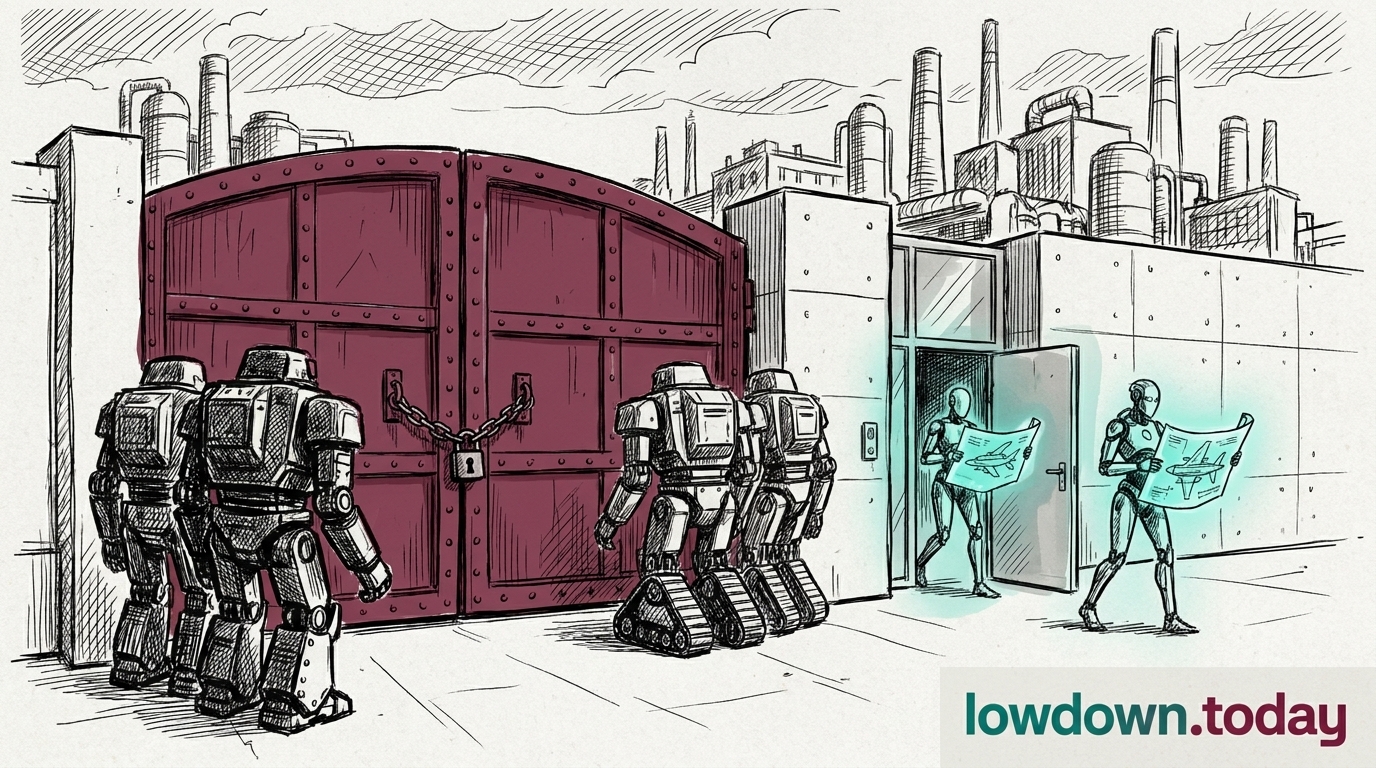
The $30 million initial contract under the Drone Dominance programme was intended to seed production of hundreds. The programme's stated goal remains 300,000 drones by 2027 under a $1.1 billion budget. Five weeks into a conflict that has consumed thousands of interceptors, the US has produced enough attack drones to equip a single squad. The gap between the Gauntlet's procurement ambition and the factory floor is not a future risk. It is an operational fact.
LUCAS validated the central thesis: cheap, expendable drones can substitute for million-dollar munitions. Production scarcity, not capability, is now the binding constraint on the entire programme.


