Skip to content
Briefings are running a touch slower this week while we rebuild the foundations.See roadmap
Drones: Industry & Defence
7JUN

Ukraine deploys 228 specialists to Gulf

2 min read
11:27UTC

Ten-year defence deals with Saudi Arabia and Qatar turn combat experience into an export commodity. A UAE agreement is expected imminently.

TechnologyDeveloping
Key takeaway

Gulf states are paying for Ukrainian combat expertise the US declined to support.

Ukraine signed 10-year defence deals with Saudi Arabia and Qatar in March 2026, deploying 228 counter-drone specialists across five Gulf states.1 A deal with the United Arab Emirates is expected imminently.

The personnel deployments are the most commercially significant element. Zelenskyy proposed drone combat hubs to the White House in August 2025; the US dismissed the offer . The Gulf states did not. At $2,500 to $5,000 per interceptor versus $13.5 million for a PAC-3 Patriot, Ukrainian systems offer a cost advantage of roughly 3,000 to 1. Gulf buyers gain operational counter-drone capability years faster than domestic development would allow. For Ukraine, these deals create a revenue stream independent of Western military aid.

Deep Analysis

In plain English

Ukraine has spent three years developing the world's most battle-tested drone warfare doctrine. Now it is selling that expertise to Gulf states that face real drone threats from Houthi and Iranian forces. The 228 specialists are essentially working as counter-drone consultants, embedded in five Gulf countries. The 10-year deal structure means Ukraine is not just selling equipment; it is selling knowledge and presence. The US had the opportunity to partner on this and declined in August 2025. The Gulf states accepted the same offer.

Deep Analysis
Root Causes

Zelenskyy proposed drone combat hubs to the White House in August 2025 and was dismissed. The Gulf pivot reflects a pragmatic reorientation toward buyers with both the need and the financial capacity to pay for Ukrainian expertise, without the political constraints that made US engagement difficult.

The 10-year deal structure also reflects Ukraine's need for long-term revenue certainty. Annual military aid packages from Western donors are subject to political cycles; a decade-long commercial contract with Gulf states provides a planning horizon that aid cannot.

What could happen next?
  • Consequence

    Ukraine establishes a sustainable revenue stream from Gulf defence relationships that reduces dependence on Western military aid and provides long-term financial planning certainty.

    Short term · High
  • Opportunity

    Gulf states gain combat-proven counter-drone capability far faster and cheaper than domestic development would allow, with practitioners who have real operational experience.

    Immediate · High
  • Risk

    Specialist deployments create potential intelligence exposure for Ukraine and create dependency dynamics that could complicate Ukrainian foreign policy if Gulf state interests diverge.

    Medium term · Medium
  • Precedent

    Ukraine's model of monetising combat expertise through personnel deployments will be studied by other conflict-experienced smaller militaries seeking to diversify beyond traditional hardware exports.

    Long term · Medium
First Reported In

Update #3 · Anduril wins $20 billion counter-drone deal

DroneXL (sourcing NYT)· 30 Mar 2026
Read original
Causes and effects
This Event
Ukraine deploys 228 specialists to Gulf
Monetises Ukraine's three years of combat-proven counter-drone doctrine through personnel deployment and long-term contracts.
Different Perspectives
Denmark (host nation)
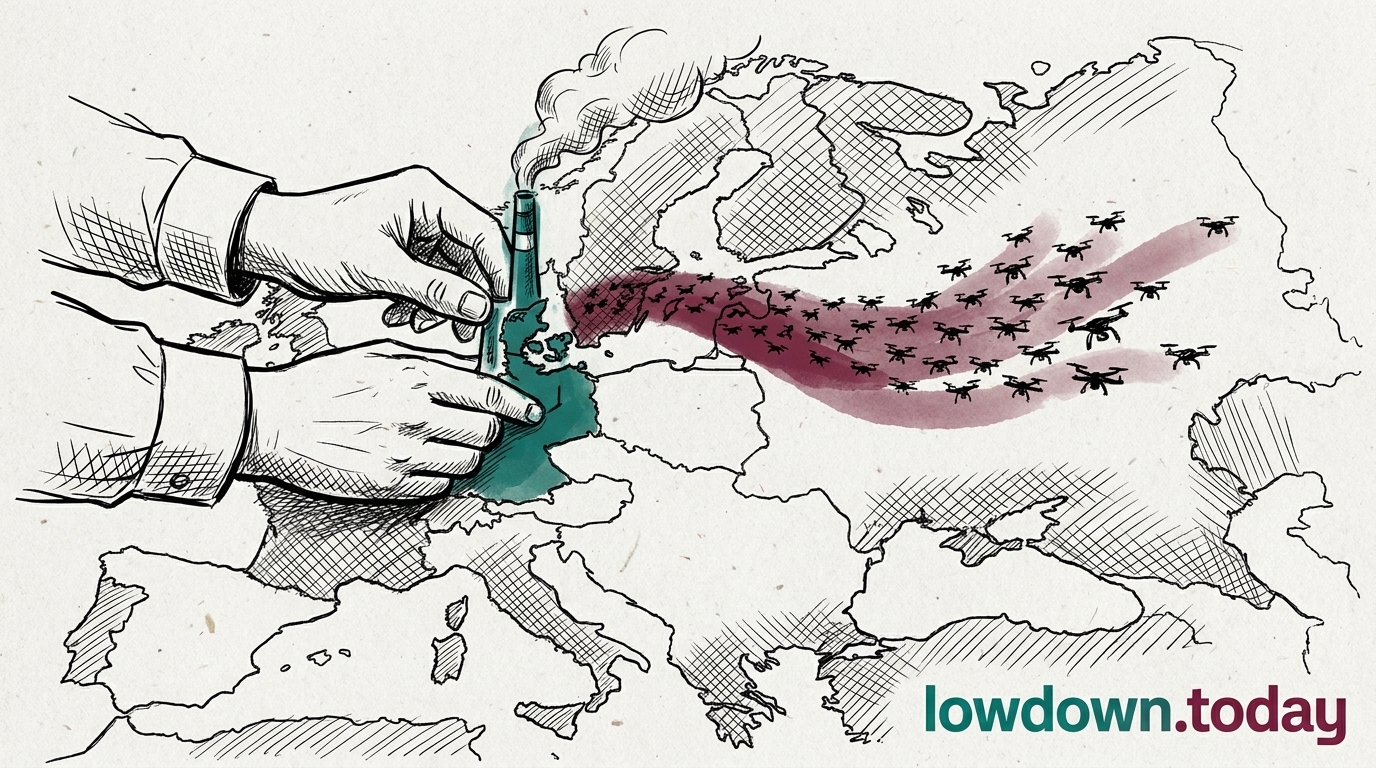
Denmark accepted Fire Point's Skrydstrup plant after committing to bilateral defence co-production at the B9 Nordic summit in May; the facility sits beside a Danish F-35 base, sharing security perimeters. NATO has published no legal guidance on whether hosting Ukrainian weapons production converts Denmark into a co-belligerent, leaving the host-state obligation unresolved.
Russian Ministry of Defence
Russia's 117% YoY drone-output rise in April, accelerating from a 68% full-year 2025 baseline, validates the FPV mass-production doctrine and hands Moscow a cleaner targeting argument for the Skrydstrup plant than any hidden production line offered; a Ukrainian weapons facility on NATO sovereign territory is a legitimate military target under the laws of armed conflict.
Baltic NATO states (Latvia, Estonia, Lithuania)
Latvia deployed mobile drone-intercept teams on 29 May using domestic Origin Robotics and Eraser interceptors, the first kinetic Baltic border response to Russia's 117% output surge. The Baltic states are the primary target market for Ukraine's ten EU export offices, giving them direct commercial access to combat-tested interceptors their own manufacturers have not yet matched.
Pentagon / Joint Interagency Task Force 401
Two Ukrainian entrants in Drone Dominance Phase 2 and Red Cat's SEC-filed STE partnership bring combat-iterated Ukrainian designs into US procurement without triggering Foreign Military Sale approvals; the programme's performance-scoring methodology does not require US-origin hardware. Northrop holding the Common UAS Payload standard means a heritage prime captures interface revenue regardless of which startup airframe wins.
Ukrainian defence industry (Fire Point / Spetstechnoexport)
Fire Point's Skrydstrup construction start and Spetstechnoexport's Red Cat partnership execute Zelensky's 13 May Bucharest proposal: converting wartime production surplus into a state export apparatus, independent of US approval chains. For Ukraine, embedded manufacturing on NATO soil protects propellant supply from Russian strikes while generating hard currency the war effort needs.
Chinese drone manufacturers (DJI, Autel)
Autel's Ralls Corp Fifth Amendment filing and DJI's Ninth Circuit quantification of USD 1.56 billion in 2026 losses are parallel constitutional attacks on a classified-evidence exclusion mechanism; neither company can contest the intelligence allegations directly, so both are betting on due-process doctrine to reopen the FCC authorisation route.
