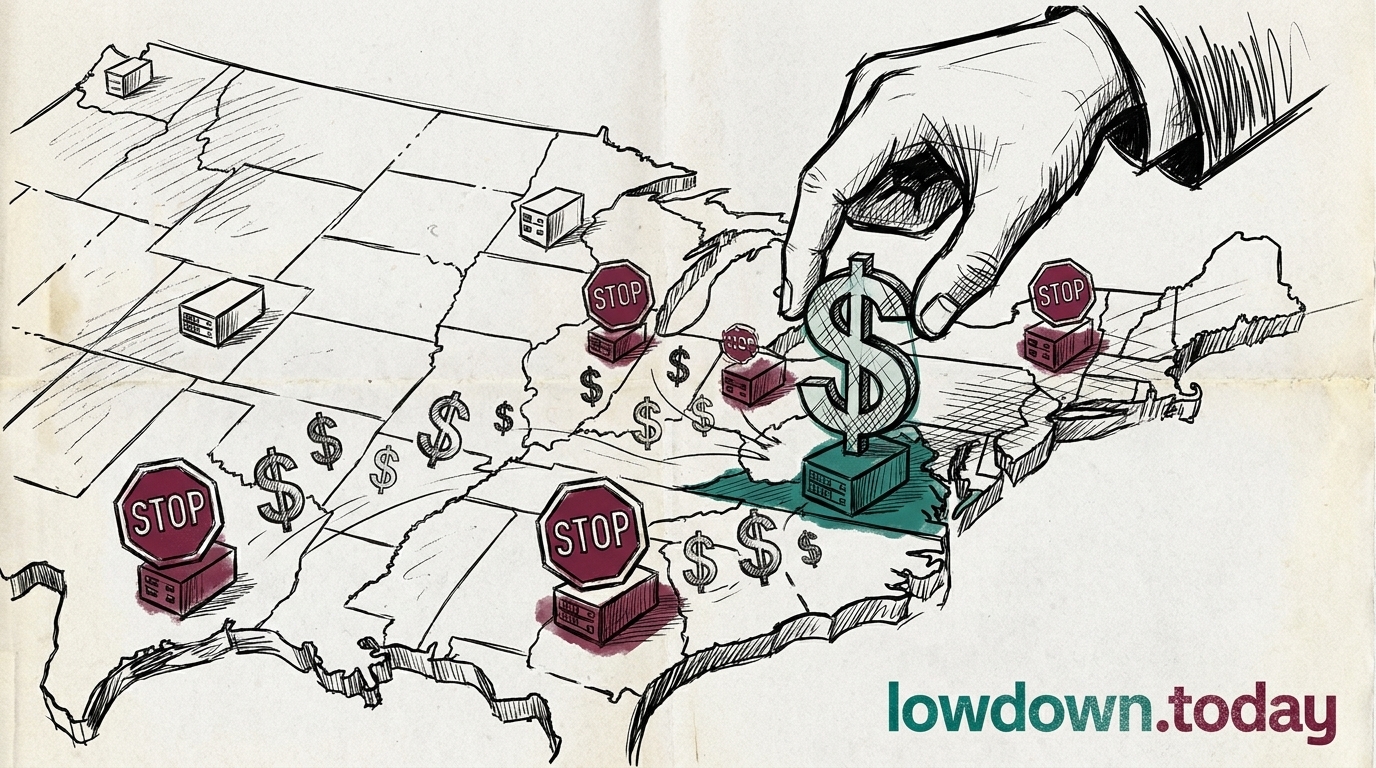
A new Virginia law, reported on 25 June and prospective to 2027, will require waterworks to break out data-centre sales from household and industrial customers, ending the aggregation that has hidden site-level draw.1 A utility that today reports one lumped figure will have to name what its data centres take.
The mandate lands on an awkward record. Google markets itself as the only hyperscaler that publishes per-site water figures, yet its Botetourt County subsidiary spent months fighting a freedom-of-information request for that exact site data, needing a November 2025 court order to release it.2 A Google director had argued in an affidavit that the numbers could let rivals infer the campus's size and design. The figures a judge finally prised loose, a draw rising from 2 to 8 million gallons a day, 7 to 30 times the utility's largest existing customer, never appeared in Google's own sustainability report.
The company had earlier answered the water question on its own terms, pledging $17m in replenishment as its Dalles, Oregon site faced a steep rate rise. That is the gap the law closes. Voluntary disclosure lets an operator choose the framing, the baseline and the offset; a statutory per-class report does not. Google's Botetourt fight shows what a company will do to keep a single site's number sealed even while branding itself the transparent one, which is why the 2027 mandate matters more than any pledge.



