Skip to content
Welcome, thoughtbot's Giant Robots listeners!Start here
Data Centres: Boom and Backlash
22OCT

Sanders and AOC target AI data centres

1 min read
16:40UTC

A bill to ban all new AI data centre construction until Congress passes worker protections. It will not pass. It was not designed to.

IndustryAssessed
Key takeaway

The bill will not pass but reframes AI regulation to include energy and infrastructure costs.

Senator Bernie Sanders and Representative Alexandria Ocasio-Cortez introduced the AI Data Centre Moratorium Act on 25 March.⁠1 The bill would ban all new AI data centre construction until Congress passes legislation addressing worker protection, consumer rights, civil rights, and environmental standards. It cites electricity costs rising nearly 7% last year, double the overall inflation rate, costing the average US household an extra $123 in 2025.

This is separate from Sanders' earlier robot tax proposal. He now operates on two tracks: one targeting AI's economic output through taxation, the other targeting its physical infrastructure through permitting. The moratorium has no path under a Republican-controlled Congress. It is a negotiating position, not legislation designed to pass. Its function is to define the left boundary of the debate and force centrist proposals to account for energy and environmental costs alongside labour displacement.

Deep Analysis

In plain English

Senators Sanders and Ocasio-Cortez have proposed a law that would stop any new AI server farms from being built until Congress passes laws protecting workers, consumers, and the environment. It will almost certainly not pass because Republicans control the Senate. The point is not to become law. It is to make a political argument: AI is already raising your electricity bill by $123 a year, and the companies building it should not be allowed to keep expanding until workers and communities are protected.

Deep Analysis
Root Causes

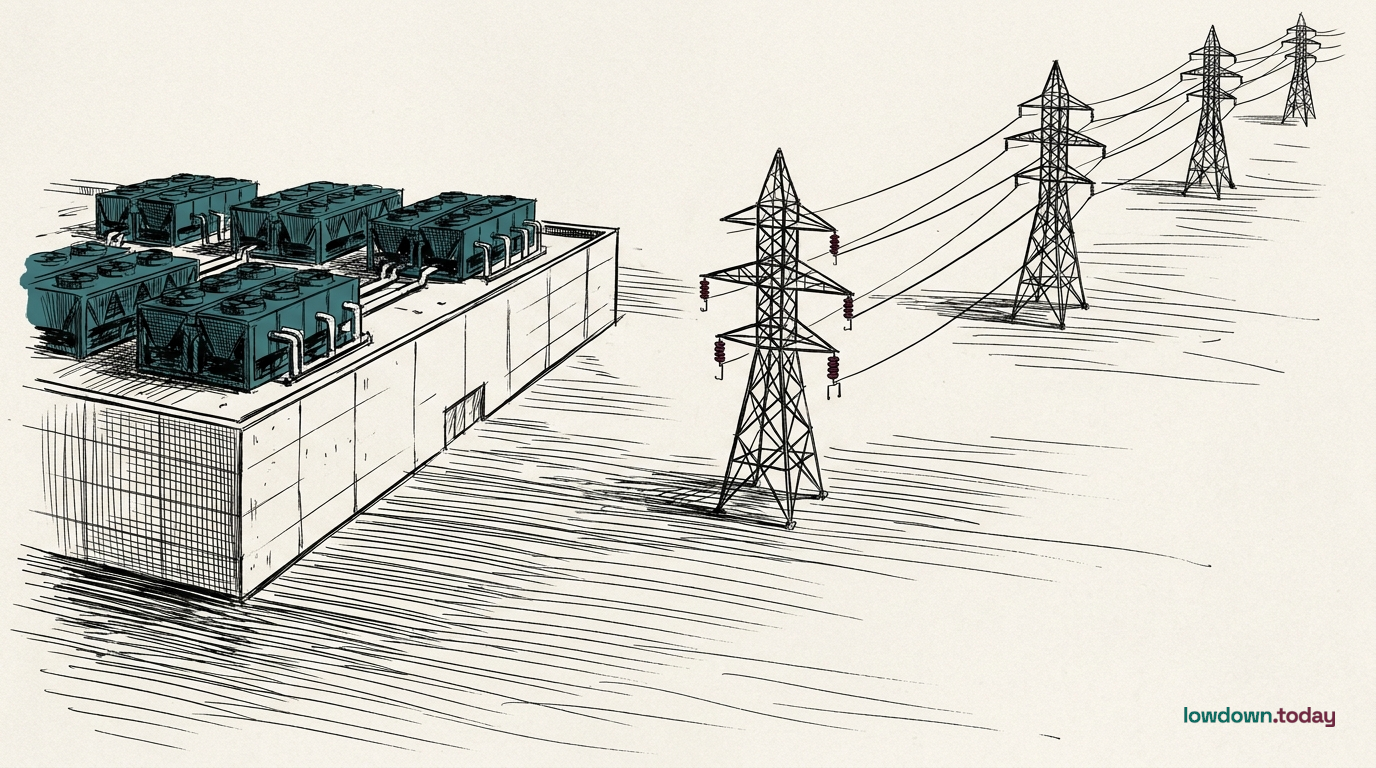
The moratorium bill reflects a strategic pivot in progressive AI regulation. Having failed to advance the robot tax through a Republican-controlled Senate, Sanders and Ocasio-Cortez are targeting the physical chokepoint: power and permitting. AI data centres require grid capacity, water, and zoning approvals that are already contested at the local level in Virginia, Arizona, and Texas.

The energy cost framing is deliberately populist. Electricity bills rising 7% with AI data centres consuming a growing share of grid capacity is politically legible in a way that labour market statistics are not. The bill is designed to shift the AI debate from abstract displacement risk to concrete household cost.

What could happen next?
  • Consequence

    The bill reframes AI regulation from a labour policy debate to an energy and infrastructure debate, opening a new coalition between labour and environmental advocates.

    Short term · High
  • Risk

    Even without passing, the moratorium bill may prompt hyperscalers to accelerate international data centre builds in EU, Asia, or Latin America to diversify political risk.

    Medium term · Medium
  • Precedent

    Sanders now operates two separate legislative tracks against AI: output taxation (robot tax) and infrastructure permitting (moratorium). Together they define the left boundary of the US AI policy debate.

    Long term · High
First Reported In

Update #3 · The AI jobs data contradicts itself

US News / Roll Call / Axios· 28 Mar 2026
Read original →
Different Perspectives
Mohsen Rezaei
Mohsen Rezaei
The senior Iranian security official and former IRGC commander told Press TV that US-linked technology infrastructure in the region could become a target if war resumes. He named the UAE and valued the assets at more than US$2 trillion, without a breakdown.
Mykhailo Shelemba
Mykhailo Shelemba
Datagroup's chief executive says the Kyiv data centre hit on the night of 18 to 19 October is beyond repair. Services continue from backup sites, and no staff were hurt.
Kristen Umstattd
Kristen Umstattd
The Loudoun supervisor voted against fast-tracking Amazon's rezoning of the Ashburn campus. She said there were no figures yet on homes, school or road costs.
Akishima residents' litigation group
The group formed on 18 October and plans to sue Nihon GLP by year-end to stop eight data-centre buildings. Its lawyers will argue rights to life, health, clean water and a natural environment after mediation failed in August.
Óscar López
Óscar López
Spain's Digital Transformation minister said on 22 October he could not confirm when the data-centre decree will be approved. He added that Google has always committed to investing in Spain.
Google
Google
Google said it would comply with LVV's order to stop preparatory works at Muhos and Kajaani until environmental assessments finish. A spokesperson conceded the company had fallen short.

Written with AI from Lowdown's published reporting. Not individually reviewed by an editor. Editorial standards.

