Skip to content
You can now search across every topic, entity and event.What's new
Data Centres: Boom and Backlash
8SEP

Taiwan votes to make big users generate

1 min read
13:06UTC

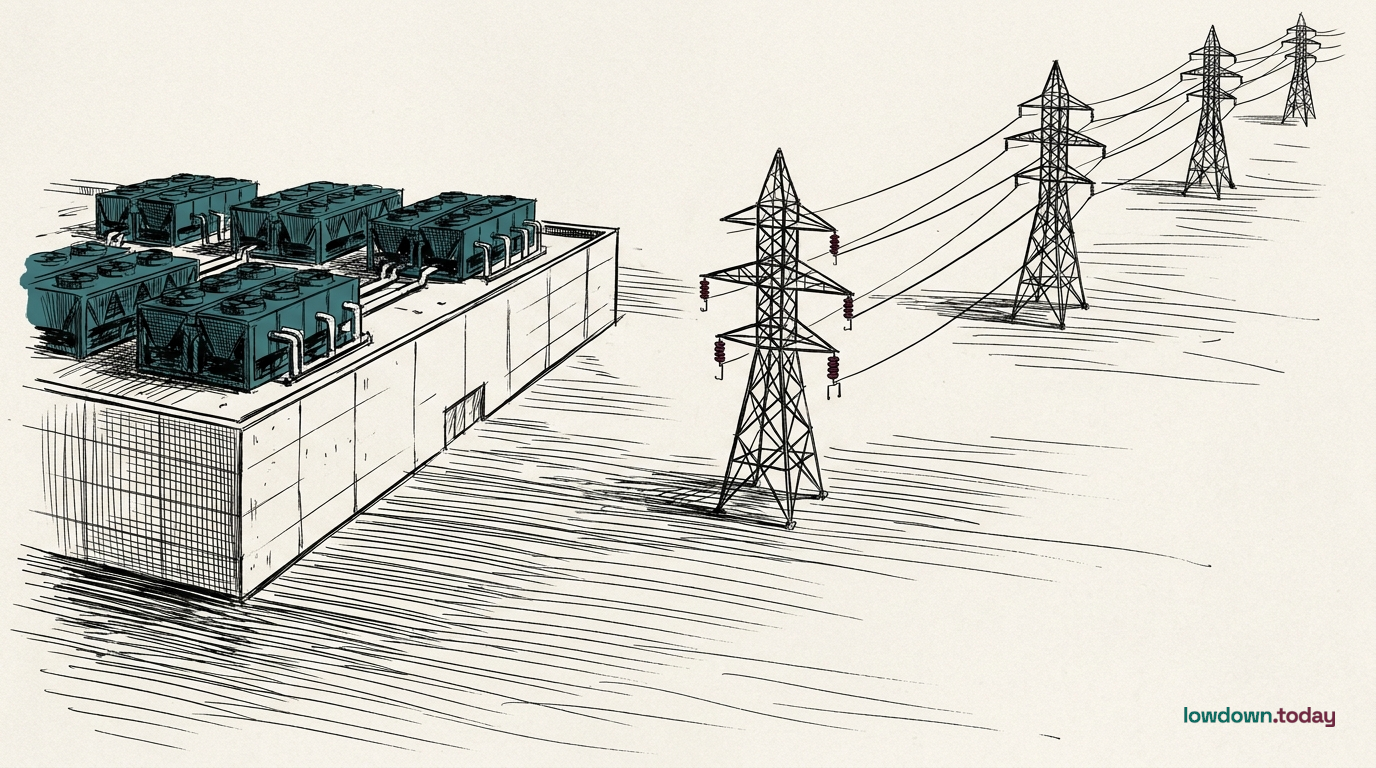
Taiwan's Legislative Yuan Economics Committee gave preliminary approval on 5 August to an amendment requiring large power users, data-centre operators among them, to install self-generation or storage at new facilities.

IndustryDeveloping
Key takeaway

Taiwan agreed the self-generation duty first and left the megawatt threshold to later regulation.

Taiwan's Legislative Yuan Economics Committee gave preliminary approval on 5 August to an Energy Administration Act amendment requiring large power users, data-centre operators among them, to install self-generation or storage for new facilities, with penalties of NT$150,000 to NT$750,000. The Taipei Times is the only source for this account 1.

No threshold is fixed in the text. Which operators the duty reaches goes to later implementing regulation, so the committee has agreed the obligation while leaving the number that defines its scope to the executive. On an island whose grid runs on imported fuel and whose semiconductor industry already absorbs a large share of industrial demand, that number decides whether the amendment governs a handful of campuses or most new industrial connections.

Britain has taken the pricing route to the same problem, with Ofgem proposing a per-megawatt deposit on grid offers , where Taipei asks the user to build supply instead of paying for access to someone else's. The penalty range suggests the drafters expect compliance from the permitting stage rather than from enforcement after the fact. At the top of the range the fine is small against the cost of a data-centre build, which puts the weight on the construction consent, not on the fine.

Deep Analysis

In plain English

Taiwan's parliament, the Legislative Yuan, is one step closer to passing a rule that would force big electricity users, including data centres, to build their own power source or battery storage rather than relying entirely on the public grid. Companies that do not comply would face fines of NT$150,000 to NT$750,000 (roughly $4,700 to $23,500), but lawmakers have not yet decided which size of facility the rule actually applies to.

Deep Analysis
Root Causes

Taiwan's grid draws heavily on imported fuel, which is the structural reason lawmakers are pushing large users towards self-generation rather than adding pure demand to an import-dependent system.

Leaving the megawatt threshold to later implementing regulation means the amendment's actual bite on data centres, as distinct from steel mills, petrochemical plants and other existing large users already covered by similar duties, will not be known until a threshold is set.

First Reported In

Update #13 · GPUs now collateral as Nebius borrows $775m

Taipei Times· 14 Aug 2026
Read original
Causes and effects
This Event
Taiwan votes to make big users generate
The duty is agreed in principle before anyone has fixed the megawatt level at which it starts to bite.
Different Perspectives
NVIDIA
NVIDIA
NVIDIA told the Securities and Exchange Commission on 26 August it had signed memorandums aiming to mobilise over $500bn for buyers' equipment purchases, then said in the same filing the arrangements may not become definitive. It may also carry limited residual-value risk on the equipment itself.
IREN Limited
IREN Limited
IREN signed $2.4bn of financing on 25 August that only releases cash once its Mackenzie GPU servers are accepted, and only through 31 December 2026. A shipping delay from here now creates a funding problem as well as a revenue one.
Energy Commission (Malaysia)
Malaysia's Energy Commission recorded data centres at 9.3% of national power in one hot week in August, against a 7% year-to-date average, and is projecting 31% of peninsular demand by 2035. It wants roughly 9 GW of new gas-fired capacity by 2032 to cover the gap.
Economic Development Board and Infocomm Media Development Authority
Singapore's EDB and IMDA rationed 200 MW across four operators on 21 August and followed with a tropical liquid-cooling standard six days later, fixing the terms before construction starts. The agencies will decide within 18 to 24 months whether to run a third call.
Legal Resources Centre
The Legal Resources Centre put the water and power draw of two approved Cape Town Equinix sites in public, at roughly 4.4 billion litres and 1.4 to 1.5 billion kWh a year, because the city and the operator would not. It wants a cumulative assessment before any more of the five approvals proceed.
Ministerio de Minas e Energia
Brazil's energy ministry published Redata's five conditions after the Senate passed PL 278/2026 on 1 September, betting a repeatable annual water test enforces cooling design better than a one-off approval. Redata now needs President Lula's signature before any of it takes effect.

